2012 Honda Civic Hybrid: Multi-Day Drive Review
World's First Diesel Hybrid SUV: 2011 Peugeot...
2012 Infiniti M35h, Its First Hybrid, Previews...
Traveling With A 2010 Toyota Prius V: The 8-Day...
2012 Toyota Prius V Station Wagon/Minivan...
It's one of the most frequent questions asked about hybrids: What happens if I have to replace the high-voltage battery pack?
While Toyota warrants its Prius batteries for 8 years/100,000 miles (or 10 years/150,000 miles in some states), cars more than a decade old won't be covered--and may still have plenty of life left in them.
So what does it really cost to replace a hybrid battery pack?
Our reader Al Hodges, of El Cajon, California, was kind enough to tell us how it happened for him.
His experience is just one data point, but it may reassure those who fear that they'll have to pay $7,500 or even $10,000 to replace their hybrid battery.
"I purchased my Prius in September 2000, took delivery in January 2001, and have had great service, low mileage, and no major service," Hodges told us.
MORE: Ultimate Guide: Toyota Prius Battery Life, Cost & Warranty
"However, a few weeks ago, my dash lit up like a Christmas tree."
"I dug out the owner's manual," he related, "and all the idiot lights were giving me the same message: 'See your Toyota Dealer.'"
The verdict from his dealer: "You need a new high-voltage battery."
While hybrid battery packs are designed to last the life of the vehicle, a few may well need to be replaced before then. Hodges got twelve and a half years out of his, close to the average 15-year life of a car.
Before you ask, by the way: Toyota service departments have had a program in place for years to recycle nickel-metal-hydride battery packs at the end of their life.
Including new cables, labor, and taxes, the service manager told Hodges, the cost would be more than $4,400.
Hodges walked out in shock, and started researching alternatives.
"Mr. Q in San Diego had a program to replace first-generation Prius batteries for $2,500, using rebuilt packs, as a Do-It-Yourself package," he found.
But, Hodges said, "at 83 years old, I am not a D-I-Y guy any more."
His next step was simple: "I went back to Toyota, and begged the service manager on bended knee to sharpen his pencil."
Lo and behold, Hodges received a new quote. It still included everything required for the full replacement, but this time, the total was $2,931.
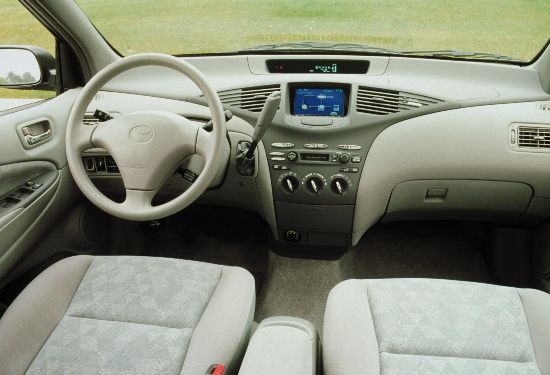
Hodges suspects Toyota has about a 200-percent markup on its parts, so he was pleased to see an extra $1,400 remaining in his bank account compared to the first estimate.
What's the lesson? (And it's not confined to hybrid battery packs, either.) ASK!
"The worst they can do is say, 'no,'" Hodges said. "Dealers don't want to lose service work"--which is now one of their main sources of profit, along with selling used cars. (New cars are, on average, less profitable for dealers.)
Hodges also suggests that the price for battery replacements will come down over time, so that they may be cheaper in the future than they are today.
"Back in 2000, I asked the Toyota dealer about the price to replace the high-voltage battery," Hodges said. "The price in 2000 was $8,000."
The list price of the pack for a 2001-2003 Prius today is $2,299.
[UPDATE: Toyota's Wade Hoyt offered some further details, noting that the list price of the replacement pack is $3,649, but the cost to the owner is reduced by a $1,350 "core credit" for turning in the old pack. And, Hoyt added, service department labor time to replace a pack is listed at 1.6 to 1.7 hours.]
"The price came down."
+++++++++++

Follow GreenCarReports on Facebook and Twitter.
Have an opinion?
From this story, it shows that replacing a battery in a car that is simply a set of cells is about $700 in labor and a whole lot of parts markup. The "stealerships" show their mettle here in the $4400 initial quote. I look forward to more EVs and more self-service cars in the future. Forget the hundreds of government-mandated ecology sensors and converters in today's ICEs.
I see your reasoning, but it doesn't match my experience as a Prius owner.
But that hasn't been true with the 2nd-gen Prius in my driveway. Toyota built the thing to be reliable, and it's had the lowest TCO of just about any car that I or anyone in my family has owned. It's certainly comparable (TCO-wise) with the Honda Accords and other conventional Japanese cars we've owned.
The fact of the matter is that the Prius, especially the second generation one, is just a very reliable and efficient car.
Whether this holds for the Volt, though, remains to be seen!
The doom and gloom hybrid battery replacement cost apocalypse that so many preached just hasn't happened.
Best car I've ever owned!
We have dozens rolling the streets of San Francisco - its not uncommon to see 200k+ miles on the odometer.
Also, the HV battery is basically a component of the Prius transmission (the Prius Power Split Device transaxle won't work without an HV battery). A regular car's transmission might die and need replacement after 100,000 miles. Same cost as replacing a Prius HV battery. So contrary to all the ignorant anti-hybrid FUD out there, a high-mileage regular car isn't any cheaper to fix than a high-mileage Prius.
That NEVER happens with a Prius traction battery under normal conditions. The hybrid system tries to keep the battery charged between 60-80% at all times, where average service life can be 10+ years.
One of the reasons for a dying Prius hybrid battery would be due to operator error-- Running out of gas and forcing the battery to fully discharge to propel the car after the gas ran out.
The effects of repeated cycles of deep-discharging an electric vehicle battery pack over years have yet to be fully determined. We will find out in a few years how the battery packs in Teslas, Volts, Nissan Leafs, etc. hold up in the next few years.
Forest...you just described my sister...and alot of other people. Engineers have to design around operator error. Maybe they should design the car to not let the operator fully discharge the battery.
Point is, NiMH batteries work just fine for non-plug-in hybrids because unlike laptops, cell phones, PHEVs and full-electric cars, they don't deep-cycle the batteries.
That's not to say Toyota isn't putting more advanced batteries in non-plug-in hybrids-- An Li-ion pack is standard in the Prius-Plus (Euro version of the Prius v).
As far as the 1st-gen Prii owners go, there will be plenty of supply for reconditioned gen-1 battery packs for the next 5 years. By then the first 2000 Prius would already be 17 years old.
It's time-intensive to get at the HV batt, which most crooks don't want to do-- The longer it takes to steal it, the higher the chances of them getting caught.
http://sierraclub.org/coal/ca/
As for the power grid, a seminal 2007 EPRI-NRDC report laid to rest fears of plug-in car charging--the bulk of which will take place at night, when demand is lowest--will overwhelm the grid. The impact of plug-in cars will be FAR less than the quick and widespread adoption of electric air conditioning in the 1960s and 1970s.
The electric part of the Gen-1 Prius drivetrain is merely a part of the transmission-- It uses a generator (MG1) and electric motor (MG2) to replace a normal transmission's multiple gear ratios and torque converter.
Also, these days no new coal-fired electric power plants are being built in the U.S.-- Power generation companies are switching en-masse to natural gas due to the boom in shale natural gas production in the U.S., which has driven NG prices down to just $3 per 1000 ft^3. And Natural gas burns far cleaner than coal or gasoline.
Quo warranto, B.O.?
Assuming the gentleman's Prius averaged 40 mpg and over the life of the car and gasoline averaged $2.75 .If the battery failed at 22,000 miles and cost $2931 to replace then:
22,000mi/40mpg x $2.75gal = $1512 fuel cost
$1512 fuel cost + $2931 battery repl = $4443 cost to go 22,000mi.
$4443/22,000mi = 21cents/mile
Spoiler Alert! If you love electric cars please do not read further!!
Avg cost of gasoline $2.75gal/21 cents/mi = 13 miles per gallon.
i.e. the gentleman would have come out better buying a '66 Ford with a 390 cubic inch engine with a Holly 4 barrel carburetor... it would have been cheaper than the Prius!
Have an opinion?Join the conversation!