Advertisement

Do Battery-Pack Failures Reduce the Life of Hybrid Cars? A Reader Asks

 
Follow John

2011 Toyota Prius

2011 Toyota Prius

Enlarge Photo

Related Photo Galleries


See more photos »

Our reader Jonathan P asks:

I have a 1997 Saturn that, remarkably, is still running. It probably has the book value of a large watermelon, so if anything major goes wrong with it, that's the end of that.

If that Saturn were a hybrid, I'm guessing the battery pack would have died about four years ago, give or take. But replacing a battery pack would be a huge expense, no? And the older the car gets, the less incentive there is to incur this huge expense.


So it seems to me that hybrids have a significant built-in obsolescence factor--while at the same time their higher up-front cost means you need to hold on to them longer to recoup the cost.

What, then, is the logic behind buying a hybrid...or an electric, for that matter...over an efficient gasoline or diesel vehicle?

2004-1009 Toyota Prius battery pack, second generation
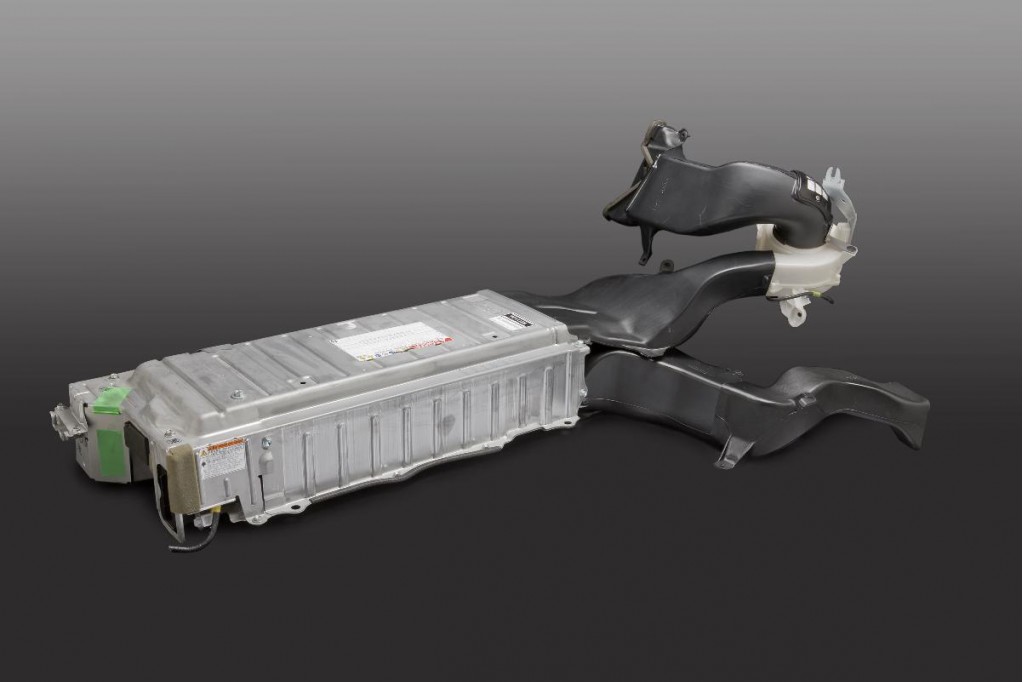
2004-1009 Toyota Prius battery pack, second generation

Enlarge Photo

Good question, Jonathan.

It's not about payback, necessarily

First, many of the people who have bought hybrids like the Toyota Prius didn't do so for the "payback," or the money they'll save on gasoline. Instead, they wanted the car to make a public statement about their values. Just like buying a HUMMER, only, ummmm, different.

The broader universe of car buyers who say they want a green car really want to save money. So they may or may not buy a hybrid, since retail buyers routinely overweight the importance of purchase price and ignore the impact of total cost of ownership (maintenance, repairs, gasoline cost) over the lifetime of the car.

Whether a hybrid really save you money depends on your duty cycle: whether you spend a lot of time in stop-and-go urban traffic, where its engine switches off frequently and it can move under electric power alone for short distances, or whether you do hundreds of miles a day on freeways, in which case a clean diesel is a better bet.

2010 Ford Fusion Hybrid

2010 Ford Fusion Hybrid

Enlarge Photo

Designed to last a lifetime

Second, a hybrid's high-voltage battery pack generally doesn't need to be replaced over the lifetime of the car--or at least the first decade.

The nickel-metal-hydride (and now lithium-ion) battery packs in hybrids are very different to 12-Volt lead-acid starter batteries. They're considered part of the vehicle's pollution control system by regulators, so they must be warrantied for either 8 years//100,000 miles or 10 years/150,000 miles (depending on your state).

Beyond that, automakers know very well that replacing a pack (a Gen II Prius pack costs about $2,500) would be a huge customer dissatisfaction issue. The packs are built with plenty spare energy capacity, and they control them to operate within a very narrow state-of-charge range, usually between 40 and 60 percent.

2010 Toyota Camry Hybrid

2010 Toyota Camry Hybrid

Enlarge Photo

This reduces stress on the pack, prolonging its life. While there's little public data so far on how long packs last, hundreds of hybrids have been used as taxis for 300,000 miles or more, and they still run fine.

The packs may not have 100 percent of their original energy capacity, but they still function as hybrids.

Battery chemistry is key

A technical note: The battery chemistries used by most manufacturers degrade only with duty cycles (usage) and NOT with time alone. Electric-car maker Tesla is one of the few exceptions: It uses consumer-grade lithium-ion cells, which lose energy capacity over time, even if you never use them.
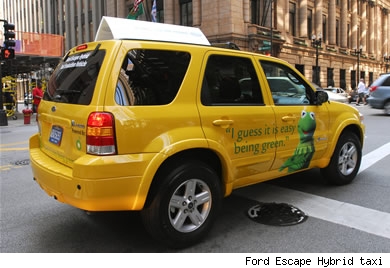
Ford Escape Hybrid Taxi

Ford Escape Hybrid Taxi

Enlarge Photo

So, while a hybrid car owner may theoretically need to replace the pack at some point, it most likely won't be required until around the same time the car itself becomes uneconomical: 12 to 15 years or more.

As you point out, if your Saturn loses its engine, or even its transmission, there's no sense in repairing it. The hybrid battery pack falls into that same group of components: the ones that usually last the life of the car, and whose failure determines when the car gets scrapped.

Toyota, incidentally, has said that the hybrid battery pack is one of its least-replaced items. The bulk of them are sold to repair accident damage, not because they failed.

+++++++++++

Follow GreenCarReports on Facebook and Twitter.


Follow Us


Have an opinion?

  • Posting indicates you have read this site's Privacy Policy and Terms of Use
  • Notify me when there are more comments
Comments (25)
  1. Great article, but I really need to take up one point.
    Despite the supposed psychological report supporting your argument, I strenuously object to the idea that people buy a Prius to make a public statement. People buy a Prius to effect a positive change in either the environment, foreign trade, global warming, etc. This purchase does have a positive effect in all those areas.
    On the flip side, people buy Hummers because they don't give a rat's arse about any of those things. They are having a negative impact on the country.
    So the logic that says there is a comment thread between the Prius buyer and the Hummer buyer is ridiculous. The Prius is being purchased to have a positive impact, and it is having a positive impact. As for the Hummer buyer, well, let's not beat a dead horse, or apologize for the dead horse after it is already dead.
     
    Post Reply
    Vote
    Bad stuff?

  2. Wow, Kind of opened my eyes. I woudln't think they would last that long.
     
    Post Reply
    Vote
    Bad stuff?

  3. What about complaints relating to the Civic Hybrid's batteries? Alas, Honda recalls older Civic HEVs for re-programming the engine/motor system to use much less of the battery, as it ages, bringing fuel economy down quite a bit (from what I read on the web). My friend tells me that Toyota enjoys a much better battery provided. My 8 year-old, 25,000-mile Civic HEV hasn't yet needed a battery replacement, thank goodness, but we're supposed to take it in, for re-programming (and lower fuel economy). We wish we could have a new battery instead. It will take a lawsuit, from what I understand.
     
    Post Reply
    Vote
    Bad stuff?

  4. I've been talking to automakers, analysts, and aftermarket insurance providers, about the issue of how the battery replacement cost will potentially impact the value of a used battery electric vehicle. Everyone is thinking about it, but no one really knows...yet. Guess we'll find out!
     
    Post Reply
    Vote
    Bad stuff?

  5. @John C Briggs: Reasonable people may disagree on these points. I'd like to see the data you use to support your assertions. The data I use to support my statement are contained in the link.
     
    Post Reply
    Vote
    Bad stuff?

  6. Info on Honda Civic Hybrid battery packs here:
    http://www.greencarreports.com/blog/1048230_honda-civic-hybrid-software-upgrade-fixes-battery-issue
    And, a link I forgot to add. Hyundai is warranting its battery for 10 years/100K miles:
    http://www.greencarreports.com/blog/1051494_2011-hyundai-sonata-hybrid-battery-gets-10-year-100k-mile-warranty
     
    Post Reply
    Vote
    Bad stuff?

  7. Thanks for the great article. I do love it! However, I bought my 2010 Prius for fuel economy. I drive a lot, no less than 50k miles a year. I am saving $5000+ of gasoline per year over my previous car, an Infiniti M35X which I got 19.7MPG only. In less than 5 years, I would save more fuel than the cost of the car itself. It is like driving this Prius for free!
    Also, I am producing 20+ less tons of carbon-dioxide per year! Have I made you guys breath a little easier? Haha! I feel good!
     
    Post Reply
    Vote
    Bad stuff?

  8. @John - Buying a Prius will affect the global trade positively in your eyes only if you're Japanese. Before the Chinese took over the Hummer brand, it did have a pretty good economic impact on the American economy. But I do see your point - you probably meant all the money we pour into Sheiks' pockets but it's mainly Canada and Mexico we got our oil from.
    One good point about Tesla (and also the LEAF) is that individual lithium ion battery packs (40+ for the Nissan) can be tested and replaced as needed.
     
    Post Reply
    Vote
    Bad stuff?

  9. @John Briggs. I'm certainly not one to criticize people driving vehicles that are environmentally sound, but to claim that people don't buy hybrids because of the outwardly visible statement is a little baffling; are hybrids vehicles that look just like standard vehicles selling or have they sold? Or, more accurately, do hybrids apparently need to be made with huge letters showing everyone it's a hybrid?
    Personally, I'll take a hybrid or EV with nothing stating it's a hybrid but do you not remember the Silverado or Yukon hybrid release when feedback from the customers was mainly "why aren't there larger "Hybrid" decals/lettering?" Sad, but true. Well, if my memory serves me correct, that is...
    Just because the HUMMER makes a statement you don't like doesn't mean it isn't a statement. Both vehicles make a statement in my opinion.
     
    Post Reply
    Vote
    Bad stuff?

  10. @JKD: One correction. "The Chinese" did not "take over the HUMMER brand," although a Chinese company tried to buy it but failed to get approval from the Chinese government. GM shut down the brand: http://www.motorauthority.com/blog/1023120_gm-will-shut-hummer-brand-down
     
    Post Reply
    Vote
    Bad stuff?

  11. I've had a 2004 Prius for nearly 7 1/2 years (130,000 miles). The overall mileage has dropped of late, and I know of one owner who had to replace the battery pack after some mice shorted it out. She is getting better mileage than she was with the original battery pack, so I do think there is a drop in efficiencly. However, nothing that would cause me to want to replace it. It still gets better mileage than any other car I've owned.
     
    Post Reply
    Vote
    Bad stuff?

  12. John Voelcker,
    Data? My experience so far is that you ignore it in favor of your preconceived notions (OK, maybe I am guilty on that score as well). But let's take a typical example.
    You keep denigrating hybrids saying they are only 2% of the market. I keep sending you the link to "Light-Duty Automotive Technology, Carbon Dioxide Emissions, and Fuel Economy Trends: 1975 Through 2010" that says the number is actual twice that amount or 4.3%. Please explain why you ignore that data.
    Bear in mind this is a knowable number. It is the actual number of cars purchased. This is hard data. Perhaps subject to error of one kind of another, but at least there is a real answer.
     
    Post Reply
    Vote
    Bad stuff?

  13. Continuing,
    So what data do you like. Well your reference "data" for this story is called "Going Green to Be Seen: Status, Reputation, and Conspicuous Conservation". This data is more than a little bit softer. As an example of its softness, it predicts that hybrid sales should be 37.2%. That is more than a little bit off as we all know.
    Why is the data off, well the authors explain it this way. "One limitation of the current research is that our experiments did not involve the actual purchasing of products". That is right, no actual purchases were made during the research. The authors point this because it is well known that people don't buy what they say they are going to buy.
    If you haven't had the pleasure of being involved with "conjoint analysis", let me explain. Conjoint analysis is a well thought out system for analyzing what features people want and how much they are willing to pay for them. The only problem is that it does not predict real world purchases. Oops, big problem. But hey, many consultants made a lot of money off of it.
     
    Post Reply
    Vote
    Bad stuff?

  14. Now, what does "Going Green to Be Seen: Status, Reputation, and Conspicuous Conservation" have to say about your Hummer versus Prius comparison. Well, they don't say what you say. The don't say the behaviors are the same. In fact, the people that buy luxury vehicles are assumed to show normal behavior, and the people that buy Prii are assumed to be irrational. The author's spend their research trying to figure out the Prius driver's irrational behavior. So how do they do that. Well hold on to your seat.
     
    Post Reply
    Vote
    Bad stuff?

  15. What they do is present college student with a choice of two vehicles, a Honda Accord Hybrid (eco) and a Honda Accord ICE fully loaded (luxury). In the control group, 37.2% chose ECO. The test group had to read a story that is intended to evoke "status" feeling". In that group 54.5% of the people chose ECO. So they got a 17% shift in behavior.
    But here is the leap of faith that you need to go through. 1) the story evoke "status" feeling. 2) the person seeks higher status, 3) the person chooses an ECO vehicle so as to be seen as an altruistic person. 4) no other possible interpretations are possible.
    Really you can't make this stuff up. It is a long and complex chain of events that lead to the philosophy of "conspicuous conservation".
     
    Post Reply
    Vote
    Bad stuff?

  16. @John C Briggs: The document you refer to gives sales percentages for hybrids in 2008, 2009, and 2010 as 2.5%, 2.3%, and 4.3%. That is a remarkable and bizarre leap that I have not seen supported by the data.
    I also note the report was dated Nov 2010, and a sentence in the executive summary says, "The EPA database for this report was frozen in June 2010." Hence their "2010" figure is a guesstimate based on half a year's data.
    The HybridCars.com Market Dashboard indicates a 2010 hybrid sales rate of 2.4%. That seems to me far more likely:
    http://www.hybridcars.com/hybrid-clean-diesel-sales-dashboard/december-2010.html
    Hybrid sales percentages vary slightly depending on the denominator: Are heavy-duty vehicle sales included, for example, or just passenger vehicles? But frankly, I find the 4.3% number bizarre.
     
    Post Reply
    Vote
    Bad stuff?

  17. So what are we to make of this? Firstly, the Honda Accord hybrid was canceled due to poor sales. This surely would not have happened if 37% or 54% people chose the Accord Hybrid.
    Secondly, what are we to make of this complex sequence of events that the authors go through to show that Prius driver really buy them to show "status".
    Firstly, the authors provide all the necessary information to shoot down this theory. Firstly, as the point out, this 2010 paper is the first time anyone has ever shown this linkage. So this is not exactly been confirmed.
    Secondly, they provide three alternative explanations for their data. Most interestingly is the idea of "indirect reciprocity". The idea that you do the right thing in life so that people with do the right thing to you. What a radical idea? Unfortunately it is as old as the bible and the golden rule. So is the Prius buy seeking "status" or "doing the right thing", well there is probably some of each category. So the question becomes one of percentages.
     
    Post Reply
    Vote
    Bad stuff?

  18. So what does "Going Green to Be Seen: Status, Reputation, and Conspicuous Conservation" actual say about Hummer buyers? There is just one sentence about that refers to Hummer buyers as "those who behave selfishly".
    How does this compare with what they say about Prius drivers? Aside from considering them an enigma, they consider them "prosocial" "altruistic", etc. So very different from the Hummer driver.
     
    Post Reply
    Vote
    Bad stuff?

  19. Let me finish up by talking about motivations. The focus seems to be that Prius drivers and Hummer drivers are both motivated by the same source, to achieve status. I would argue that their motivations should not be the focus of the discussion. Consider this.
    Two guys really want TVs, so they each go down to the store and get one. The key difference is that one guy purchases it with his hard earned money, and the other guy steals it. Now, this guys are really the same. After all, they are both motivated by the same desire, to have a TV set. So the process is equivalent.
    The only problem, is their motives are not usually the thing people focus on. One is taking an action compatible with civil society, the other is doing something illegal.
    The same could be said for car purchases. Some people make purchases compatible with society (prosocial if you must). Other people make purchases that are less so.
    So focus on the motives of Prius vs Hummer drivers if you must, but their actions are far more important.
     
    Post Reply
    Vote
    Bad stuff?

  20. Great article! It was really comprehensive and it was good to know that hybrid cars are built to last a long time. I know that that is one of the concerns people who are skeptical of hybrid performance make all the time. It is comforting to know about hybrids' long term performance.
     
    Post Reply
    Vote
    Bad stuff?

  21. @John Voelcker,
    I want to apologize for my comment about your usage of the hybrid 4.3% data. Rather than bias, you are reasonable rejecting an outlier data point.
    The problem of bias was apparently mine. I really wanted to believe the 4.3% number. Unfortunately, I cannot find anything to confirm it.
    Sorry
    John C. Briggs
     
    Post Reply
    Vote
    Bad stuff?

  22. @Rob O'Keefe
    First, OK some people do the Prius thing as some sort of personal green-washing, but I think this number is very small.
    Of the people that I know with a Prius, and that is a lot, the goal is to take personal action to effect positive change. These people often do other things in their life that are much less visible that reflect this personal action. Many have solar panels, recycle, conserve electricity, ride bicycles to work, reduce toxic waste, etc. In other words, their purchase of the Prius is consistent with other actions. The idea that they are seeking "status" seems flatly ridiculous as many of them could easily afford a Lexus or BMW. Their goal is to take action not to make a statement.
    As for people with EV or hybrid stickers, this is part of the environmental effort to seek positive change by letting people see that these vehicles exist. It helps to educate people. This is important for the same reason that gay people should be out. It normalizes the behavior and people come to accept it. These technologies need to be seen and not be in the closet (sorry if the analogy is way off the mark).
    As for the uniquely shaped Prius being a status symbol, perhaps. But also consider the fact that the Prius is by far the most fuel efficient vehicle available for sale. No other hybrid comes close. So the purchase of the Prius might be due to the fact that it is an awesome vehicle.
     
    Post Reply
    Vote
    Bad stuff?

  23. As for the Hummer drivers, do you really think they are "making a personal statement?" I find this equally bizarre. The people that I know with Hummers just happen to really like them, particularly if they happened to get one of the original military ones. Personally, I love Hummers, I just wish people didn't drive them to work in Boston.
     
    Post Reply
    Vote
    Bad stuff?

  24. Consumer Reports performed tests that showed that a 206,000 mile, 2002 Prius returned about the same combined MPG as a 2001 Prius with just 2,000 miles. Here's the article:
    http://www.dailytech.com/206Kmile+Toyota+Prius+MPG+Nearly+Matches+New+Figures/article20940.htm
     
    Post Reply
    Vote
    Bad stuff?

  25. The letter from Jonathan P is asking several questions; I think the answer to whether the battery pack affects the useful lifespan of the car -- is that it depends on the car. The Prius batteries are quite dependable, while other hybrids say from Honda, are not quite as long lasting. Both are repairable, without resorting to total replacement.
    *
    The second (implied?) question is about "payback". This is a strange concept for a car, really. If the payback logic was applied, then only basic, stripped models would sell, and luxury brands would never have been started, I think.
    *
    The lower energy consumption is why people like the Prius, or EV's, or efficient ICE powered cars. The l cost of fuel over the lifetime of any car is just like the initial purchase cost, is just that -- a cost. No car is an "investment", so payback is not really applicable, I think?
    Neil
     
    Post Reply
    Vote
    Bad stuff?


Have an opinion?Join the conversation!

Advertisement
Advertisement

Find Green Cars

Go!

Advertisement

 
© 2013 Green Car Reports. All Rights Reserved. Green Car Reports is published by High Gear Media. Send us feedback. Stock photography by Homestar, LLC.