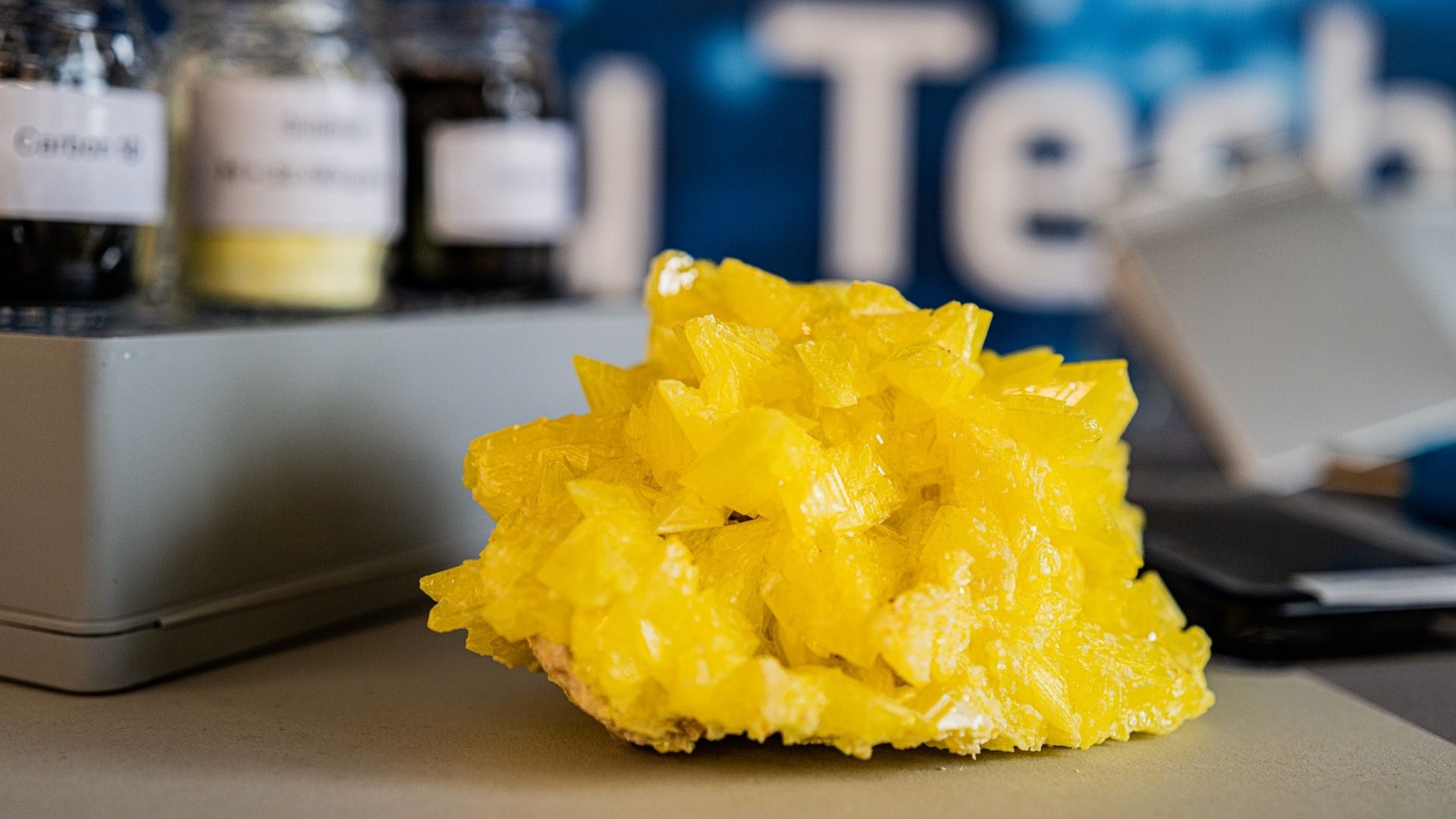
You can virtually throw a stone these days and hit someone developing a "fuel of the future", but some do appear to show more promise than others.
Many options for future transportation have their disadvantages, but Alchemy Research believes there's one option that could solve several of our fuel problems.
Interestingly, that fuel is already very well known--it's called aluminum.
Alydro technology
So how does aluminum become a fuel? Through Alydro technology, explains an Alchemy Research white paper.
The system uses only two reactants, aluminum and water. Those are the only two things you'd need to add to an Alydro car, the rest being dealt with under the hood.
Aluminum and water react, and that reaction generates three things - huge quantities of heat--50 percent of the reaction's energy output--aluminum oxide, and hydrogen. And, if you've not guessed already, that hydrogen can then be used in fuel cells, to generate electricity for powering a car.
Refueling would take around 5 minutes according to the paper, to fill the aluminum tank, remove the waste aluminum oxide, and top-up whatever water wasn't replenished by the 65 percent-efficient condenser.
Benefits
Currently, a main issue with electric cars is the poor energy density of batteries compared to gasoline. That means you need big, heavy batteries for a relatively modest range. The issue with hydrogen fuel-cell vehicles is creating a usable hydrogen infrastructure, and somehow generating hydrogen in a way that's more energy-efficient than simply plugging in a battery-electric vehicle.
Alydro theoretically solves both of these issues.
Aluminum is particularly energy-dense, and combined with a turbo-generator, you get 6.5 kWh of power from one liter of aluminum. Alchemy Research suggests that 60-liter tank would store 390 kWh of energy, and going by an electric car benchmark of 100 kilometers (62 miles) for every 15 kWh, total range for a 60-liter Alydro car would be 2,400 km, or 1,491 miles.
So range isn't an issue, how about the technology's green credentials?
Alchemy Research lists several environmental benefits of aluminum. It's non-toxic--food and drinks are safely stored in aluminum, so storing it in a tank isn't an issue. Nor does it pollute, since there's no burning involved in the reaction and the aluminum-oxide by-product can be recycled into aluminum, ready to be used again.
It's also easy to store (with low reactivity), and relatively abundant--even more so when you consider how much waste aluminum could be re-used from old drink cans and food packaging.
It's also not as flammable as hydrogen, natural gas or of course, gasoline--making it easier and cheaper to set up an infrastructure, and safer to transport.
Bauxite [Image by Flickr user rebeckymrg]![Bauxite [Image by Flickr user rebeckymrg]](https://images.hgmsites.net/med/bauxite-image-by-flickr-user-rebeckymrg_100392497_m.jpg "Bauxite [Image by Flickr user rebeckymrg]")
What they don't tell you
The perfect fuel then? Not quite. Although there are plenty of benefits, the white paper does miss out a few key negatives--and not insignificant ones.
Firstly, the weight of an Alydro car. Internal combustion cars, with engines, transmissions, ancillaries and fuel tanks--with gasoline at roughly 6 lbs per gallon--are heavy. Battery-electric cars, with reduction gears, power units and of course, heavy battery packs, are heavier still.
A vehicle that not only contains batteries and all the associated bits and pieces but also a water tank, aluminum tank, turbine/generator and an alydro reactor would surely weigh significantly more than either.
As a result, efficiency would be compromised unless carmakers spent more on serious weight-loss programs, a cost that would likely be passed on to consumers.
Then there's cost related to demand. Gasoline isn't expensive for no reason, it's expensive because demand for it is huge. Start using aluminum in the same way and watch the price of the raw materials soar. And you can expect that to make the price of anything else made of aluminum--from drinks cans to aluminum foil--rise too.
Lastly, if not using recycled aluminum, it's hardly a metal with low energy input to produce--four tons of bauxite ore are required to produce one ton of aluminum, and during that process energy-intensive electrolysis is required to produce the aluminum itself. To its credit, Alchemy Research does say that future increases in renewable energy sources would improve this process.
Conclusion
Alydro is a complicated but promising process. It certainly isn't without its faults, but even considering these the ease of storage and recyclable nature of the fuel is laudable.
Will it work in the real world, and provide a net benefit over the continued development of regular battery-electric vehicles? That remains to be seen.
To read Alchemy Research's white paper in full, click on this link (pdf file).
+++++++++++