Hybrid cars seem to bring out strong beliefs among car buyers, both pro and con.
On the pro side, they get better gas mileage, offer some small degree of all-electric running, and let buyers display (to varying degrees) their green credentials.
On the con side, they're usually pricier than similarly equipped gasoline-engined cars, and the payback on that extra cost is debatable and varies greatly with driving behavior, length of ownership, and comparison set.
There's also a fair degree of back-and-forth between hybrid enthusiasts and proponents of clean-diesel vehicles, whose sales are rising slowly as more are offered to U.S. buyers.

2011 Honda Insight
Most hybrids get their best fuel economy in stop-and-go city driving, though this is changing, and most clean diesels are most efficient in high-speed highway cruising. And those generalizations too can be debated.
What's not debatable is that after a decade on the market, hybrids overall represent less than 3 percent of U.S. new vehicle sales, and that number has stayed more or less steady for a few years.
Of that number, more than half the sales are of the Toyota Prius, the quintessential hybrid that gets a combined EPA gas-mileage rating of 50 mpg.
But as a recent article in Fortune magazine points out, sales forecasts for hybrid models were, at times in the past, far more optimistic.
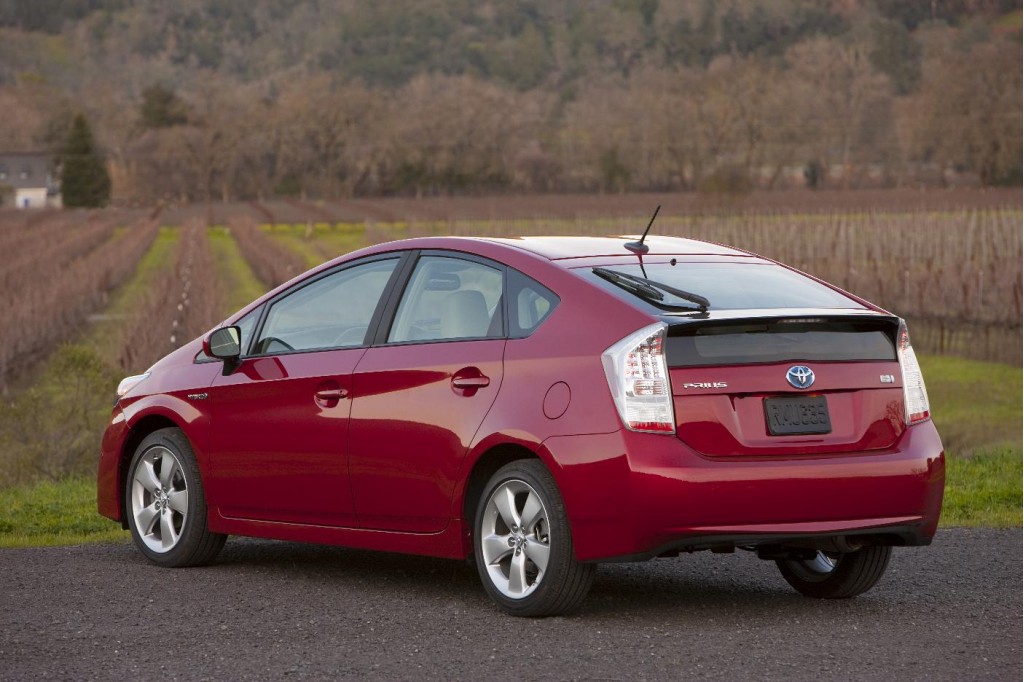
2010 Toyota Prius
The article goes into some detail on projections both by auto analysts such as J.D. Power and the automakers themselves--including Honda, which expected hybrids to make up 10 percent of its global sales by 2010.
The market failure of the 2010 Honda Insight hybrid, which has logged only a fraction of its predicted sales, means Honda hasn't a hope of getting near that number.
The Fortune article is worth reading, and then we'd like to throw out some questions to you, our readers.
Why haven't hybrids sold in greater numbers? Should they have? Will they make up the difference in years to come?
And what can this teach us about predictions for sales of plug-in and electric vehicles over the next 10 years?
Will plug-ins overtake hybrids, or will both technologies increase in number as fuel economy and carbon emissions standards tighten globally?
Let us know what you think in the Comments below.
+++++++++++