Oh, the pain. We hear about all those special European models with astoundingly high gas mileage ratings, and we wonder, why can't we have them here?
The latest is the 2012 Ford Focus ECOnetic, which goes on sale in Europe later this year.
During its debut yesterday at the Amsterdam Auto Show, Ford projected that the Focus ECOnetic will return an amazing rating of 67 miles per gallon.
One caveat: That fuel efficiency rating comes from the European combined cycle test, which usually returns slightly higher figures than the EPA combined rating.
Still, remember, this is the all-new 2012 Ford Focus, a fully up-to-date compact hatchback stuffed with electronic features, safety equipment, and everything else to make driving tolerable. ECOnetic, by the way, is Ford's European sub-brand for the highest gas-mileage version of each model.
And unlike past generations of Focuses, the European versions shares fully 80 percent of its structure, parts, and features between the European and U.S. versions. The North American 2012 Focus has just gone into production at Ford's Wayne Assembly plant in Michigan.
The 2012 Focus ECOnetic is available as a five-door hatchback or a four-door station wagon, though not in the less-aerodynamic sedan model.
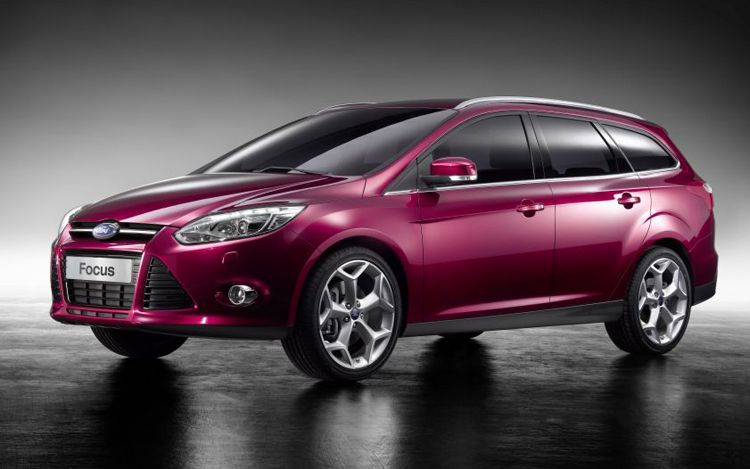
2012 Ford Focus station wagon, launched at 2010 Geneva Motor Show
It uses a 1.6-liter turbodiesel engine, updated to lower internal friction and with a start-stop feature to save fuel when the car is stopped in traffic. It is also fitted with low-rolling-resistance tires.
If the Focus ECOnetic can hit the predicted 67-mpg rating, it will have done better than a pair of hybrids that are among the five compacts with the lowest overall fuel consumption in Europe: the 2011 Lexus CT 200h, also sold here in the States, and the 2011 Peugeot 3008 HYbrid4 diesel hybrid crossover, which is not sold here.
The ECOnetic Focus also uses an electrically-actuated active grille shutter--like those used on the 2011 Chevy Cruze Eco and the 2012 Buick Lacross with eAssist--to close off its lower front air opening at higher speeds when the cooling air isn't needed, lowering its aerodynamic drag and hence reducing its fuel consumption.
Is Ford likely to sell the 2012 Focus ECOnetic in the States? That depends.

ford fiesta econetic motorauthority 002
Automakers have long given several reasons that high-mileage European diesels aren't suited to the U.S. market.
But with the news that Chevrolet plans to sell a diesel model of its Cruze compact for 2013, Ford may feel compelled to compete.
Or perhaps the company will just point to the upcoming 2012 Ford Focus Electric model, which eliminates fuel consumption--diesel or gasoline--altogether.
Either way, stay tuned for more in the increasingly interesting game of major automakers competing to raise gas mileage. There will be more, much more, to come.
[Automotive News (subscription required)]
+++++++++++