Let's be real: How many of you out there have ever driven a single mile on E85 ethanol fuel?
Very, very, very few of you, most likely. The fuel composed of 85 percent ethanol blended with 15 percent gasoline is available only in a handful of Midwestern states.
Yet a bill now under consideration by a panel in the U.S. Senate would mandate that 90 percent of vehicles sold in the U.S. by 2016 be capable of running on E85, or what are known colloquially as "flex-fuel" cars.
The measure was introduced in January by Senator Tom Harkin (D-IA), and is cosponsored by three other farm-state senators: Al Franken (D-MN), Tim Johnson (D-SD), and Amy Klobuchar (D-MN).
It is broadly similar to a 2009 House bill that required 80 percent flex-fuel capability by 2015. The Senate panel, however, has not yet scheduled a vote on Harkin's bill.
Predictably, the auto industry is pushing back. In this case, though, the data is on their side.
A representative of the Alliance of Automobile Manufacturers, representing 12 of the largest automakers selling in the U.S., points out that fewer than 2 percent of gas stations offer E85, and those are clustered in a handful of Midwest states.
Automakers have pledged to increase the number of vehicles they offer that accept E85, signing a 2006 pledge to make 50 percent of its production flex-fuel capable by 2012.
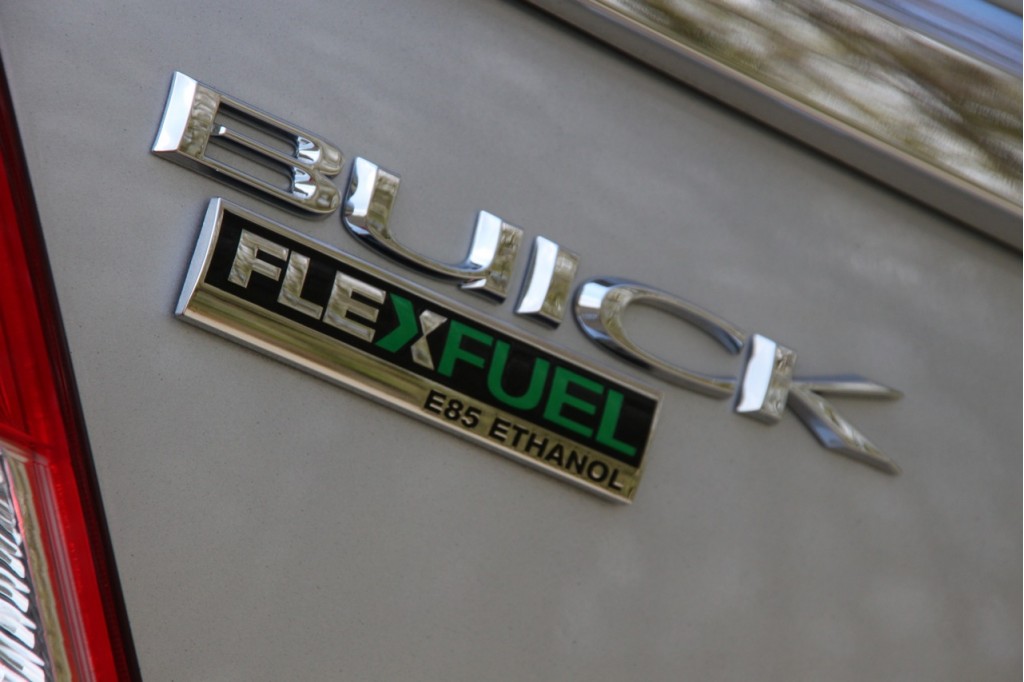
2011 Buick Regal flex-fuel badge
This year, for example, every 2011 Buick Regal will offer flex-fuel capability as standard. Similarly, Ford doubled its production of flex-fuel vehicles between 2006 and 2011.
But the industry will still be far from attaining 90 percent capability under current plans. While more than 8 million vehicles on U.S. roads can run on E85, virtually none actually do.
Ethanol has a lower energy content than gasoline, so the more ethanol you add, the lower the gas mileage gets. That means that even if a gallon of E85 costs the same as a gallon of gasoline, the cost-per-mile is significantly higher.
Carmakers originally liked flex-fuel vehicles because adding less than $100 of equipment to make a vehicle flex-fuel compatible was a cheap way to get extra credits toward meeting Corporate Average Fuel Economy (CAFE) gas-mileage requirements.
It didn't matter if not a single drop of ethanol ever entered the tank--which it pretty much never did--they still got the credits. But the credits only last through 2015.
Starting in 2016, automakers will only get credit for building flex-fuel cars if they can show the cars are actually running on E85.
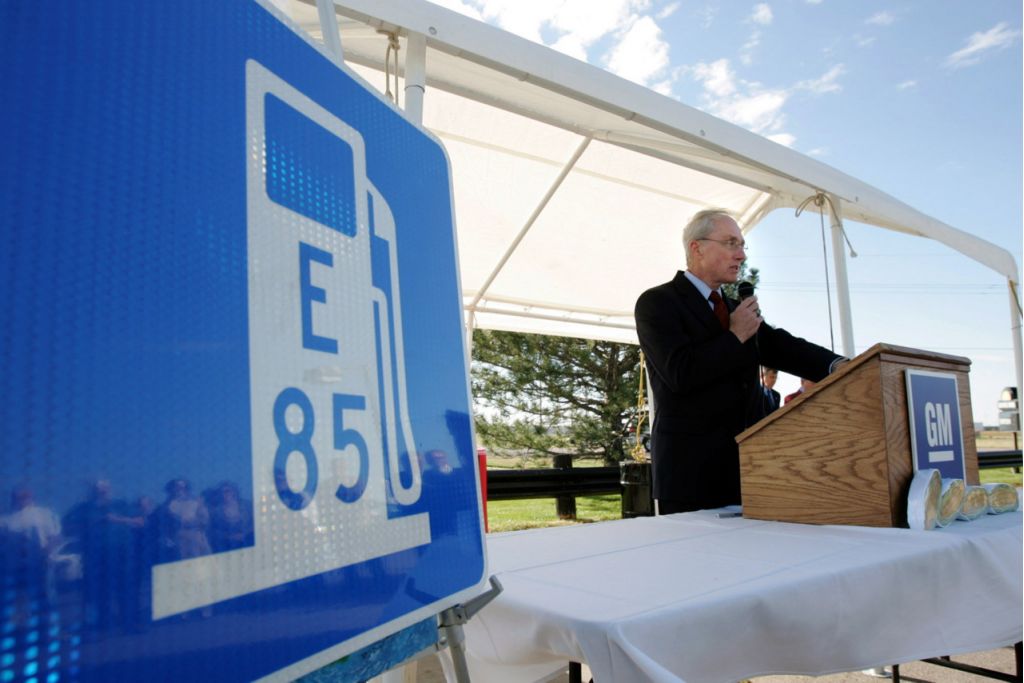
GM E85 presentation
Which at the current pace of ethanol production and distribution, seems pretty unlikely indeed.
The new bill, says the AAM's representative, amounts to nothing more than a tax on car buyers. Yes, their cars could run on E85, but they likely never will.
Much more likely is that they'll run on E15, which adds another 5 percent ethanol to the mixture we all burn today, which can contain up to 10 percent ethanol.
The EPA has approved E15 for use in cars built from 2001 to the present, but a House measure barred the EPA from proceeding with the change. The more-ethanol-friendly Senate has not approved that measure.
And so the drama--we call it democracy--continues.
+++++++++++