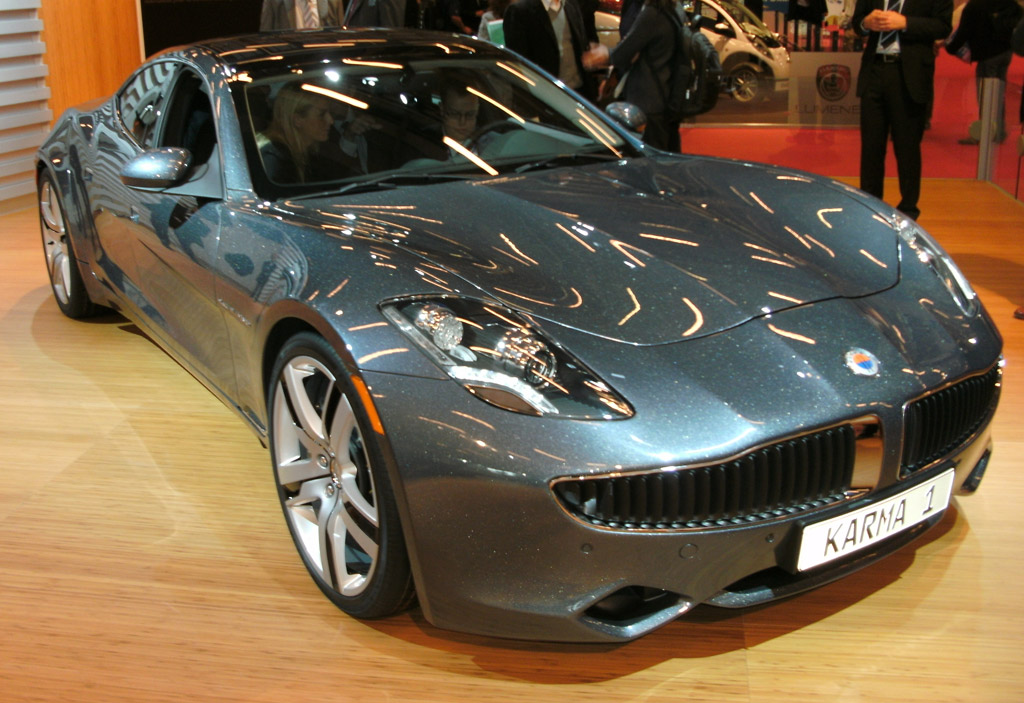
First factory-built Fisker Karma live photos
Electric cars like the 2011 Chevrolet Volt and 2011 Fisker Karma get around the problem of range anxiety the old-fashioned way: They use gasoline engines.
They do it because the battery systems of pure electric vehicles are large, heavy, and expensive, but the range they produce is still ...limited.
A series hybrid, like the Volt or Karma, makes do with a smaller battery system that keep the vehicle totally clean for almost all typical daily commuting, but still offers full normal range via the secondary, range-extending gasoline engine.
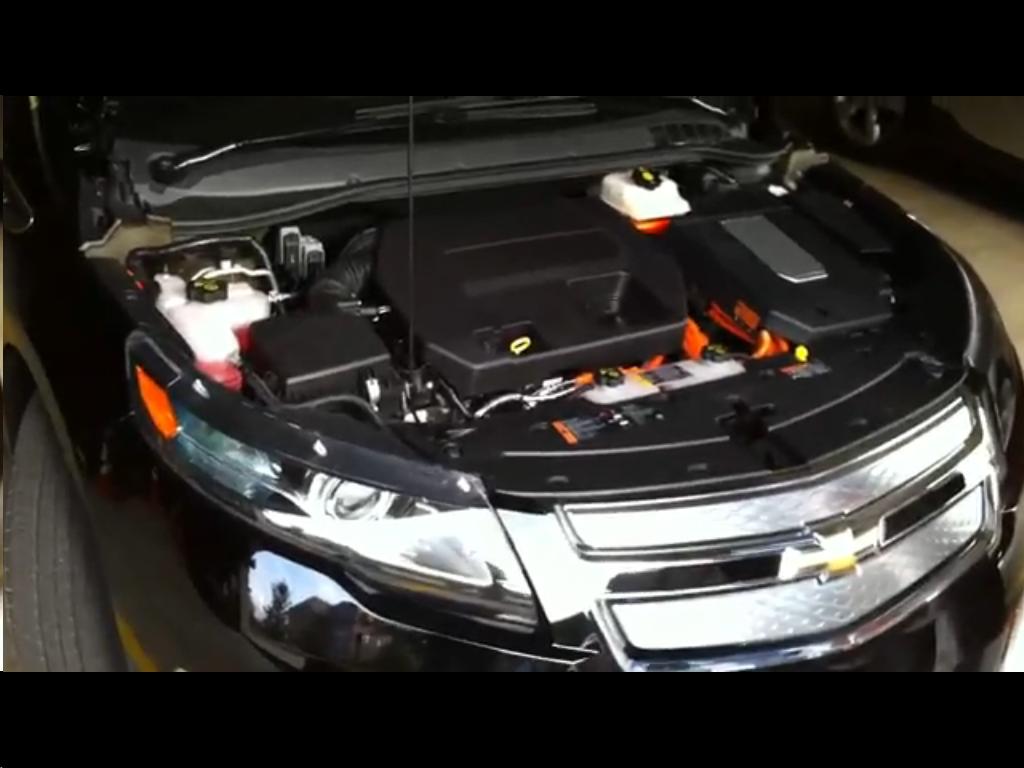
2011 Chevrolet Volt with hood open, showing range extender engine and Voltec drive
By 2014, we should see such series hybrids using gasoline or diesel engines, even turbines, designed solely to generate electric current.
These purpose-built range extending powerplants will be both very clean and much more efficient than what we see now in the introductory, "version 1.0" models of the Chevy Volt and Fisker Karma.
Off-the-shelf engines
Both cars are very special forms of hybrid cars, meaning they have two types of powertrain. The more technical description is a series hybrid (where the gas engine does NOT drive the wheels) as compared to a parallel hybrid (e.g. 2011Toyota Prius, 2011 Hyundai, Sonata Hybrid, 2011 Ford Fusion hybrid), the better-known form of a hybrid.
Perhaps the most glaring weakness in the 2011 Chevy Volt is the mundane design of its gasoline engine. After around 40 miles, the 2011 Chevrolet Volt's battery has reached its discharge limit and the gasoline engine takes over as the "range extender."

2011 Chevrolet Volt drive test, March 2011
General Motors specifically calls the Volt an "extended range electrical vehicle," or EREV, and the Fisker Karma uses a similar format with a larger initial battery capacity that it claims gives more like 50 miles of clean electrical operating range.
The 2011 Karma has a more powerful 2.0 liter, 260-hp turbocharged gasoline powerplant compared to the 74-horsepower, 1.4-liter engine in the 2011 Volt. Both gasoline engines were sourced from standard General Motors items, and neither was specially designed to power a generator.
Design weaknesses
The 2011 Chevrolet Volt's "off the shelf" gasoline engine was early to market, but it's currently not refined enough to meet the strict emissions standards of the California Air Resources Board for full "clean vehicle operation."

2010 Honda Civic GX natural-gas vehicle, Los Angeles, November 2010
GM has said that the 2012 Volt will have a more polished gasoline engine and thus meet these more demanding standards. In not meeting these more rigorous emission standards, the Volt does not qualify for either the California $5,000 clean vehicle rebate, the electric vehicle parking permit, or a freeway single-occupant carpool lane permit.
Future, Application Specific Range Extender Engines-
Lotus Engineering has announced the development of a new engine designed especially for range extending applications. This very compact 1.2-liter three-cylinder engine with an integrated generator holds the promise of being both lighter and cleaner than the current "off the shelf" options used in the 2011 Volt and 2011 Karma.
Lotus reports "several companies" are in negotiations to license this design for future electric drivetrain applications. Other engine designs are possible as well, including rotary or Wankel engines. Michigan State University Engineering Faculty have been working on a new twist on what might be called a rotary engine.
Funded by a $2.5 million federal grant, the engineers at MSU are now proceeding to scale up their prototype work solely to act as a range extender engine for electric vehicle applications.This "wave rotor" design holds the promise of high energy output, very clean combustion, and and amazingly light and compact format.
+++++++++++