We approach energy policy with care here, since GreenCarReports is largely about ... well, cars.
But a recent article claims it could take just 40 years to convert the bulk of the world's global energy usage from fossil fuels to renewable energy, primarily wind and solar power.
That's not only vehicle fuel, but also electric-power generation, home heating, and the many other global activities that rely on the remarkably high energy density of the hydrocarbon molecules in coal, oil, and natural gas.

Beijing smog
Researchers from Stanford University and the University of California-Davis published their analysis in the journal Energy Policy.
Measuring costs vs benefits
The main challenges, say the authors, will be summoning the global will to make the conversion. "There are no technological or economic barriers to converting the entire world to clean, renewable energy sources," said author Mark Jacobson, a Stanford professor, saying it is only a question of "whether we have the societal and political will."
Another challenge: accurately accounting for both the costs (which are comparatively easy to tally and project) and the benefits (which are tougher).

Power lines by Flickr user achouro
When looking at the cost of junking half a century's worth of existing power plants, for example, how can electric utilities benefit from the tens of billions of dollars in public health costs that will be avoided in the future once those emissions are no longer being generated?
Those public-health benefits might include saving 2.5 to 3 million lives each year.
And then there's the benefit of halting climate change, not to mention reductions in water pollution, and increased energy security as more of each nation's energy is generated from within its own borders.
Step One: New generation from renewables
The authors assessed the costs, benefits, and materials requirements necessary to convert the bulk of the world's energy usage to renewable sources.

Nissan lithium-ion battery pack plant under construction, Smyrna, Tennessee, Jan 2011
Just as it will do over the next few decades for cars, electricity will play an increasingly large role, with 90 percent from wind turbines and various forms of solar generation.
Hydroelectric and geothermal sources would each provide about 4 percent of the total, with another 2 percent from wave and tidal power.
Vehicles would run either on electricity provided by the power grid, or hydrogen stored under high pressure and converted to electricity in a fuel cell. Airplanes would be fueled with liquid hydrogen. But, crucially, the hydrogen would all be produced electrically, with the electricity coming from those same renewable sources: wind, sun, and water.
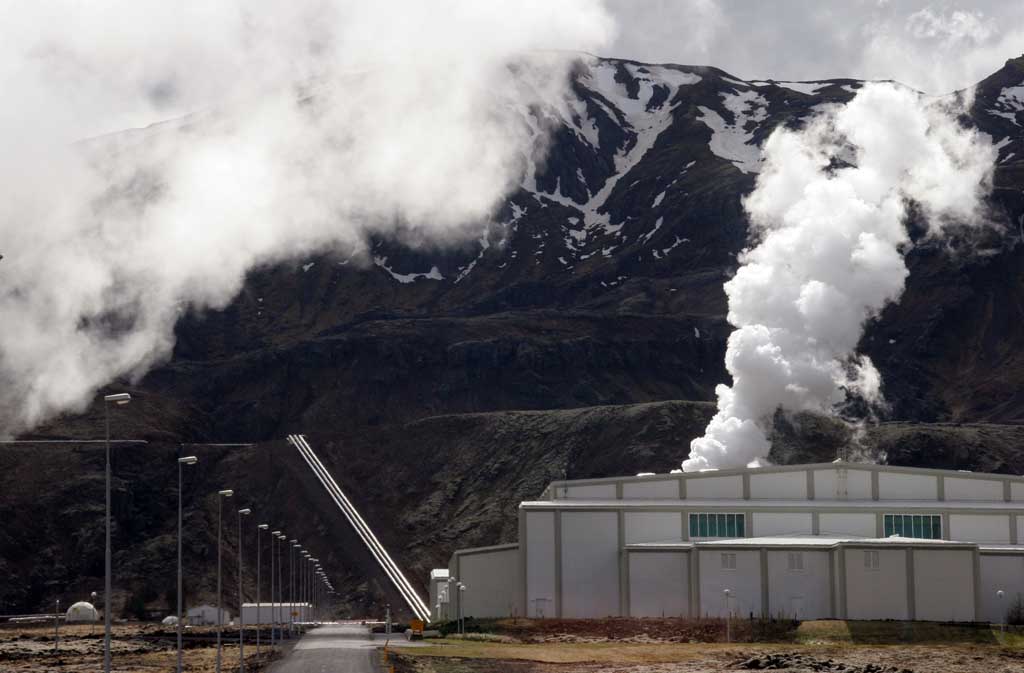
Geothermal Power Plant in Iceland
The analysis shows that the land and raw materials needed won't pose a problem. What will be needed is a much more robust electrical grid. By 2030, say the authors, all new generating capacity can be provided by renewable sources, with no further fossil-fuel plants built globally.
Step Two: Shutting down the old stuff
Then comes the second stage: starting to convert existing generating plants from fossil fuels to renewables. That, say the authors, will take another two decades.
End game: By 2050, fossil fuels will have been replaced for more than 90 percent of global energy use. The world's citizens will do more things electrically, from heating their homes to commuting to work, and the carbon footprint of industry, transportation, and other sectors will be approaching zero.
Is it real? We're not capable of assessing the paper, which comes in two sections: Part I and Part II, both of which we invite you to read for yourself.
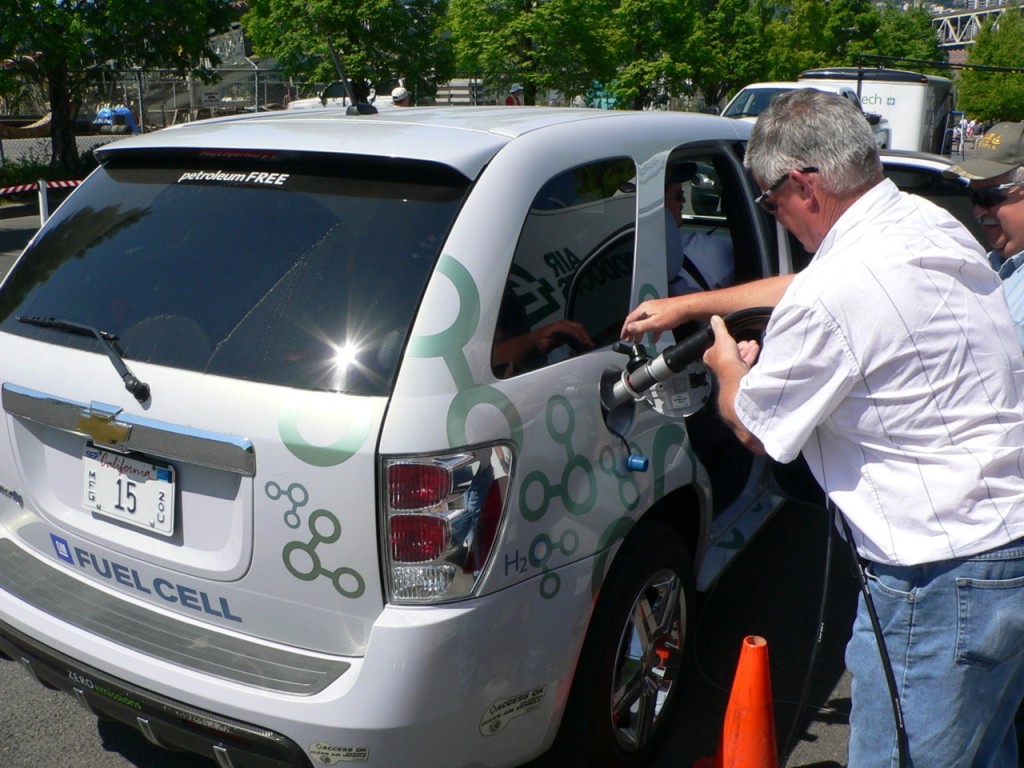
Chevrolet Equinox Fuel Cell with mobile refueler
For cars, electricity and gasoline
But for cars and other vehicles, the conversion to electricity is real. It's just starting now, but electric cars will expand substantially this decade, and become a substantial part of total vehicle production after 2020. During this decade, the two "fuels of the future" will be electricity and gasoline.
Beyond that, we can't project. Carmakers will presumably have reduced the cost of hydrogen fuel cells by then to parity with gasoline engines, piggybacking on the work done in electric propulsion for battery electric cars. Then there's just the distribution problem for hydrogen.
Still, it's nice to know that smart people believe a largely green energy future is possible, and achievable, and offers enormous measurable benefits to offset the obvious costs and challenges.
So here's the question: Do we have the will to do it, as a country and, even more importantly, globally?
Leave us your thoughts in the Comments section below.