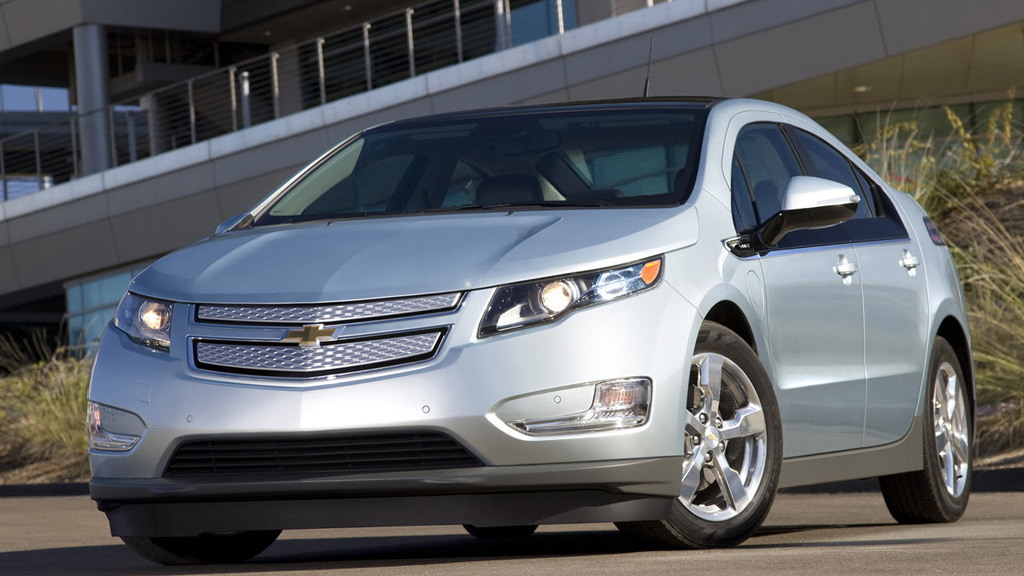
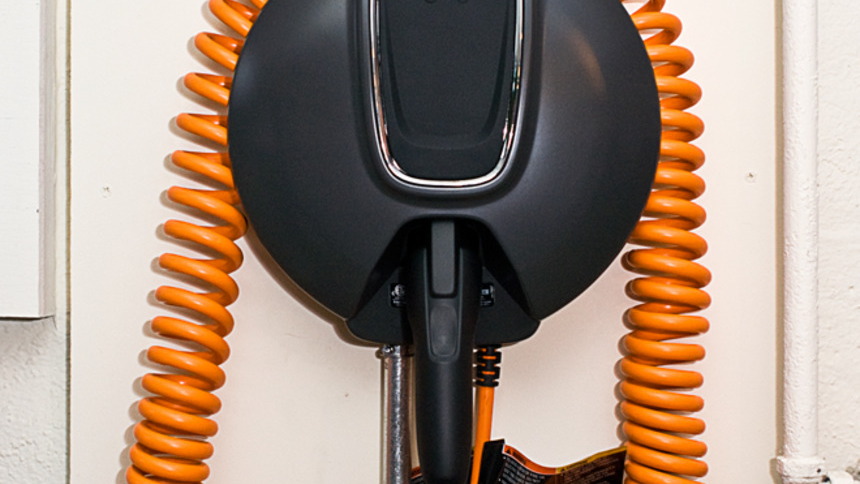
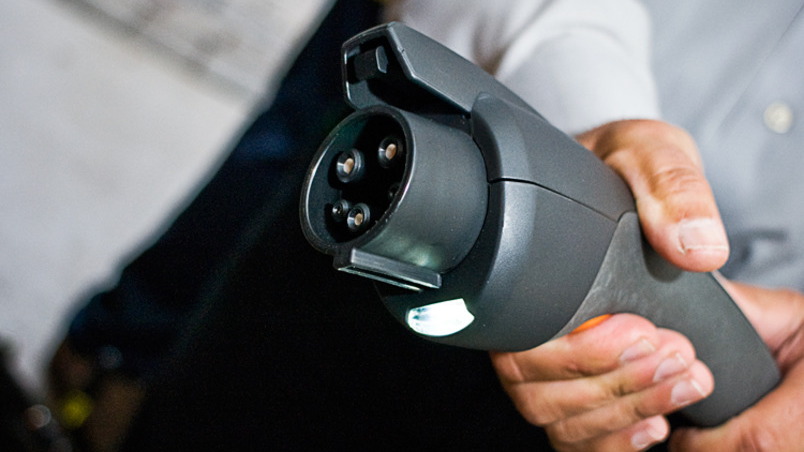
Your shiny new 2011 Chevrolet Volt is sitting in the garage, fresh from its maiden voyage on electric-only power. But it's 2 a.m. and you have to be at work by 8. Charging takes 10 hours on standard 120-volt power, and you didn't buy this thing to run it on gas during the morning commute. The solution? A $490 Voltec 240-volt charger from GM that can have your car charged in just four hours.
Beware, though: installation is estimated at $1,475 on top of the purchase of the charger, though it may range higher or lower depending on the readiness of the destination house.
Competitive Pricing
The Volt itself may be priced a bit on the high side for the current crop of EVs to help cover its dual-mode range-extended capabilities, but the charger is actually quite competitive. The Nissan LEAF's standard charger is estimated to cost around $2,200 including the $700 charging unit and installation.
On the other hand, the LEAF's 440-volt quick-charge upgrade (available only on the SL model) can top up the battery pack to 80 percent of capacity in just 30 minutes, a much quicker--if still tethered--solution, though Nissan hopes to have the quick-charging stations available along the road in most of the major sales cities. Volt's ability to generate its own power on the go comes built-in, and costs just $3.00 per gallon or so--plus a slightly larger carbon footprint.
The standard LEAF charger, however, is more analogous to the Volt's upgraded charger, as both are 240-volt units, with the Volt's smaller battery capacity accounting for the difference in the LEAF's standard eight-hour charge time and the Volt's upgraded charger's four-hour charge time.
Installation and Incentives
The installation process will be handled by SPX Service Solutions, manufacturers of the Voltec 240V charging unit. The company will take care of the entire process, including the home survey, permitting, coordination with utility companies, and identification of government programs or incentives for less expensive electricity rates to charge the EV.
Several California utilities, for instance, are already offering reduced rates for EV charging, including those in Sacramento, Los Angeles, San Diego, and all areas covered by Southern California Edison. The rates typically apply during both peak and off-peak hours, and vary in their amount from a fixed $0.025 per kilowatt-hour discount (Los Angeles) to a floating 50 percent discount (Sacramento).
But Is It Worth It?
The question for Volt buyers will be: is the roughly $2,000 expenditure on top of the (likely incentivized) purchase price of the 2011 Volt worth the convenience of a full charge in six hours less time than a standard 120-volt charge? That will depend on how the vehicle is used.
If the owner drives the Volt within its design parameters, the 10-hour overnight charge won't likely be an issue, as the 40-mile electric range covers their daily needs. If, however, the owner is looking to push the Volt into longer-haul electric-only service, the charger could effectively double or triple the car's daily electric-only range, provided strategic recharging.
Given the Volt's on-the-go electricity generating capabilities, however, it remains to be seen how many will opt for the quicker charge as a matter of necessity. For many the value equation won't matter--it will simply be a convenience.
[GM, U.S. DOE]