Almost a year ago, we called Bentley's much-touted biofuels strategy "bogus," in an alliterative headline to a piece that was much forwarded around the green-car world.
Now we've had a chat with the very reasonable and polite David Reuter, Bentley's head of PR and communications.
We still think almost zero Continental Supersports models will ever run on ethanol, but we now understand the company's point of view somewhat better.
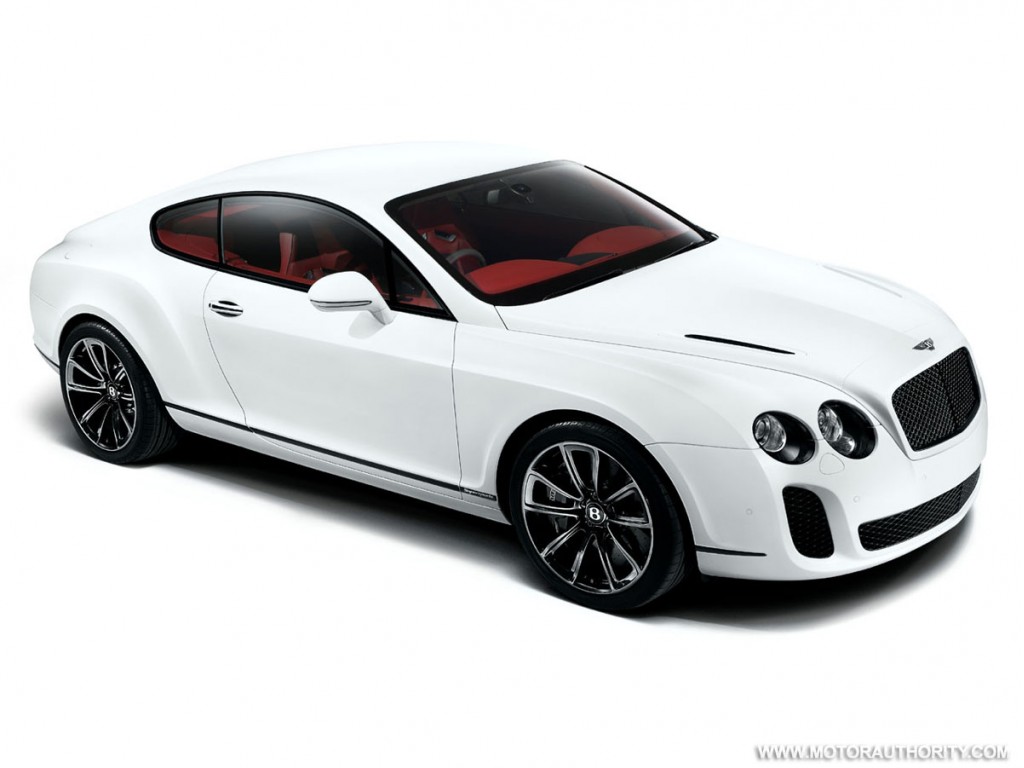
2009 bentley continental supersports 004

2009 bentley continental supersports 015

2009 bentley continental supersports 007

2009 bentley continental supersports 016
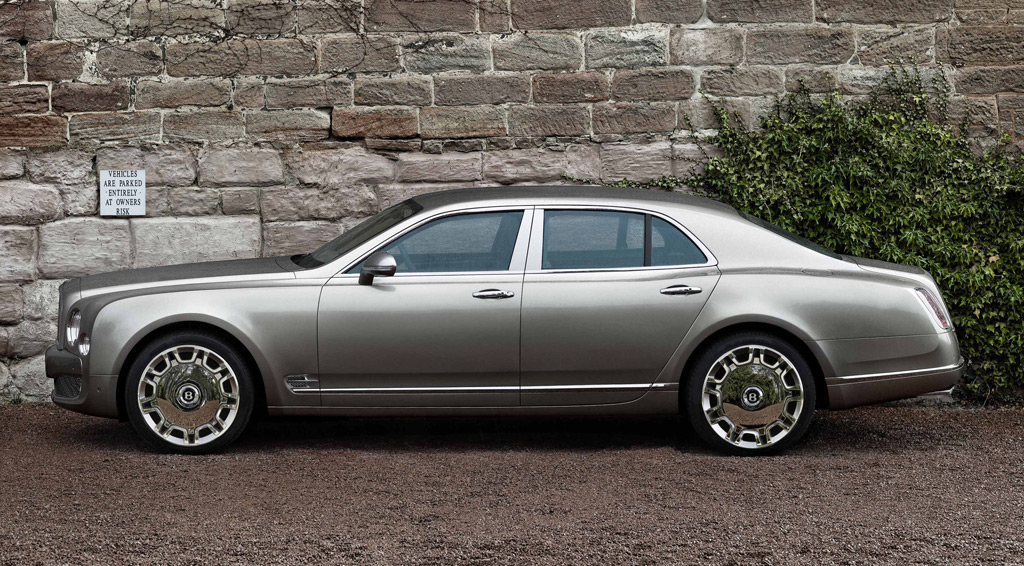
2011 Bentley Mulsanne
We'd summarize Reuter's several points as follows:
Customer expectations: Bentley listens very, very closely to its customers. Any Bentley is a discretionary purchase, and wealthy folks often have strong opinions on what they want, like, and expect.
At the moment, customers are saying that they expect Bentleys to have torquey, high-output gasoline engines. Not smaller, revvier engines; not hybrids; not electric drive; not even diesels (except, perhaps, for a few German Bentley buyers who'd go for them).
But buyers also want their Bentleys to be as green and fuel efficient as possible, and to accommodate future fuels if and when they're introduced. That means making every new Bentley capable of running on ethanol blends from the current E10 all the way to E100.
Effort almost complete: Despite the first few hundred Supersports not being E85-capable, Bentley is pressing on to make every model biofuel-ready. That effort will be complete when the 2012 Bentley Mulsanne is launched next year, by the way.
Ethanol is a renewable fuel manufactured out of biomass, so a car running on pure ethanol emits only as much CO2 as what the plants sucked out of the air to begin with. Hence, CO2 footprint is close to zero. There's more to the argument, but we'll leave it there for now.
Low production: Bentley sells so few cars--5,000 last year, only 10,000 in 2007, their best year ever--that compared to the output of major automakers, the cars' emissions are a rounding error at best.
One-tenth of a mile per gallon better on every Toyota and Honda built this year would likely cut far more emissions than taking all 50,000 or so Bentleys built over 90 years off the road entirely.
Long-term planning: Given scarce and patchy E85 distribution, Reuter admits that few if any Bentleys are likely to run on biofuels in the next few years. But he pointed out that Bentley is taking action early to position its cars for the long term.
The company firmly believes that second- and third-generation ethanol--that made from biomass like switchgrass, or even more advanced technologies like algae that grow in sunlight and excrete biofuel--will become a major factor.
And since 90 percent of Bentleys made since 1920 are still on the road, today's owners want to know that their cars will run on greener fuels 10 or 20 years hence.
Distribution is the problem. Reuter acknowledged that given the lack of business incentives for oil companies to sell non-oil-based fuels in their stations, government incentives may be needed to kick-start widespread ethanol distribution.
He also agreed with the notion that much of the ethanol consumed a decade hence may be in blends like E12 or E15. The Environmental Protection Agency and automakers are still studying those formulations to find out if higher ethanol content will damage older cars.
New engines coming. Finally, Reuter hinted that Bentley has far more efficient engines on the way. It will launch a new powertrain for the Continental by 2012, he said, that will reduce emissions and fuel consumption up to 40 percent--a remarkable rise.
While he wouldn't provide any details, he noted that the latest version of the classic 6.75-liter Bentley V-8 fitted to the 2011 Mulsanne is essentially an entirely new engine compared to its same-sized predecessors.
Will the Continental's twin-turbo W-12 undergo the same process? In a gracious, refined, very Bentley way, Reuter said he wasn't going to tell us. Stay tuned on that front.