National Research Council Report on PHEVs and EVs May Be Biased


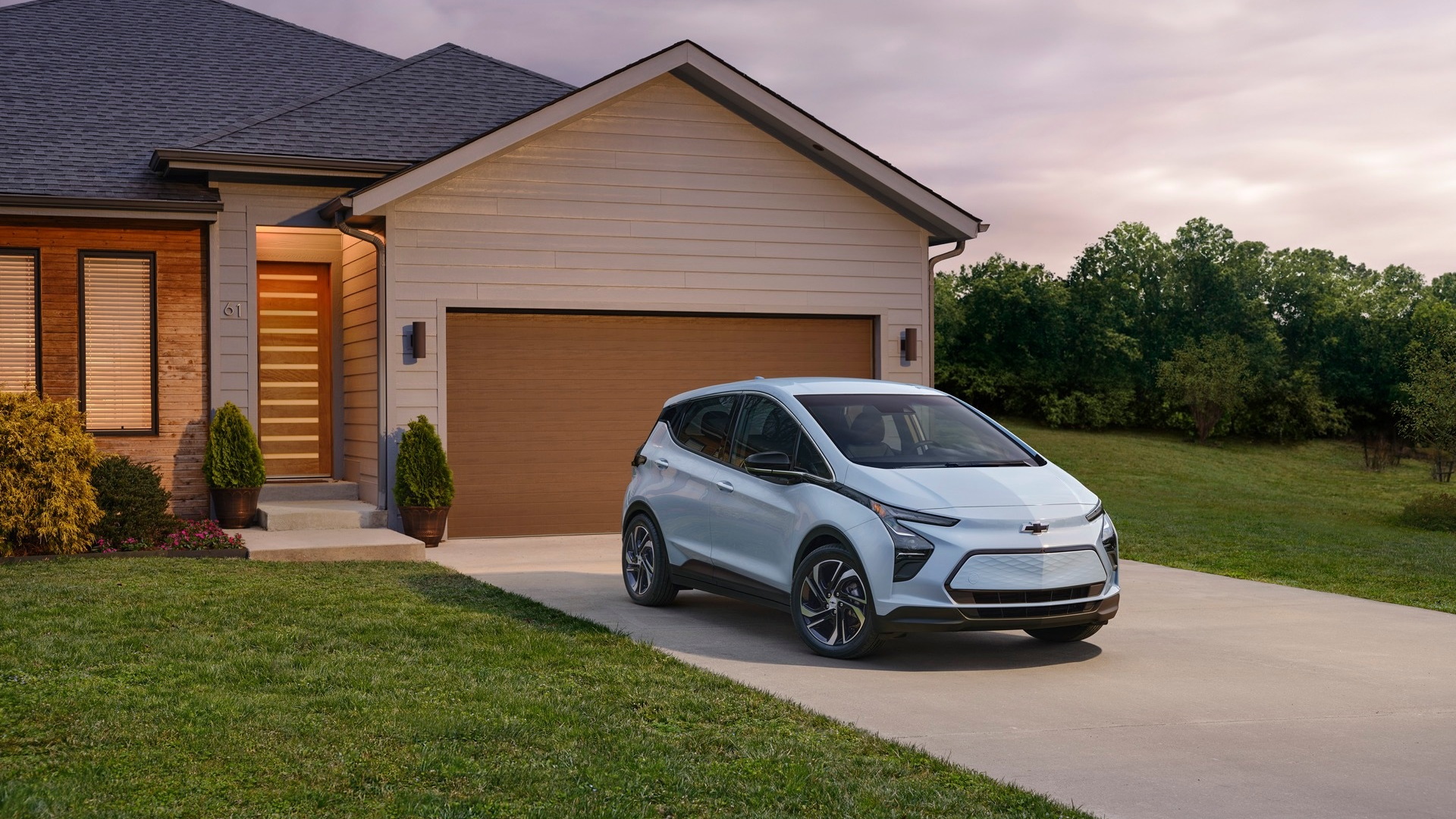
Chevy Volt

Chevy Volt

Following up on a piece we ran on December 18th titled "  PHEVs and EVs To Cost Tens of Thousands More Than Gasoline Counterparts for Next 20 to 30 Years", we would like to offer some additional information that has been pointed out to us.  Many who commented note that the National Research Council could indeed be biased and the truth is, their report likely is.  Here's why.

According to Felix Kramer of Cal Cars, and a proponent of plug in vehicles the group that the National Research Council assigned to do the report on plug-in was non other than the Committee on the Assessment of Resource Needs for Fuel Cell and Hydrogen Technologies.

The committee was formed to do research and report on the needs of hydrogen vehicles.  Their research indicated that hydrogen vehicles would need strong governmental support in order to move forward.  After completing their work, this same group conducted a full scale study on plug-in vehicles.

As we know, supporters of hydrogen technology and those who support electric vehicles don't typically show strong support for each other.  Both groups tend to believe that their technology is more advanced and soon to be the dominant technology of the automotive industry.

The reason for argument between the two groups really comes down to money.  Both supporters of hydrogen vehicles and those who support plug-ins are in need of financing.  Each group tries desperately to secure additional money for research and development purposes and the battles will continue to wage on.

So back to the point at the opening of the story, the report from the National Research Council was submitted by the Committee on the Assessment of Resource Needs for Fuel Cell and Hydrogen Technologies.  Read the report and its findings with this in mind.

Source:  Edmunds.com



Posted in:
 
Follow Us


Have an opinion?Join the conversation!

  • Posting indicates you have read this site's Privacy Policy and Terms of Use
  • Notify me when there are more comments
Comments (13)
  1. Maybe.
    A look at the committee members show a mix of ex-petroleum execs, govt consultants/employees, analysts and academicians. With business and economic credentials. Yes, mostly with Hydrogen experience, but also electric vehicle and other alternative fuel experience.
    While they may have a "bias" (and who doesn't), their credentials would indicate that they might be able to rise above that.
    Last thought, even if they allowed their bias to influence the report, that doesn't mean it is baseless.
     
    Post Reply
    Vote
    Bad stuff?

  2. Link to original article and comments:
    http://www.allcarselectric.com/blog/1040277_phevs-and-evs-to-cost-tens-of-thousands-more-than-gasoline-counterparts-for-next-20-to-30-years
     
    Post Reply
    Vote
    Bad stuff?

  3. "Last thought, even if they allowed their bias to influence the report, that doesn't mean it is baseless."
    They claim, out to year 2030, gas will remain at same price, they claim cost of batteries will only go down by 30% (from a figure 30% higher than to-days cost), Only Fuel Cell Cars will drop dramatically in price.
     
    Post Reply
    Vote
    Bad stuff?

  4. Despite their alleged "credentials" the report was definitely biased. It ignored the fact batteries will become better and cheaper as the technology improves and mass-production occurs. Thankfully, your readers didn't buy this load of manure and your blog had the guts to call them on it.
     
    Post Reply
    Vote
    Bad stuff?

  5. Thanks for this report. It was immediately clear that it was a typical example of "rent-a-prof science", i.e. rigging the inputs in order to arrive at a pre-defined result and now we know why.
     
    Post Reply
    Vote
    Bad stuff?

  6. hey webva , while your sitting in your cosy office at EXXON , pls consider that battery price is dropping at a rate of 5-7%/year , while performance is increasing by about 5%/year...go figure....you'll remain the only one using oil in 10-15 years....and you'll be living in a reservation...for dinausaurs...:),...don't worry , we'll preserve you....in a museum...:)
     
    Post Reply
    Vote
    Bad stuff?

  7. I just basically ignore this stuff anyway. When I see real cars in a real marketplace at real prices, I will be able to do the math for myself. And car purchases are driven by a lot more than bottom line cost analysis anyway. Otherwise, everybody would be driving a Hyundai or an Aveo, and Mercedes, BMW, Audi, et al, would be long since out of business.
    I want to make a statement about saving US jobs, reducing oil imports, stopping the "need" for oil wars, reducing air pollution, ASF. And I'm willing to spend a fair amount of money to do it.
    LJGTVWOTR!!
     
    Post Reply
    Vote
    Bad stuff?

  8. It is a bias article…basic technology advancements in the electronic market place will drive the battery prices down far greater than what they predicted. A perfect example is the plasma television. In 1997 you could buy a plasma TV for $15k and due to advancements you can now get one at Walmart for under $800. That is a 95% drop in price……I predict the same for automotive batteries…
     
    Post Reply
    Vote
    Bad stuff?

  9. MAY be biased? NOT just biased, is incompetent. They assume gas will cost $4/gallon in 230! WTF
     
    Post Reply
    Vote
    Bad stuff?

  10. 2030 that is. They also assume batteries in a pack cost $1440/KWH! GIGO!
     
    Post Reply
    Vote
    Bad stuff?

  11. Someone said the committee members' previous affiliations would somehow allow them to rise above their bias? Non-sense. They wrote the report for a reason, and they have NO REASON to promote electric cars. They have every reason to trash electric cars. Cui Bono?
    The report manipulates the data.
    There is so much at stake here, you can hardly underestimate how important it is for the big exec's, politicians, & bankers to delay the introduction of electric cars as long as possible.
    If electric cars became available, in great numbers, very quickly, suddenly the need for drastic environmental solutions (carbon tax & international governance, industrial restrictions, etc) evaporates.
    Pollution (which comes mainly from personal vehicles), reduction of natural resources & economic crisis are the basis for the move towards world governance.
    Electric cars go a long way to remedy all 3 of these problems.
    Electric cars would lift a huge financial burden & source of (fossil fuels) national insecurity from our shoulders. This would result in a measurable loss of control for our elite/global bankers & oil cartels.
    The suppression of electric car technology began in earnest when Standard Oil began providing massive subsidies for Henry Ford's cars almost 100 years ago, "putting a gasoline car in every garage", the same way your cell phone service provider pays a large portion of the purchase price for you expensive mobile phone, when you sign a contract.
     
    Post Reply
    Vote
    Bad stuff?

  12. Credentials don't make an accurate report and this report is inaccurate. Battery cost quoted are about 3 times the retail market price today and large lithium battery prices are dropping very fast. See my blog on EVWorld.com. http://evworld.com/blogs/index.cfm?authorid=46&blogid=826&archive=1 and http://evworld.com/blogs/index.cfm?authorid=46&blogid=830&archive=1
     
    Post Reply
    Vote
    Bad stuff?

  13. Correction . . . the report doesn't say gas will be $4/gallon in 2030. It is actually WORSE than that . . . it says gas will be $4/gallon in 2050! It indicates gas will costs $3.50 in 2030. It costs $3.50 for premium down the street from my house. I didn't realize I was living in 2030!
     
    Post Reply
    Vote
    Bad stuff?


Have an opinion?Join the conversation!

Find Green Cars

Go!


© 2011 Green Car Reports. All Rights Reserved. Green Car Reports is published by High Gear Media. Send us feedback. Stock photography by Homestar, LLC.