Advertisement

Faceoff: 2011 Chevrolet Volt Vs 2012 Toyota Prius Plug-In Hybrid

 
Follow John

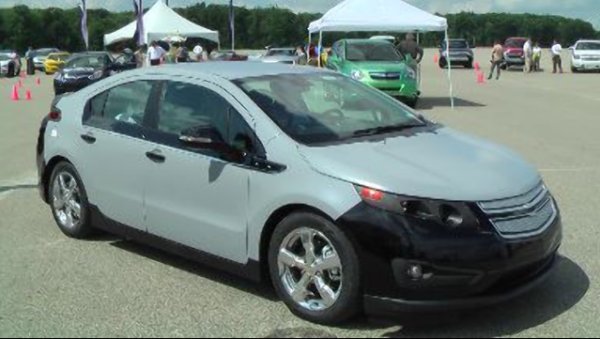
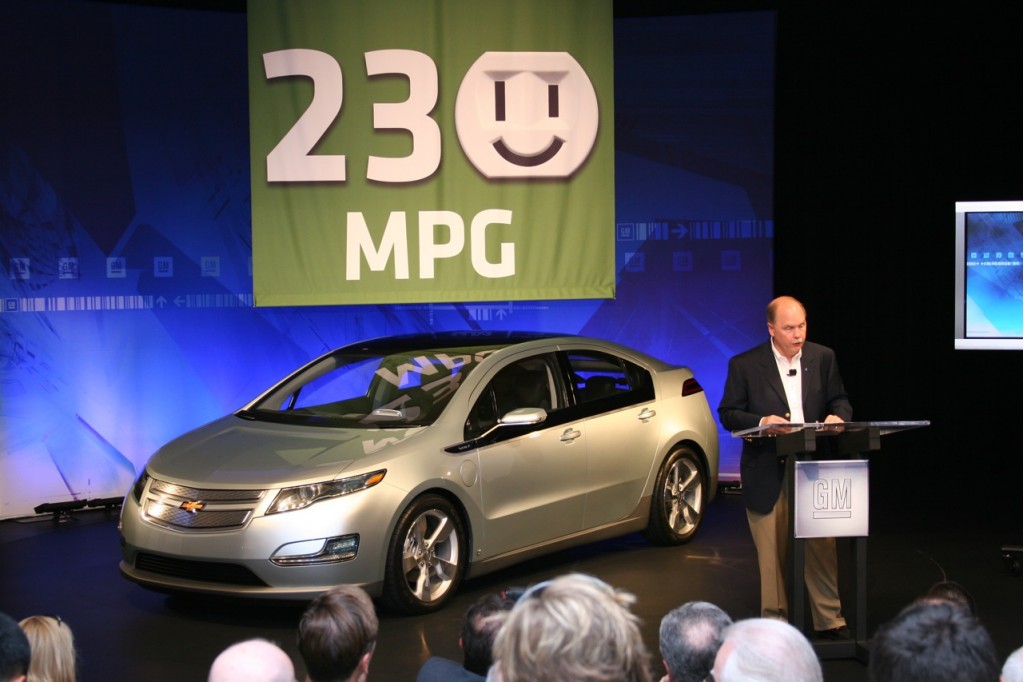
2011 Chevrolet Volt

2011 Chevrolet Volt

Enlarge Photo

Related Photo Galleries


See more photos »

Toyota and GM are the auto industry's heavyweights. Each has stumbled this year; General Motors collapsed into bankruptcy and Toyota is beset with embarrassing recalls that may dent its reputation for reliability.

Each also has a plug-in car coming. The 2011 Chevy Volt will hit dealers in less than a year's time, and a plug-in version of the Toyota Prius will be go on sale sometime before the end of 2011, with small numbers being tested in fleet use starting next month.


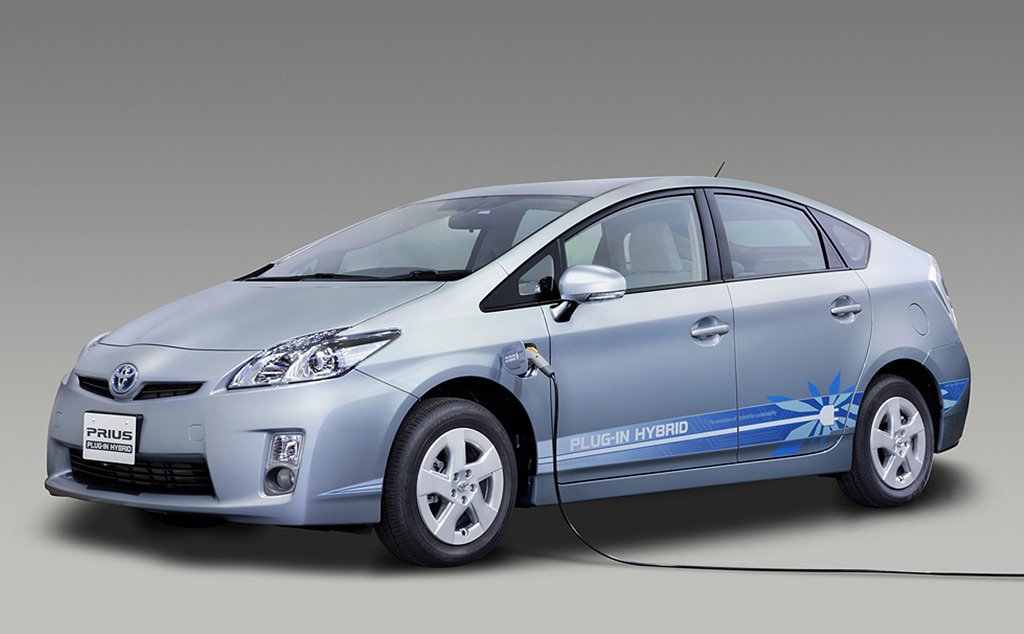
2010 Toyota Prius Plug-In Hybrid, 2009 Los Angeles Auto Show

2010 Toyota Prius Plug-In Hybrid, 2009 Los Angeles Auto Show

Enlarge Photo

2010 chevrolet volt 009

2010 chevrolet volt 009

Enlarge Photo

2010 Toyota Prius Plug-In Hybrid, 2009 Los Angeles Auto Show

2010 Toyota Prius Plug-In Hybrid, 2009 Los Angeles Auto Show

Enlarge Photo

So how do these two heavyweight plug-in cars stack up to each other?

BODY STYLE & SIZE

Both are five-door hatchbacks. The 2011 Chevrolet Volt is a compact, while the current Toyota Prius has enough interior space to qualify it as a midsize car. That aside, not a lot of differences.

TOTAL RANGE

Both plug-in vehicles offer a continuous range of more than 300 miles. In either case, your bladder may give out before the car's range does.

Chevrolet: The 2011 Volt will run at least 40 miles on electricity under any circumstances, plus "at least 300 more miles" using the 1.4-liter range-extender engine to generate electricity to power it, Volt vehicle line manager Tony Posawatz told us.

Toyota: The combined range of the Prius Plug-In Hybrid hasn't been revealed yet, but it could be more than 600 miles. That's definitely longer than most people can drive without stopping.

ELECTRIC RANGE

This will be the major difference consumers hear about. Chevrolet points out, over and over, that more than two-thirds of American cars run less than 40 miles a day--meaning a Volt might never use any gasoline if it's plugged in each night. The Prius Plug-In can't claim anything like that.

Toyota: The company quotes an electric range "up to 13 miles" for its Toyota Prius Plug-In Hybrid, at speeds up to 60 mph. But the real-world electric mileage will depend heavily on exactly how the car is used. Under some circumstances, that 13 miles may arrive in small segments, with the engine turned on in between.

Chevrolet:  The 2011 Volt will run at least 40 miles on electricity under any circumstances, GM says--meaning, at highway speeds, carrying heavy loads, or in around-town stop-and-go use. And that figure is so well publicized that if the car doesn't live up to it, it'll be pilloried in the press.

HYBRID TECHNOLOGY

This is the biggest difference between the two cars. The Prius Plug-In remains a parallel (or "power-split") hybrid in which the engine and electric motors combine to power the wheels. But the 2011 Volt is a series hybrid, in which the wheels are driven solely by its electric motor.

Toyota: The Prius Plug-In Hybrid increases the battery pack capacity (from 1.6 to 4 kilowatt-hours), switching from the nickel-metal-hydride technology used in all Toyota hybrids to more compact lithium-ion cells. But it runs like a standard hybrid with a longer electric range. So the engine will switch itself on and off at will, including under high-speed conditions, heavy loads, at colder temperatures, and so forth.

Chevrolet: The engine of the 2011 Volt cannot power the wheels directly. The car's larger battery pack (16 kilowatt-hours, or 4 times the Prius Plug-In's) provides uninterrupted electric running for 40 miles, then the engine switches on to provide electric power to the wheels. The big question: Will the experience of pure electric drive for three times the distance give the Volt an edge over a Prius Plug-In engine that stops and starts whenever it wants?


Follow Us


Have an opinion?

  • Posting indicates you have read this site's Privacy Policy and Terms of Use
  • Notify me when there are more comments
Comments (22)
  1. The Volt offers the best option for fuel free driving in and around the city and medium range driving up to around 150 miles per drive. That is what most of us drive year in and year out every day and is the first true electric vehicle that can operate as the primary vehicle for the entire family. No range anxiety, and even in CS-mode the mpg are similar to the current Prius. The Plug-in Prius is probably better for routes longer than 200 miles as it will save more fuel over the long distance
    How ever, the Volt is brand new technology that is only using 40% of its battery at the moment. Once the Volt's range is extended to 100 miles of pure EV range, the Prius, plug in or not, won't be able to compete.
    Both vehicles are awesome but I think we finally have found a real competitor to what has otherwise been a market dominated by Toyota, and the reign of the Prius is coming to an end.
     
    Post Reply
    Vote
    Bad stuff?

  2. The Volt's serial hybrid technology is absolutely superior to the Prius. Basically the Volt sends hybrid technology on a new trajectory. The Volt, and other serial hybrid vehicles, will certainly evolve over time and become a truly impressive platform. Initially GM is using an off the shelf engine for the Volt's generator. I would like to see an optimized air cooled generator in the future. An air cooled generator would be less expensive and require less maintenance. Also the batteries will certainly improve to provide more range and less weight. Eventually the on-board generator will likely be dropped and we'll be in an all electric vehicle world.
     
    Post Reply
    Vote
    Bad stuff?

  3. I agree that the Volt will win the faceoff in the near future. I also agree with Ed in that the gas engine is smaller in the Volt and most likely will cost less to maintain. Ideally there would be no gas engine at all. Smaller, air-cooled generators will prove better than old styled "hybrids" very very soon.
     
    Post Reply
    Vote
    Bad stuff?

  4. Toyota wins. The Prius would beat the Volt in any eco-race. Given a full charge and 10 gallons of gas, the Toyota still needs less energy to run and still has a lower rolling resistance. The Volt saves gas only for those who don't drive much, and saves money and the environment for people who know how to get solar panels for free. As for an air cooled engine (or no engine), that's great for the few living near the tropics. Most of the population gets cold in winter, don't leave us in the cold! I was raised a Chevy man, but honestly folks... nobody buys a Chevy at 100,000 miles expecting to rack up another 100,000. You have to consider the long-term economy too. Those darn Toyotas run and run until they're so outdated and ugly you wish they'd just die. Plus with the Prius' parallel drive, each engine only runs half as much... look on ebay you'll see used Prius cars with 300,000 miles. I doubt we'll see that with the Volt. Resale value, long term driveability, warmth, reliability, Toyota wins this comparison hands-down.
     
    Post Reply
    Vote
    Bad stuff?

  5. wake up. batt.tech will not improve, engine tech will not improve. pity the fools who spend 2x$ for last gen's performance. i doubt a volt can do 40mi on electric in the middle of winter - the driver will probably freeze to death 1st. btw, i get 60mpg rt between LA and SD on my 2nd.gen prius (55-65mph). i challenge gm to come to my apartment and lets see if the volt does better.
     
    Post Reply
    Vote
    Bad stuff?

  6. re:Toyota is beset with embarrassing recalls...
    Are you kidding me? Toyota has has the most and worst recalls of any company ever. Frames in trucks rusting out after just 6 years... if this had been FORD or GM you would have had much more to say about it. GM tests all of it's vehicles at it's 126 mile test tracks which includes a corrosion lab that simulates 6 years of corrosion. My Pontiac Bonneville was 17 years old when we traded it in... it had no major rust and it's original stainless steel exhaust.
    You always find it easy to point out that GM "collapsed into bankruptcy" but never mention that a Chevy Cobalt still costs $45,000 in Japan and Japanese companies build plants in the US and PAY NO US TAXES giving them a $3000 per car advantage over our own GM and FORD. How many Toyotas Hondas etc would sell in the US if we put a $20000 tariff on them just like they do to us?
    No one copied the Prius technology and after 10 years hybrids don't make up 1% of the cars Toyota makes... you call this a success?
    Every company plans on copying the Volt technology and they have a waiting list of over 50,000 before the first one is sold but you still put in your negative digs.... we will give GM the credit they deserve.... maybe some day our media will have some good Japanese Korean or German competition and we may actually get some decent auto journalism in the US for a change.
     
    Post Reply
    Vote
    Bad stuff?

  7. Battery tech wont improve? First of all, battery tech on existing hybrids has already improved over earlier generations, just look at the specs and performance. Secondly, these new cars are using lithium ion batteries. Before 10 years ago, almost no one had heard of them, yet today they power almost every mobile electronic device we own and are getting better. The fact that they are now big and powerful enough to power a car is testiment enough to this fact. You know, there were people who said that the automobile would never be more than a play toy for the rich....being naive enough to think that technology and its proliferation wont advance is ridiculous.
     
    Post Reply
    Vote
    Bad stuff?

  8. You skipped one significant difference between the two vehicles; The Prius has been on the road perfrming up to and beyond it's marketing for over tens years, since 1997 when they were introduced in Japan. My own Prius has been realible, solid transportation in the uper northeast of the US since 2001. It 10 degrees F outside right now. I would not want to rely on an untested GM-designed EV. Not on a hill in Vermont. Not until I see and hear that it's a reliable lives-up-to-it's marketing design. And that's not GM's track record.
     
    Post Reply
    Vote
    Bad stuff?

  9. I love how all these GM lovers are declaring the Volt a superior car without having seen what happens to the things after they've been on the road for a few months.
    See me here in Jan 2011 after the GM's are in the paper every day for falling apart and we'll see what you have to say.
    Also, gotta love the way GM has no innovation. Americans are lazy, and they're gonna get sick of plugging in their car, GM. How about a charging pad a driver can simply lay in their garage and park over, huh?
    P.S. The Volt is also 15,000 more than the Prius. GM lost a ton of sales prying out a few extra MPG in lieu of producing the actual good looking concept model they've been showing off for 6 years. The message boards are filled with potential Volt buyers who are sick over it.
     
    Post Reply
    Vote
    Bad stuff?

  10. @JT: Just one comment, regarding the concept car. Bob Lutz actually admitted that the styling of the concept was developed without regard to aerodynamics, which of course are critical to energy conservation in a car with regenerative braking. He said the concept was more aerodynamic going BACKWARDS than forwards.
    So whether you like or loathe the final version, nothing remotely like the Volt concept was going to make it into production.
     
    Post Reply
    Vote
    Bad stuff?

  11. I remember in the early '80s when gas prices jumped up that there was a great interest in improving gas mileage, and there were hobbyists who made cars that used a serial hybrid configuration much like the volt. Gas prices dropped and all interest disappeared. I like the idea of having an electric motor drive the wheels and only use a gasoline engine run a generator to power the electric motor when needed. I don't understand why its taken so long for this to be produced. I also believe the Volt is more of a step in the direction that we really want to be going - a vehicle that doesn't use gas. By the way, I disagree with the opinion that just because a vehicle is made by Toyota it is automatically better than one made by GM.
     
    Post Reply
    Vote
    Bad stuff?

  12. This car is just wow. And it's really eco-friendly too! Amazing! Oh and I found the Chevy Volt release date
     
    Post Reply
    Vote
    Bad stuff?

  13. Boom! Can't wait for this to come out! OH and I found the release date: http://www.kaycircle.com/index.php?q=What-is-the-Chevy-Volt-release-date
     
    Post Reply
    Vote
    Bad stuff?

  14. The Volt is not the first "extended EV". The fisker Karma is. The automaker should have produced car like this long time ago, until they really find a way to replace the "gasoline generator" with a hydrogen core with fuel cell technology. I guess I don't get into oil industry/auto maker politic.
    Again, the Fisker Karma produces over 400 hp, all wheel drive, but it only uses 2L of fuel per 100kms. It has more torque than a Bugatti Veyron. Don't understand why the Volt can only do 300 miles after the first 40miles on a long trip... A Honda Civic can do better than that... Opps... I guess GM doesn't want to make it so effective... still try to protect their gasoline powered vehicle ?
     
    Post Reply
    Vote
    Bad stuff?

  15. Grammar: You can use the word “between” when you are talking about distinct, individual items even if there are more than two of them.
     
    Post Reply
    Vote
    Bad stuff?

  16. FYI, readers may be interested in knowing that all USA diesel locomotives drive their wheels via electric motors. The diesel drives a generator which in turn powers the electric "traction motors". This technology has been in use since the 1950s. GM's Electromotive Division was a major supplier of these locomotives, made in LaGrange Illinois, until GM finally sold the division. So the Volt concept isn't new to GM. Also note that the GM designed "moon buggy" used in the Apollo missions used electric motors to drive the wheels. Deja vu all over again...
     
    Post Reply
    Vote
    Bad stuff?

  17. GM will never receive another penny from me for any product. Their track record for break-downs is terrible. They have had the technology for electric powered vehicles for years and we could have been reaping their benefits long ago, but because of GM's cozy relationship with Chevron, they have withheld those benefits from the public. The EV-1 was available by lease contract only, and GM cancelled those contracts after making a deal with Chevron over the battery patent. I won't deal with a company who acts like a monopolizing giant forcing their will on the American people.
     
    Post Reply
    Vote
    Bad stuff?

  18. Ha, ha, made you look. It's a regular hybrid and the engine has to turn at speed just like the Toyota, albeit at 70and not 63 like the Toy. The Chevy is juat a Government Motors fraud and customers showing up to look at a Volt will take home the 300HP Camaro.
     
    Post Reply
    Vote
    Bad stuff?

  19. Toyota may have the worst recalls in history, however, put that in perspective of the amount of cars they've sold... and you'll have one of the best production car in history.. the volt is weak at best when compared to production cars coming out for 2011/2012. i would rather purchase the Tesla Model S, for $10k more if i want a TRUE and PURE EV. the Volt have no middle ground, the Prius at mpg and range, the Tesla Model S's for the pure EV and range. only the Volt win at is the high price point.
     
    Post Reply
    Vote
    Bad stuff?

  20. I'd take the Chevrolet Volt over a stupid Japanese car. By then, I'm going to hear more gas pedal floor mat jokes once the Volt dominates the faceoff.
     
    Post Reply
    Vote
    Bad stuff?

  21. well lets take a look at the volt after 150000 miles and see how many repairs it has had it will be trash they cant even build a regular car they are all rattle boxes i drive a 05 prius with 259000 miles still runs great the only way the volt will get that many miles would be for me to tow it
     
    Post Reply
    Vote
    Bad stuff?

  22. I was a GM person for over 50 years. In the last 6 years the GM brand start to fall apart. I feel sorry for GM because there car do not last. Do to poor management and substandard car/truck they went broke. THAT"S A FACT.
    I buy a new car/truck every few years. No more GMC truck and no more chevy Sub. I switch to a 2010 Dodge RAM Diesel and love it. I also switch to the 2010 Toyota Prius we just love it as well. Prius milage is 71 miles per gal. and at times it is 61 to 60 miles per gal. I know the Prius numbers are very high, I think Toyota makes more Prius's in 6 months than the big 3 auto companies in the US in a year. GM, Ford, & Dodge. You all need to checkout the battery pack and fuel tank locations on the new Chevy Volt looks to my it is a little BOMB. That right!
     
    Post Reply
    Vote
    Bad stuff?


Have an opinion?Join the conversation!

Advertisement
Advertisement

Find Green Cars

Go!

Advertisement

 
© 2013 Green Car Reports. All Rights Reserved. Green Car Reports is published by High Gear Media. Send us feedback. Stock photography by Homestar, LLC.