We were going to let it slide, really. Just because the U.S. president of a major automaker calls the buyers of another carmaker's product "idiots" is no reason for us to sink to name calling.
But the hoohah has continued, and the misunderstandings seem to be growing. We thought it was time to contribute a few facts and some actual data to the uproar.
Electric cars? For "idiots"
Two days ago, MSN Autos quoted Audi of America President Johan de Nysschen telling reporter Laurence Ulrich that the 2011 Chevrolet Volt extended-range electric vehicle was "a car for idiots."
He based his argument on two points: The Volt will never pay back its extra cost in fuel savings, and plug-in cars that run on electricity would "result in a net increase in carbon dioxide emissions" because much of the American grid "relies on dirty coal."
The first is just his guess, based on price rumors. And on the second, sadly, he is just flat-out wrong.
(Audi has since been doing damage control and de Nysschen claims he misspoke. More on that below.)
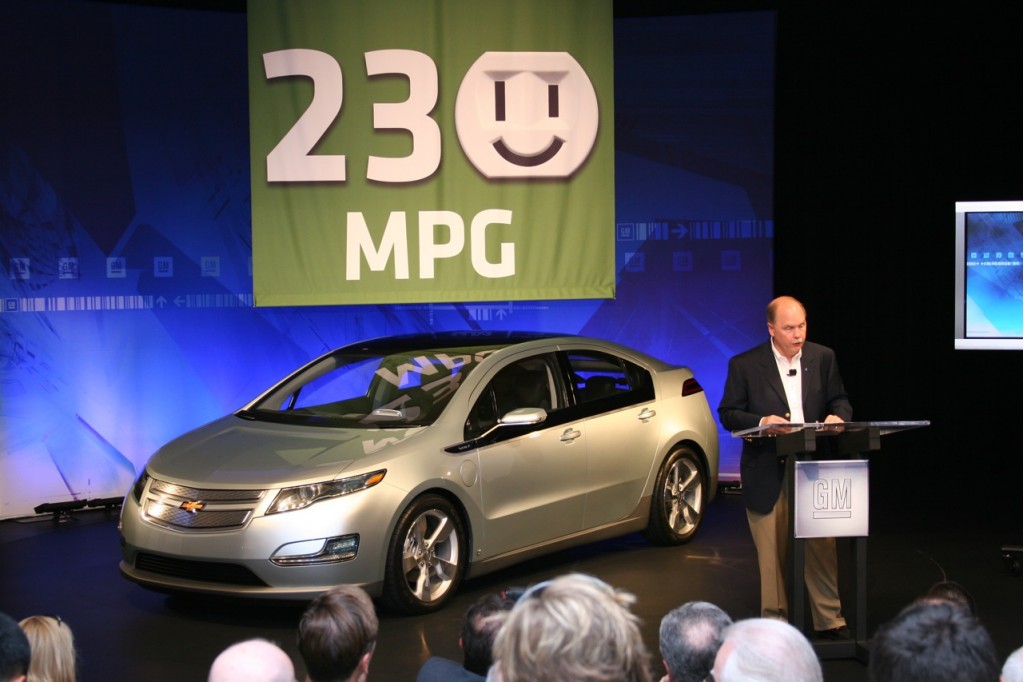
2011 Chevrolet Volt

first pre production chevrolet volt prototype 001
Volt payback: Only rumors
On the first, de Nysschen is basing his calculations on rumors. Unless and until GM releases the price for its 2011 Volt, it's all supposition.
It's been widely rumored that the 2011 Chevy Volt will sticker around $40,000, but the actual price likely won't be known for another year, assuming it arrives in November 2010 as promised.
“No one is going to pay a $15,000 premium for a car that competes with a (Toyota) Corolla,” he told Ulrich. “So there are not enough idiots who will buy it.”
That assumes the compact Volt will compete directly against other compact cars, like the Corolla. But that hasn't proven to be true for other advanced technology cars, like hybrids.
The Toyota Prius, for instance, is often a substitute for luxury cars like the ones Audi sells. We think that may be the case for the Chevy Volt's early years too, before lithium-ion cell costs fall.
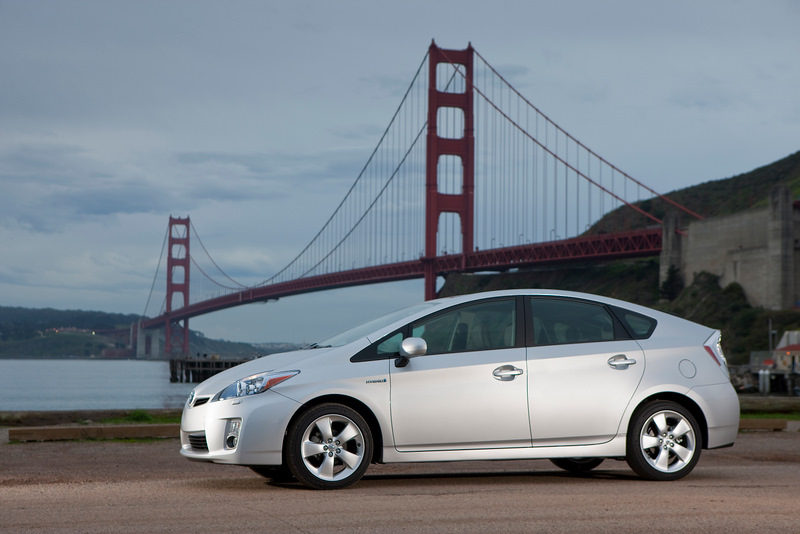
2010 Toyota Prius
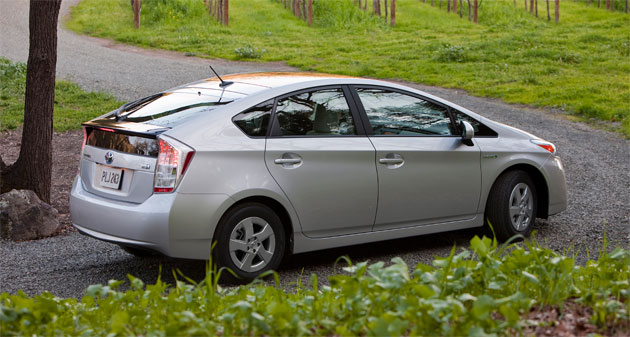
Could a GM-branded Prius be in your future?
EVs = more CO2? Wrong, wrong, wrong
On his second point, that electric cars would increase CO2 emissions compared to diesels, de Nyscchen is absolutely wrong.
A recent study of the U.S. market shows that how green a plug-in is depends on where it's plugged in. But a mile driven on electricity always produces less CO2 than driving that same mile in a 25-mile-per-gallon gasoline car. Always.
And the same applies to diesel at slightly lower levels--say 20 miles per gallon--since diesel engines are more efficient per gallon (and hence emit less carbon) than gasoline engines.
Extreme case: Dirtiest grid
If you're comparing to a 50-mpg gasoline car (say, the 2010 Toyota Prius), or a 40-mpg diesel car (say, the new 2010 Audi A3 TDI), then you need to know more about your local grid.
In states with very dirty (or "high-carbon") power, that 50-mpg 2010 Prius or 40-mpg A3 TDI emits slightly less carbon on a full "wells to wheels" basis than it would if powered on electricity.
In Wyoming or North Dakota, for instance, the power is largely from burning coal and hence exceptionally dirty. Making a kilowatt-hour of electricity generates more than 1,000 grams of CO2, or twice the national average. There, the Prius or A3 TDI is a better bet.
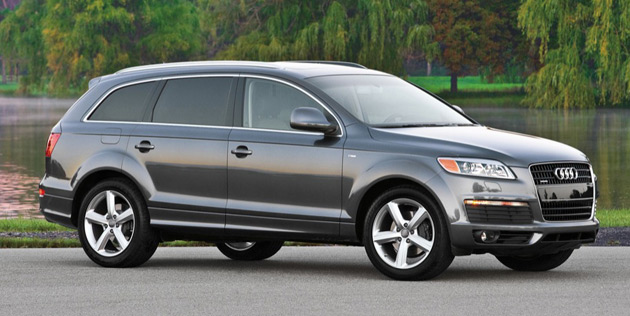
The American and Japanese competition face delays as the Germans have the segment to themselves

diesel and AdBlue fillers in Audi Q7 TDI
Average U.S. grid? Not even close
So in the end, if de Nysschen's new Audi A3 TDI can get to a 40-mpg average, he has a case--but solely for the absolute filthiest U.S. electric plants. For the average U.S. plant, he's not even close.
And his case falls apart further when you look at the 2010 Audi Q7 TDI, a 5000-pound diesel SUV, EPA-rated at a combined 20 miles per gallon. It hasn't a hope in hell of being cleaner than an electric version of the same vehicle.
With increases in emissions controls and more renewable energy, the grid will also gradually get lower in carbon intensity--which raises the bar still further for combustion engined cars.
That study, by the way, was done two years ago by the Electric Power Research Institute (EPRI), the trade association for electric utilities, and the National Resource Defense Council (NRDC). It's been widely praised and is considered pretty close to definitive.

stains below diesel pump
Doing damage control
As of 6:14 pm yesterday, Audi's Facebook page contained a letter from de Nysschen that backpedaled slightly, but not significantly.
He acknowledges that "electric vehicles will be part of the future transportation of society," though "only if we go about it the right way. In fact, Audi is working on electric vehicles."
On that inflammatory term, he says, "I do not specifically recall using the term “car for idiots” during my informal conversation with the writer." Which, as others have said, is a bit of a sidestep.
Need to eat crow?
It wasn't de Nysschen's "intention to leave the impression...I’m opposed to electrical vehicles," and, he says, "if I was unclear on either of those points then I need to eat crow." But then he reiterates the same concerns, without adding a shred of data.
It's hard to argue that "the feasibility of the Chevrolet Volt as a concept is questionable." But he cites a "50% or so cost increase" for the car over its competitors.
That glosses over the fact that no one knows how GM will price it (quite different from what it costs them to build; see Prius, Toyota, first decade of production of).
Strain on the grid? Well, no
Also, de Nysschen worries that mass electrification of U.S. vehicles "could lead to problems like a strained electric grid" That notion is largely debunked in the EPRI-NRDC report.
The load of one electric car charging is roughly equivalent to that of four plasma TV sets; we hardly see utilities trembling at that. The number of plug-in cars is likely to rise so gradually, compared to the 300 million vehicles now on US roads, that their load will be quite manageable.
Many solutions
The end of de Nysschen's note acknowledges, correctly, that there's no single solution to increasing fuel efficiency. Smaller engines, clean diesels, hybrids, electric vehicles, all of them will play a role.
And de Nysschen properly calls himself a "passionate advocate for the role that clean diesel technology can play." Which, again, is fine. We just feel his advocacy would play better if he actually backed up his blanket assertions with, errr, data.
Meanwhile, our sister site Motor Authority takes a slightly different tack, attacking the internet-speed spread of the unfortunate word, and lauding de Nysschen for raising these issues.
We agree. We think these issues should be far more discussed than they are today. We'd just prefer the discussion be based on facts and data, and we bet Motor Authority agrees with that too.
Why can't the US be more like Europe?
In the end, we suspect de Nysschen was just annoyed that U.S. buyers aren't accepting the European view that diesels are the only sensible way to increase fuel efficiency.
For almost 30 years now, however, Europe has had far lower taxes on diesel fuel than gasoline. That's hardly the case in the U.S., and there are other barriers too: Diesel cars may still have to be fueled next to semis elsewhere in a station, for instance.
Europe's makers: behind in hybrids
Instead, U.S. buyers seem to like hybrids, which require no behavioral changes. This drives European carmakers crazy, but it has also lost them some competitiveness.
They are now up to 10 years behind Asian and U.S. makers in hybrid and plug-in experience, and they're frustrated that their view isn't prevailing.
But Europeans know they're being left behind in hybrid and electric cars. The array of green cars and concepts at the upcoming Frankfurt Auto Show vividly demonstrates their rush to catch up.
Outburst of an 8-year-old
In the end, this little ruckus will get glossed over. European markets will continue to buy half their passenger cars with diesel engines; U.S. markets won't.
We liken de Nysschen's little outburst to the tantrum of an eight-year-old boy who can't get what he wants. But then, the auto market is a cruel place.