So What's a Wheego Whip, and Why Would I Want One?


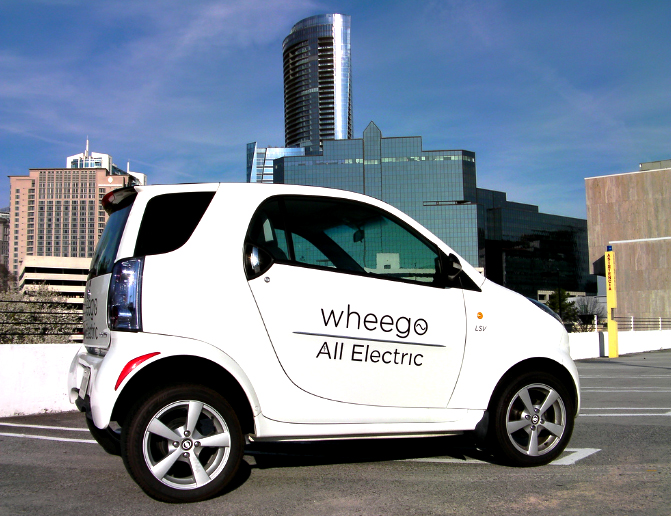
2009 WheeGo Whip NEV

2009 WheeGo Whip NEV

Enlarge Photo

It looks like a 2009 Smart ForTwo, it's made in China, it only goes 40 miles on its batteries, and it has a dopey name. So why should you care about the Wheego Whip?

Our colleague Rex Roy has just published his full review of the 2009 Wheego Whip, but we thought a little context would be useful.

Right now it's in a category of cars called "neighborhood electric vehicles," which are limited to low speeds (35 mph or less) and licensed only for certain types of roads. Regulations vary by state, so as they say, your mileage may vary.

Neighborhood electrics have to have lights, brakes, wipers, and seat belts, but not much else. They range from glorified golf carts to fully-outfitted tiny cars. All currently use lead-acid batteries to keep prices below $25,000.

Wheego says it is now "federalizing" the all-steel Whip, and that it will have completed the certification process sometime next year. That version's lithium-ion battery pack and 55-horsepower motor will provide a range of up to 100 miles and a top speed around 60 mph.

Despite its remarkable resemblance to the 2009 Smart ForTwo, the Whip is significantly larger and has its powertrain up front.

Smart has launched an all-electric version of the ForTwo--the Smart EV--in Europe, with a powertrain from Tesla Motors, so if they bring that vehicle to the States, we forsee the potential for some significant confusion.

Rex drove a prototype of the 2010 Wheego Whip HSV (high-speed vehicle), and says it felt roomy, solid, smooth, and refined, though he slammed the suspension as primitive and underdeveloped.

If and when the high-speed Wheego hits the market, we'll bring our own impressions. Until then, while its aspirations are laudable, we're taking a "wait and see" approach to what right now remains a neighborhood electric vehicle (NEV).

NEVs are used both in planned communities, some of which have separate road networks for golf carts, and on city or town streets with lower speed limits, where permitted.

We don't spend a lot of time covering NEVs, simply because they're not "real cars" and can't do highway duty. They have some limited applications, but fewer than 100,000 have been sold globally.

Most importantly, NEVs don't have to comply with the safety standards that real cars do. And you don't want to know what happens to the plastic ones when they're in an accident.

We would have included a video clip from the UK's Top Gear show, which barrier-tested a plastic G-Wiz electric vehicle that falls into the same class. But the BBC has asserted a copyright claim, so it's no longer on YouTube.

Take our word for it: You wouldn't want to be in most NEVs when they run into anything. At any speed.
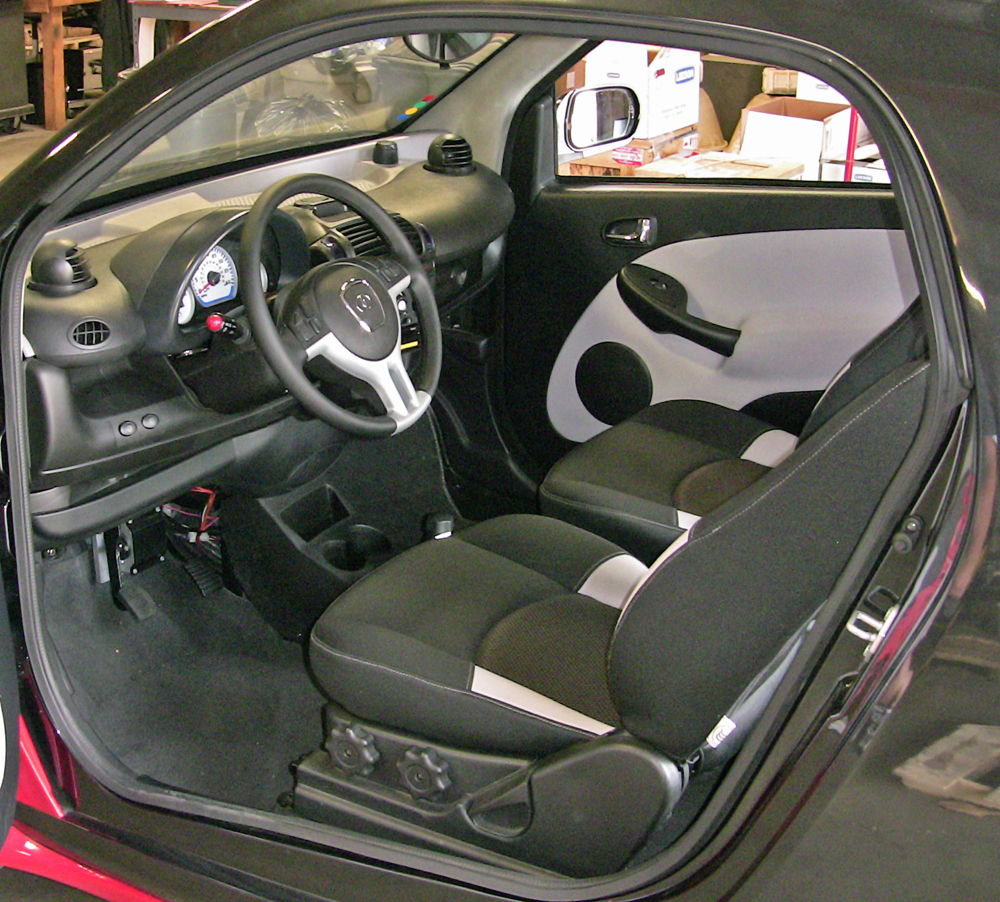
The WheeGo Whip offers plenty of room for two, a car-like feel, and high seating position that is as tall as many crossovers.

The WheeGo Whip offers plenty of room for two, a car-like feel, and high seating position that is as tall as many crossovers.
Enlarge Photo


Follow Us


Have an opinion?Join the conversation!

  • Posting indicates you have read this site's Privacy Policy and Terms of Use
Comments (6)
  1. What an ignorant comment , the G WIZ has covered more than 60 million kms since its introduction and there never was a fatality reported.This is not a claim any OEM can make. These cars are designed for low speed urban commutes not for highway motoring . It is about time that people make their own choices and take responsibilities instead of relying on biased trivial comments.
     
    Post Reply
    Vote
    Bad stuff?

  2. In terms of vehicle class, the NEV has an exemplary safety record. Approximately 40,000 NEVs have been operating on public roads in the United States for nearly ten years without any evidence of safety problems. In fact, data from the National Traffic Highway Institute (NHTSA) found that there have been no fatalities associated with the use of NEVs in mixed-use environments since 1996 (when the data started to be collected)...
     
    Post Reply
    Vote
    Bad stuff?

  3. ...There is a deliberate attempt to confuse the issue by constantly comparing the NEV to highway capable passenger vehicles. The NEV was not designed to travel on 400 series highways and therefore does not have to meet the same high-speed collision requirements. Just as you would not expect a motorcycle, or scooter, bicycle or bus to meet the same safety standards as a passenger car, so too must a NEV be held to the standards defined by its class...
     
    Post Reply
    Vote
    Bad stuff?

  4. The admirable NEV safety record can be attributed to such things as - Better driver control and awareness at lower speeds - Increased reaction time due to lower operating speeds - Shorter braking distances - General use of NEVs in lower speed applications, and that drivers of NEVs are fully aware of their operating design and drive them appropriately.
     
    Post Reply
    Vote
    Bad stuff?

  5. ...The NEV also provides a significant increase in occupant protection when compared to other low speed transportation options in the marketplace such as bicycles and motorized scooters. The relative position of the NEV in terms of road safety must also be understood to include increased protection for cyclists and pedestrians in the event of a collision with a lighter weight, slower moving low speed vehicle.
     
    Post Reply
    Vote
    Bad stuff?

  6. The comment about not wanting to be in an NEV when you hit anything is a sad commentary on human nature. What about the thing you hit with your 2 ton SUV? What about the neighbor's kid turned to jelly by your battering ram of an excuse for going to buy bread?
     
    Post Reply
    Vote
    Bad stuff?


Have an opinion?Join the conversation!

Find Green Cars

Go!


© 2011 Green Car Reports. All Rights Reserved. Green Car Reports is published by High Gear Media. Send us feedback.
 

Use the form below to send us a tip, give us feedback, or just say hello.

(max 750 characters)