
creative commons - flickr.com: http://www.flickr.com/photos/roboppy/1478522323/
Ask your average Toyota Prius owner or green-car geek about the "chicken tax," and you'll likely get a blank stare.
Only those of us who've followed the industry for far too long--or who crave some of the cool small trucks offered in Europe and Asia--know the story behind this infamous piece of legislation.
But a blog post by Harvard professor Robert Lawrence, who specializes in international trade, proposes that the "chicken tax" is actually what killed Detroit, by insulating it from real competition in light-duty trucks for 40 years.
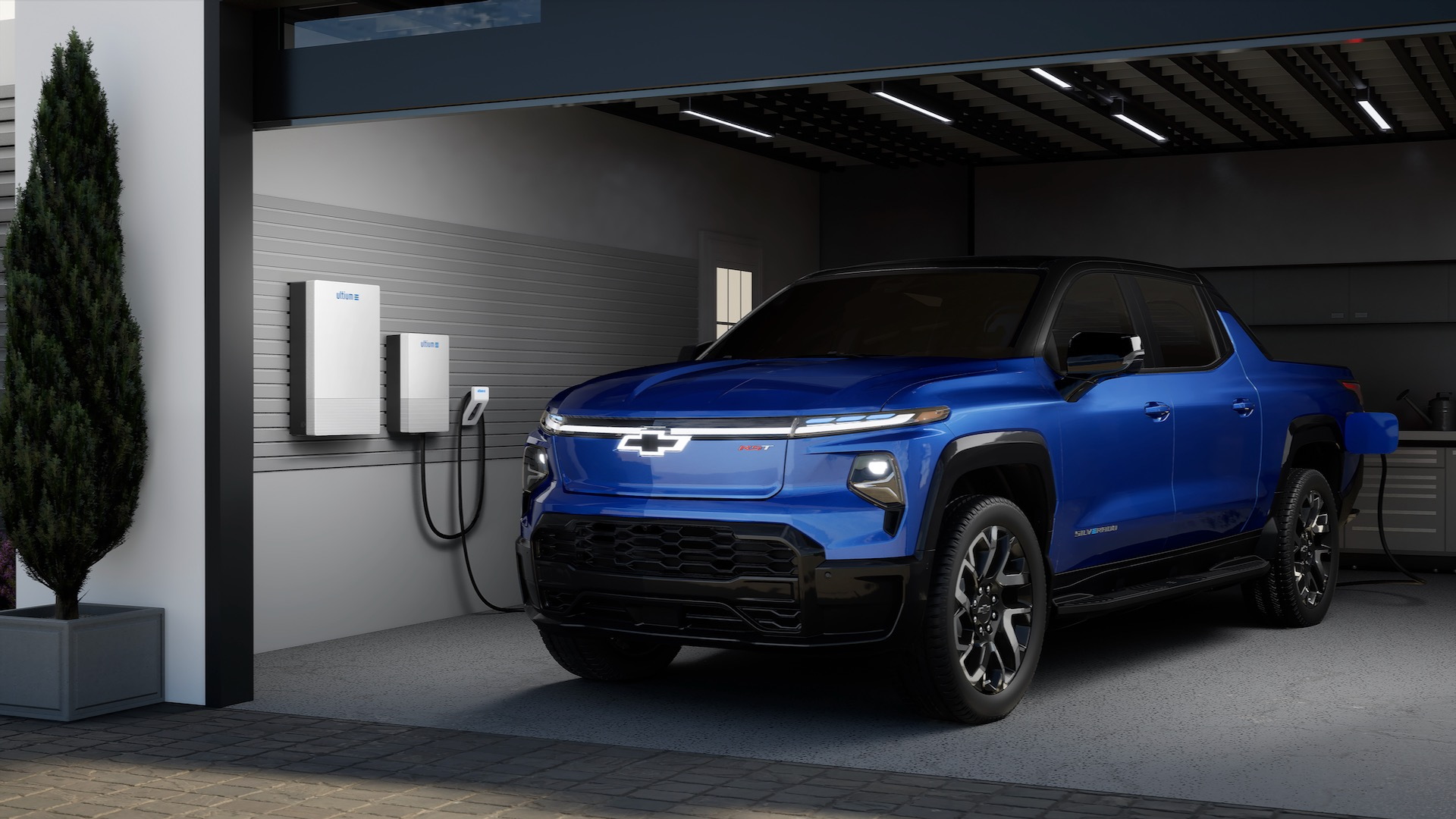
Profits from hundreds of thousands of Ford F-150 and Chevrolet Silverado pickups, he argues, stayed disproportionately high because any truck built outside North America had a 25-percent tariff slapped onto its price (versus just 2.5 percent on cars).
Addicted to that easy money, Detroit stopped paying attention to passenger cars. Which is easy to believe if you've driven a 2009 Dodge Caliber or 2009 Chevrolet Cobalt, neither of them remotely competitive with the best compacts from Honda or Toyota.
It all started in 1962, when the European Common Market barred access to US frozen-chicken imports on the grounds they were devastating German producers. After diplomacy failed, President John F. Kennedy Jr. imposed a tax aimed at Volkswagen Kombi panel vans and pickup trucks in January 1964.
Tariffs can't target individual products, so the rule applied to imports of all non-North American trucks. Exit the VW Kombi and a raft of British vans and pickups and French camionettes.
While the scope of the law narrowed somewhat in later years, it led to bizarre distortions. The most famous may be the two rear-facing seats in the bed of the 1978-87 Subaru BRAT, changing it from a two-seat pickup truck to an open-air passenger car.
The latest company to take on the chicken tax is Mahindra & Mahindra, the Indian company planning to sell diesel-powered small pickup trucks in the States this fall through Global Vehicles. Historians note, however, that automakers and importers have tried for more than four decades to kill the tariff.
None has succeeded.
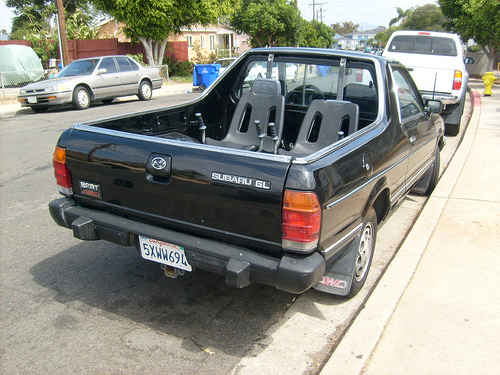
Subaru BRAT GL by Flickr user ifixfones1
[SOURCE: Dani Rodrik's Weblog, Autoblog Green; PHOTO of Subaru BRAT by Flickr user ifixfones1]