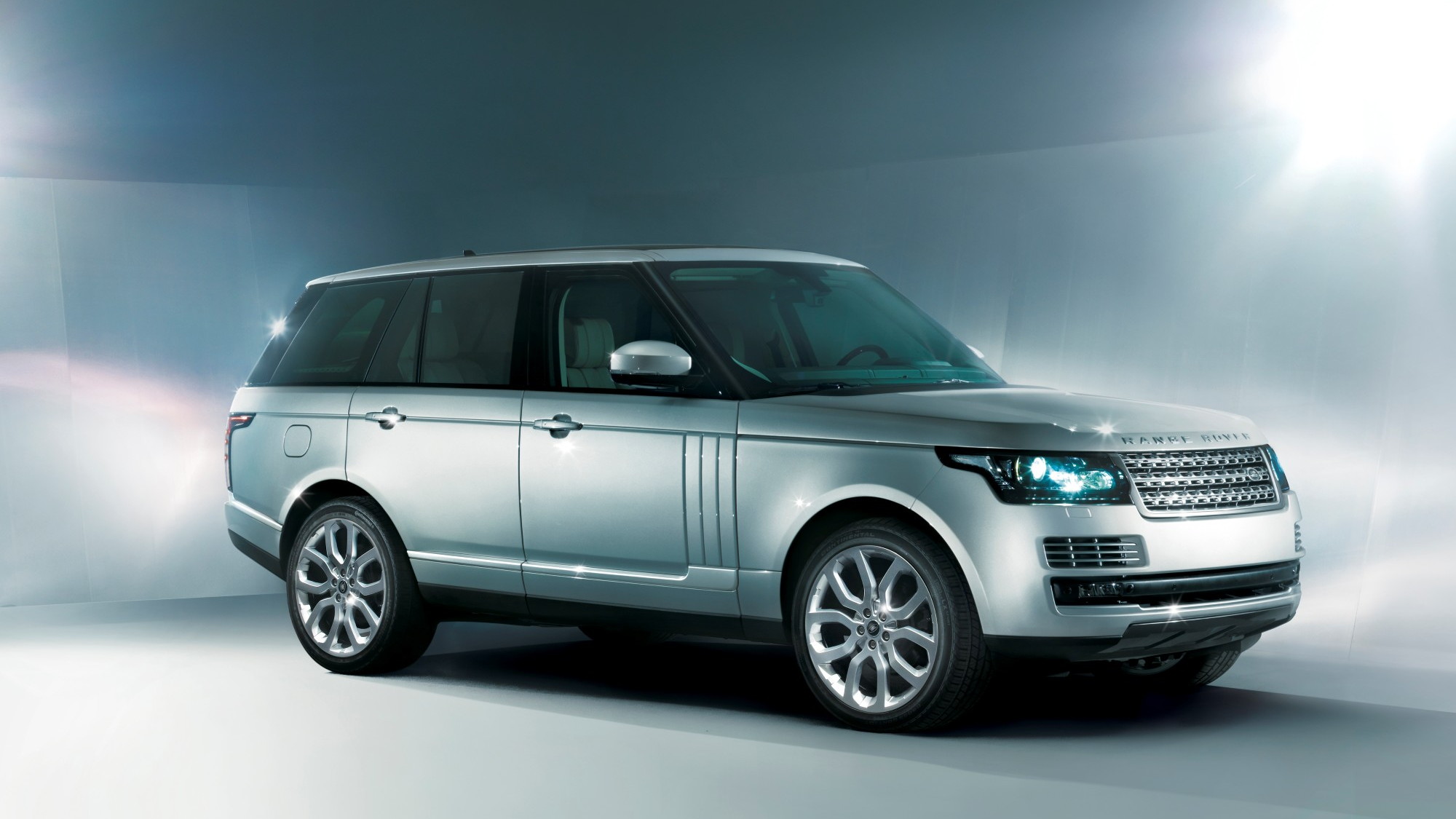

2013 Land Rover Range Rover
2013 Hyundai Sonata Hybrid: Gas Mileage Test...
2013 Ford Escape 2.0-Liter EcoBoost: Gas...
2013 Dodge Dart Limited: Gas-Mileage Drive...
There's a lot of focus--perhaps too much--on carmakers using smaller engines, hybrids, and plug-in cars to meet increasingly higher gas-mileage standards from now through 2025.
But another, equally important method is reducing the amount of car that has to be moved around in the first place.
That doesn't mean making cars smaller--absent a significant and sustained rise in the price of gas, the mix of cars and trucks sold changes very slowly, if at all--but making them lighter.
It's the invisible way to boost gas mileage. And two recent introductions typify the trend.
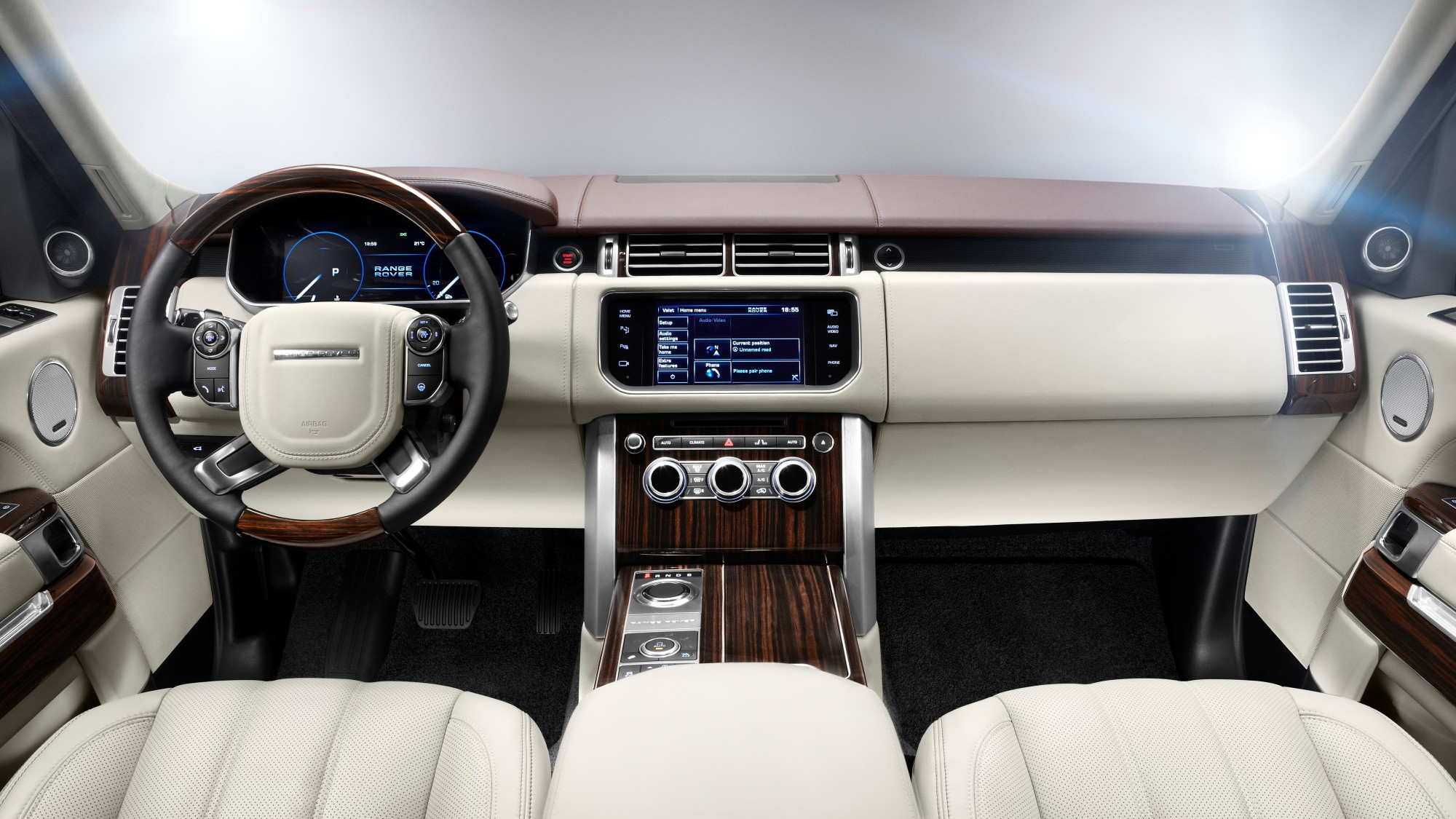
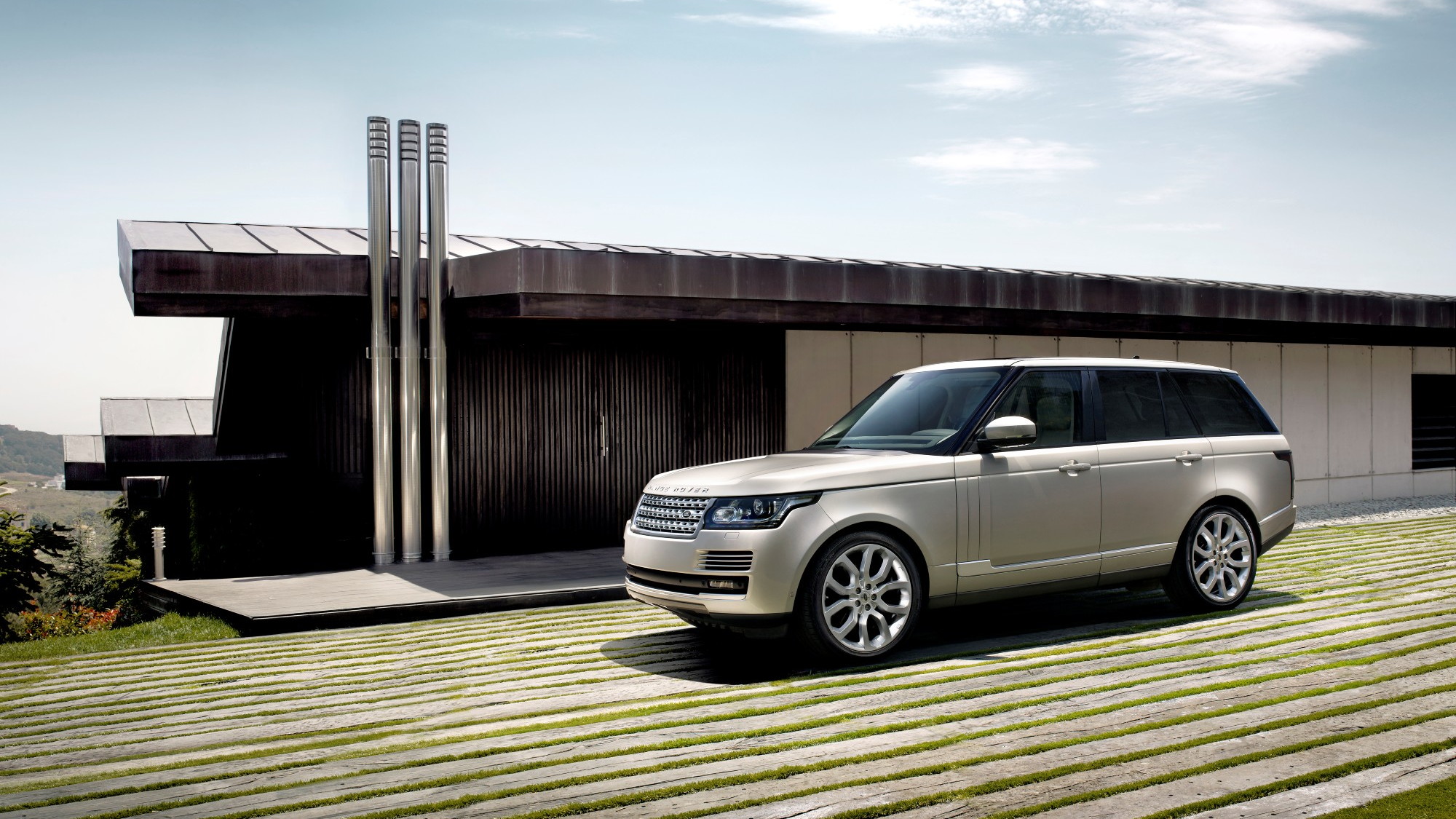
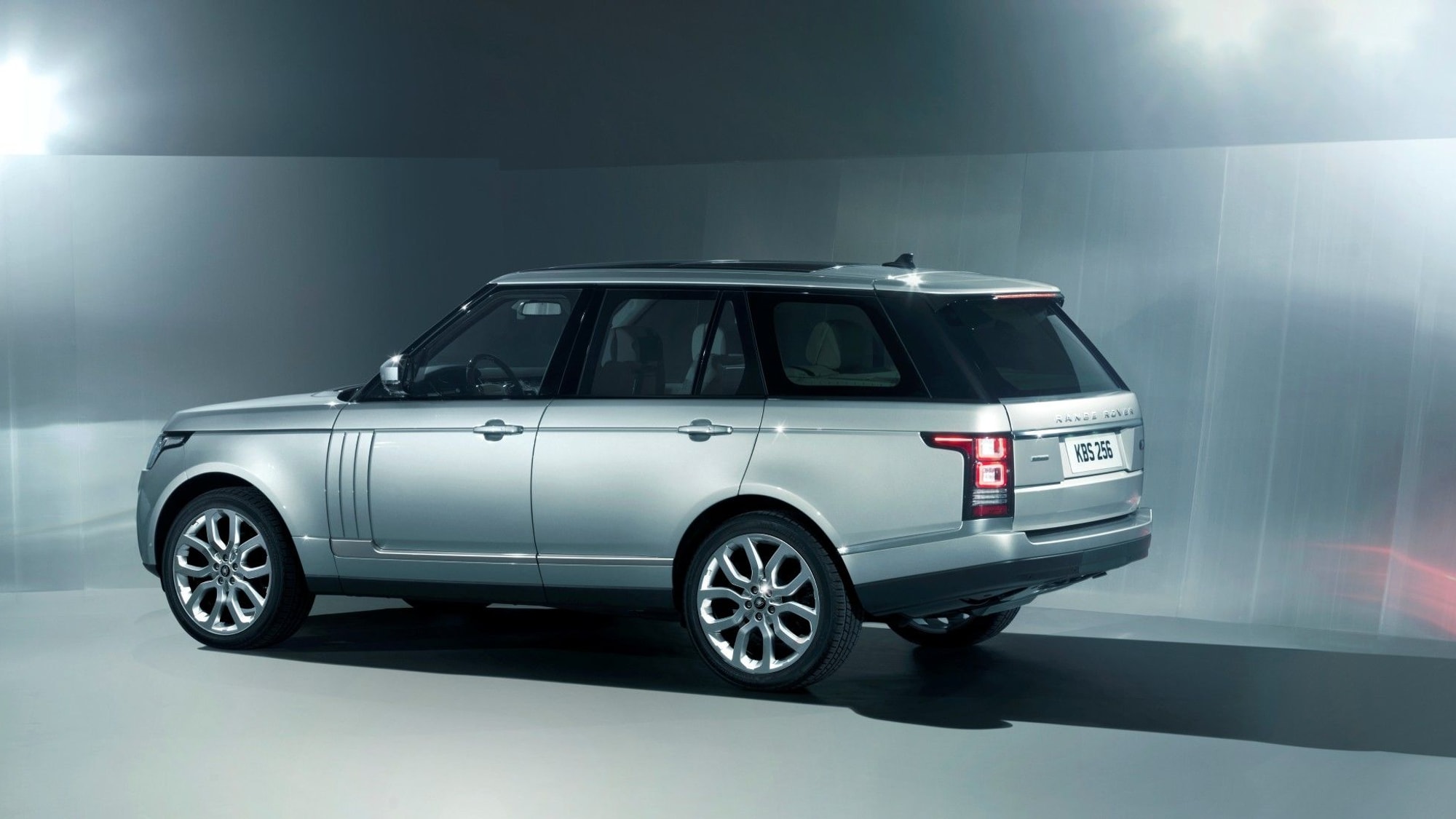
First, the all-new 2013 Range Rover--just unveiled last night--that will go on sale in December.
It's only the fourth all-new Range Rover since the iconic luxury all-wheel drive brand launched in 1970.
The new model, while stuffed with more electronics and luxury features than ever, is up to 925 pounds lighter than the outgoing model.
It uses an all-aluminum unibody structure that weighs fully 40 percent less as a "body in white" than did the steel shell of the last model. Front and rear subframes and suspension carriers are aluminum too, supporting air suspension for all four wheels.
Range Rover says the U.S. model, with a 5.0-liter gasoline V-8 engine, weighs 700 pounds less than a similar outgoing model. In Europe, there are two V-6 diesel options too. (Despite a prototype for a model intended to launch in 1999, no V-12 Range Rover is likely to be built now or in the future.)
The second case study is the 2013 Cadillac ATS, which GM's luxury brand is putting directly up against that icon of compact sports sedans, the BMW 3-Series.
Cadillac is very proud of the fact that the ATS is 58 to 146 pounds lighter than a comparable four-cylinder BMW 328i--and likely lighter than it would have been if designed even four years earlier.
Unlike the Range Rover, the ATS uses a steel body structure. But it uses a variety of high-strength steels and carefully engineered structure to eliminate unnecessary mass while keeping the desired performance characteristics.
As Ward's Auto notes, GM engineers learned a great deal about minimizing weight on the ATS program that they will carry over to future vehicle programs.
And there's more to come on the weight-saving front. The 2014 BMW i3, its first all-electric car, uses a body structure of Carbon Fiber-Reinforced Plastic (CFRP) that sits on an aluminum platform that carries the battery, electric motor, and power electronics.
Expect to see more aluminum, a slow emergence of carbon fiber for car bodies, and far, far more high-strength steel and complex structural engineering in cars to come.
It takes less energy to move a lighter object the same distance. That's basic physics.
There's also aerodynamics, another (mostly) invisible way to reduce the energy lost to wind resistance at speeds of 40 mph or above.
But we'll leave that one for another day.
+++++++++++

Follow GreenCarReports on Facebook and Twitter.
Have an opinion?
1) The 2012 Land Rover get 12/18 mpg and is simply a pig and not suitable for any green vehicle article.
2) The 2013 Caddy ATS is better at 22/33 mpg (still a pig)
3) The 2012 BMW 328i is better at 22/34 mpg, despite what is in Caddy's press release.
At least the BMW i3 was discussed at the end of the article to give some green credibility.
But the physics are right, less weight is better for efficiency.
Your Prius is 300 lbs lighter than ATS, yet it is about 4 secs slower to 60mph. That is forever in speed. Why? B/c its crappy low power engine. ATS's 22/33mpg is for its base engine 2.5 L. We don't know what the 2.0L turbo fuel economy is yet. Also, the 328i is turbo boosted. Even at 1 mpg difference is almost pointless in real world. The caddy's 2.5L is NOT turbo boosted...
Maybe you should stick with Prius discussions...
Let's deal with your factual errors one at a time.
The Hummer gets 14/18 mpg which is greener than the Range Rover.
I have never been stuck in my Prius, that is what tire "chains" are for. Honestly, all this fear associated with must have 4WD so I stay alive is very over the top.
Once again, 0-60 at 9.7 seconds in the Prius is not slow, it is better than many cars including the Hummer, which you don't pick on as being slow for some reason.
As for the BMW comparison with the ATS, it was brought up by the author (and presumably Cadillac PR) and the ATS does NOT compare favorably with the BMW 3-series. That should have been made clear.
1. So, a Land Rover of 12/18 becomes a "Range Rover" now? Land Rover is the company name, also one of its model name.
2. You have never been stuck in your Prius b/c you live in the NE. Come to the West Coast mountains and see if your Pirus will survive. Some of the roads will require 4WD or chains and some of them will require 4WD AND chains. So, there are conditions and roads where your crappy Prius won't go that Hummer and Land Rover/Range Rover will/can go. Also, there are plenty NPS roads where your Prius won't be able to.
3. Hummer? Which one? H1, H2 and H3. You keep quoting the 9.7 second (cherry picking the BEST TIME you ever seen). H3 with V-8 are faster than your Prius.
What did you get all your "cherry picking" crap from?
People really need to learn to be at speed when they hit the highway. Personally, I have the Prius at 60 when I am on the ramp shortly before I enter the highway.
Your attitude clearly shows why I despise "SLOW" Prius drivers...
This is just the type of driving that is increases accident risks. So take a deep breath, leave a little more space, and we can all get along.
I have driven in Boston before. Let me put this way, they need to upgrade their traffic control system. Don't even get me started on their tunnel rip off system with all the tolls..
I fail to see any logic to your complaints what-so-ever.
When I say these vehicles are inefficient, you can't contradict that fact and you do not even try.
Instead, you try to switch the subject to other metrics such as acceleration (in the case of the cars) and 4wd in the case of the other vehicles. And for some reason aren't particularly concerned that none of the vehicles does both.
So back to the topic at hand, Please explain to me how a Range Rover or a Cadillac ATS is efficient.
For bonus points, please find a US Presidential speech that explains the critical national importance of faster acceleration and/or more 4wd, in the same way that Presidents since Nixon talked about US need for higher MPG.
Ranger Rover and ATS is efficient for its "class" of cars. Prius is NOT part of that class. It shouldn't be compared as such. If another SUV offers similar features and capabilities as the Land Rover and still does Prius mpg, I will be more than happy to support it. But there are none. As far as ATS goes, it is similar. The only thing that can beat it is Tesla S with its super efficiency and I love that company with full passion despite its limitation with public charging access.
Are you saying that Tesla S is a "pig" and Leaf/MieV is better than Tesla S?
I also don't understand your atitude toward "performance" cars. Without performance, many of the population won't buy green cars. Tesla wouldn't exist. If you slow down the performance of Tesla to a Leaf, you can probably increase the range by 20-30% based on miles per KWh.
Not everyone is okay with your Prius performance. If they did, Prius would easily double or triple their sales...
I know you are happy with your Prius, but stay away from cars that are designed for NON-Max MPG purpose. Rest of us enjoy them too. I happen to like those performance and efficiency.
My boss purchased a BMW M3, the ultimate driving machine. Great acceleration, excellent handling, and it looks amazing. Prior to buying it, it was the best car in the world.
Now that he owns it, it is clearly a poor choice for his daily driver (which is how he uses it). The ride is unimaginably harsh on his 50+ body on his Boston commute. The traction of this RWD vehicle in the snow is terrible and he is afraid to drive it in the winter. There is very little room for more than 2 people. He is afraid to leave it anywhere.
It is clear that he is going to get rid of this car. A great vehicle, but not for him and his needs.
Inappropriate use by the owner is NOT the fault of the manufacture.
That is why I liked the Volt. As heavy as the Volt is, it didn't trade away all its performance for just efficiency. It still has decent handling, braking and acceleration while it allows you to stay in EV mode for the max efficiency possible. It gives you the choice to go fast or go efficient. If Prius had a "Sports" mode that can actually match the handling and acceleration of midsize V-6 sedans AND allow you to have the max MPG during "eco" mode, I would have supported it fully. But Prius stripped away all possible performance improvement.
I don't like to sacrifice everything just for efficiency. In that case, drive a scooter...
Hybrid and green car sales are very low and the technology is still coming along. Cutting weight is a very very effective way of reducing consumption and emmision. If we wait until everybody buys a very ugly and uncool car like the prius, it will be doomsday like the planet but if they can make sexy cars like the ats and rangerover more fuel efficient just by substituting materials, it will be better for our planet which is what any green enthusiast should be thinking about. I think you are the non-contextualized pig.
With an existing product, a manufacturer can substitute lighter weight materials in certain areas (hood, fenders, decklid, sometimes suspension), but other areas are more difficult (doors). Manufacturing a body in aluminum is major as the cost is likely over $1,000 more than steel.
I would add a couple of things. Cast magnesium is being used by Ford for the MKT liftgate. And we might start to see CFRP on subframes/suspensions (presently steel or aluminum).
John Briggs:
1. John, perhaps you were too harsh in your opening post and the use of the term "pig."
It seems the article's thrust and what we all want is more efficiency in all car models....but not necessarily at the expense of performance, ride, etc. Less weight in a model is one of the 3 primary ways to do that and the new Range Rover's nearly 17% less curb weight is a great improvement. We don't know what powertrain improvements have been made to the 2013 model yet(we assume little aero improvements due to the iconic RR shape) but it looks LR gives a crap about mpg finally so I'm gonna hope for an improvement of about 30% which would be near 18/26 instead of 12/18. A big jump!
Xia, the author nor John spoke of the Prius. Why you brought it up and spoke ill of it is not relevant to the article or discussion. And, I had a second gen Prius. Drove it in all parts of LA w/ no problems driving fast when or I needed to or in the mountains w/ snow. Specific corrections to Xia:
1) Many Prius drivers CHOOSE to drive slower for safety n better mpg...not necessarily cause the car can only drive slow.
2) The Prius is not crappy. There are more than a million on US roads. They are very safe, reliable, efficient, and practical machines. Prius was not designed for high performance so just because you can't go fast doesn't mean it's crappy...it's just now for you
John, Caddy ATS is much better mpg wise then anything Caddy has come out with and is near 3 series. Both models are improving n evolving for the better. Perhaps you should acknowledge that but still demand for better and more improvements. I, and I think most here, are with you in that respect.
Xia, Hummers aren't built nor sold here in the US anymore so why bring them up....not useful. And when you ascribe terms such as "crappy," and "piece of junk," to the Prius you lose nearly all credibility and objectivity of your posts readers. The Prius is neither of those and the very high satisfaction rates of Prius owners, best reliability n mpg...still...of all gasoline cars is proof.
I was being "childish" for the fact that if according to John Briggs that any cars aren't designed for "efficiency" are "pigs", then any cars that are designed for "efficiency" over performance are "crappy" and "piece of junks" in my view.
Sorry for being childish in my arguments.
Have an opinion?Join the conversation!