Hybrids have fans, diesels have fans, and while they produce their best fuel economy under different circumstances, each one tends to be a greener choice than a conventional gasoline car.
But passenger cars with diesels are now just a tiny part of the U.S. market (less than 1 percent) compared to hybrids, which have stayed between 2 and 3 percent of sales for several years.
Now Bosch, the German auto-parts maker, thinks that's about to change--and in a big way.
Carnegie-Mellon study
By 2015, the company projects, fully one in 10 new cars sold in the U.S. will have a diesel engine. The estimate is based on a study of public understanding of diesels and factors affecting diesel purchase that the company asked Carnegie Mellon University to undertake in 2009.
Now, data from CNW Research says that with greater awareness of new clean diesels, and a lower cost premium for diesel fuel against gasoline--unlike 2008, when gasoline soared to $4 but diesel passed $5 in some markets--public receptiveness to choosing diesels is at new highs.
The attractive features are fuel efficiency up to 30 percent higher, and the convenience of a driving range up to 700 miles. For owners who analyze total cost of ownership, diesels can also provide lower lifetime running costs despite their higher initial purchase price and more expensive fuel--due to their higher residual values.
![2008-2011 take rate on diesel engine option when offered within vehicle lines [data: Bosch]](https://images.hgmsites.net/lrg/2008-2011-take-rate-on-diesel-engine-option-when-offered-within-vehicle-lines-data-bosch_100389475_l.jpg "2008-2011 take rate on diesel engine option when offered within vehicle lines [data: Bosch]")
2008-2011 take rate on diesel engine option when offered within vehicle lines [data: Bosch]
Bosch makes high-pressure injectors, fuel pumps, and other components for diesel vehicles, so it has a stake in seeing sales rise.
But Lars Ulrich, the company's director of diesel marketing, told Green Car Reports that the big change is in which carmakers are planning to bring diesels to market.
VW, Mercedes have history
Historically, Volkswagen has sold the most diesel cars in the U.S., led by its Jetta TDI compact sedan. Mercedes-Benz has the longest history of diesel sales in the U.S., a half-century or more, but its cars are hardly mass-market.
More recently, Audi (with its A3 TDI and Q7 TDI) and BMW (with diesel versions of its 3-Series sedan and X5 sport utility) have joined the list.
But two upcoming diesel models will be the ones that kick U.S. diesel sales volumes into a new and higher tier, Ulrich suggested.
Major models: Cruze, Grand Cherokee
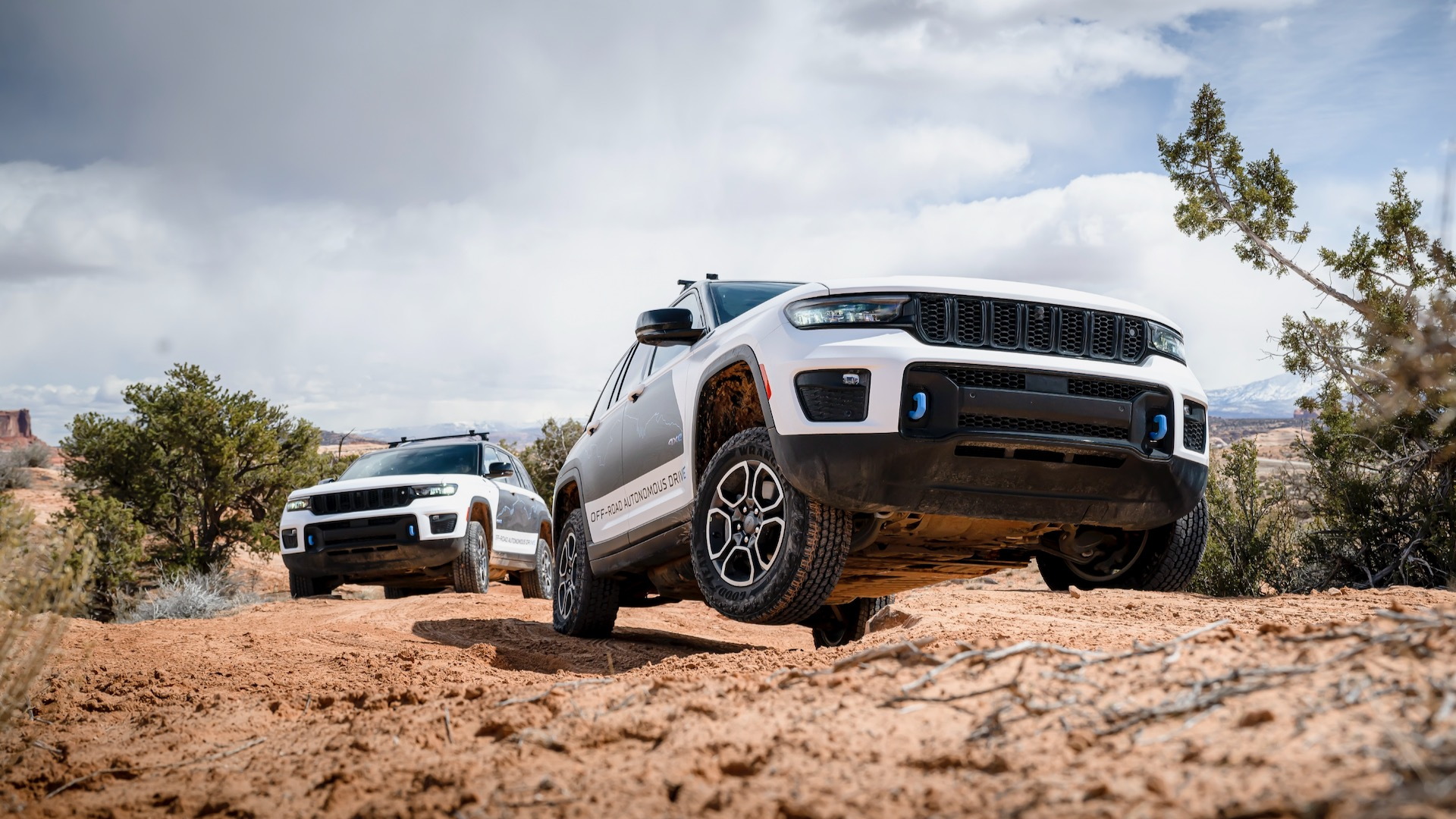
They are the 2014 Chevrolet Cruze, which will offer a 2.0-liter diesel model early next year, and the diesel version of the Jeep Grand Cherokee that Chrysler will start building next year.
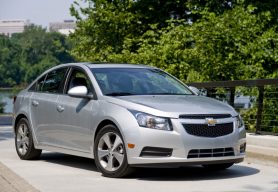
2012 Chevrolet Cruze
The Cruze is a compact sedan, the Grand Cherokee is a well-known sport utility. Each sells in enormous volume (2011 Cruze sales were 232,000, with 128,000 Grand Cherokees sold last year).
If even a small percentage of those sales--optimistically, 10 percent--are diesels, the total sold in 2014 could rise substantially from its 2011 level of roughly 100,000.
Ten-time jump in two years?
We remain to be convinced that the number will soar from 1 percent to 10 percent in just a couple of years. That would be 1.5 million vehicles if 2015 sales are 15 million vehicles.
The diesel-share data Bosch uses (2.8 percent in 2011) also includes all diesel pickup trucks, since they carry passengers, as well as passenger cars and light trucks.
More than half of heavy-duty pickups are now bought with diesels, so that skews the numbers higher--though few car buyers consider them as family vehicles.
More options on the way
Still, more diesels are definitely on the way. A diesel Mazda, most likely its new CX-5 compact crossover, is likely to arrive next year.

2011 Jeep Grand Cherokee
And Audi too will begin selling its highest-volume model, the A4 sport sedan, as a TDI diesel--in 2015 or so.
For the record, this year will see another new diesel vehicle coming to the U.S. from another maker. It's the 2013 Porsche Cayenne Diesel, the first diesel vehicle in the German sports-car maker's history.
But the oil-burning Porsche will be a low-volume model, fewer than 5,000 a year--just like the Audi Q7 TDI, with which it shares a lineage.
Tell us your thoughts
It's the Cruze and the Grand Cherokee that will lead the way toward new U.S. appreciation of diesels.
Or so says Bosch. What do you think?
Leave us your thoughts in the Comments below.
+++++++++++