2011 Smart Fortwo
-
-
-
-
-
News In Your Inbox
GreenCarReports
Related Photo Galleries
See more photos »
There are some pretty efficient cars on sale these days, but it's fair to say that to benefit from the technology, you often have to spend a little more to start with.
What if you want to spend as little as possible on fuel, but spend as little as possible on the car itself too?
That's where dollars per MPG comes in - a measure to show you how many bucks you have to spend for every 1 MPG in your car.
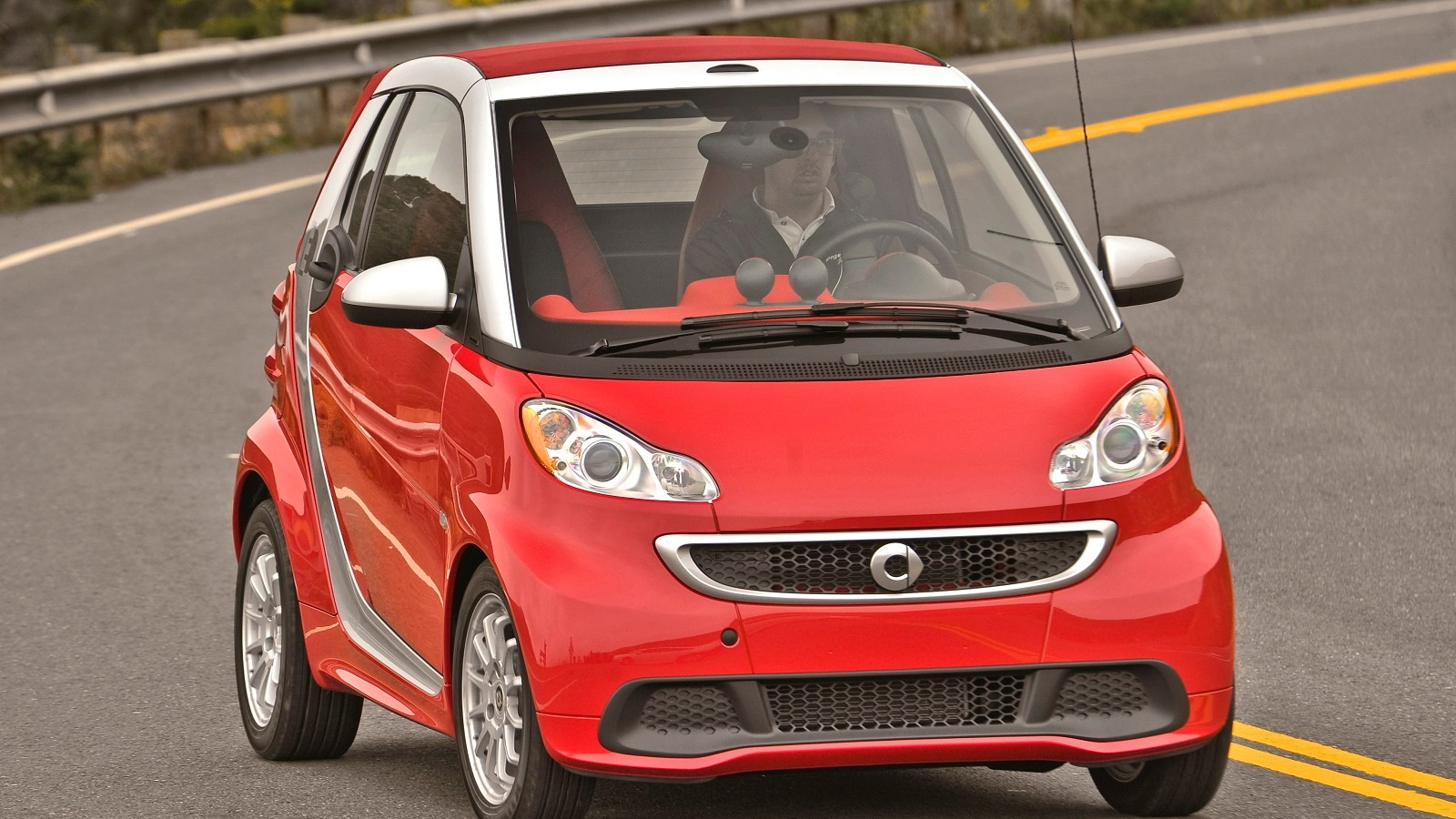
1) 2012 smart fortwo coupe - $12,490 / 36 MPG = $347/MPG
The fortwo gets its fair share of flak for not being as economical as you'd expect, but in terms of cost per MPG it's hard to beat. It's not as cheap as some in this list, but those extra few MPG here and there means it could be a little cheaper in the long run. If you don't need more than two seats (and you're okay with the image...) it's the best value car here.
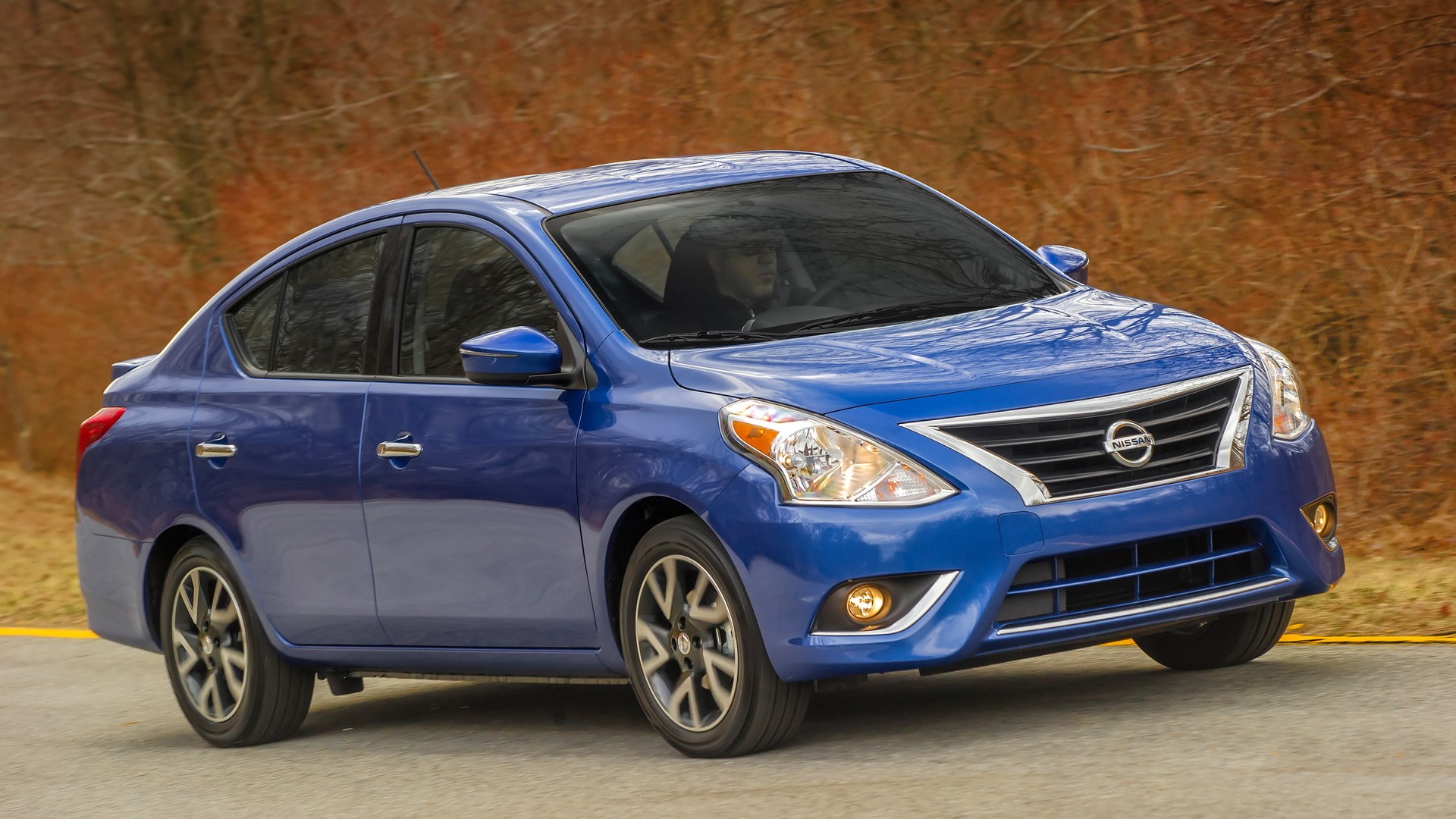
2) 2012 Nissan Versa Manual - $10,990 / 30 MPG = $366/MPG
At 30 MPG combined the Versa may not be the most economical car on the road - though it's not too bad - but by virtue of its miniscule price, it comes out with a low price per MPG - just over $366. If you're looking to spend as little as possible on your car, the Versa is the one to go for. Just remember that if you do high mileages, the fuel costs will start to stack up over more economical vehicles.
3) 2012 Hyundai Accent Manual - $12,545 / 34 MPG = $369/MPG
Like the Versa, the Accent scores on its acceptable economy, and low purchase price - you'll pay just under $369 for each one of its 34 MPG combined, marginally behind the cheaper but less economical Versa. It's less bargain-basement though and a little more stylish.
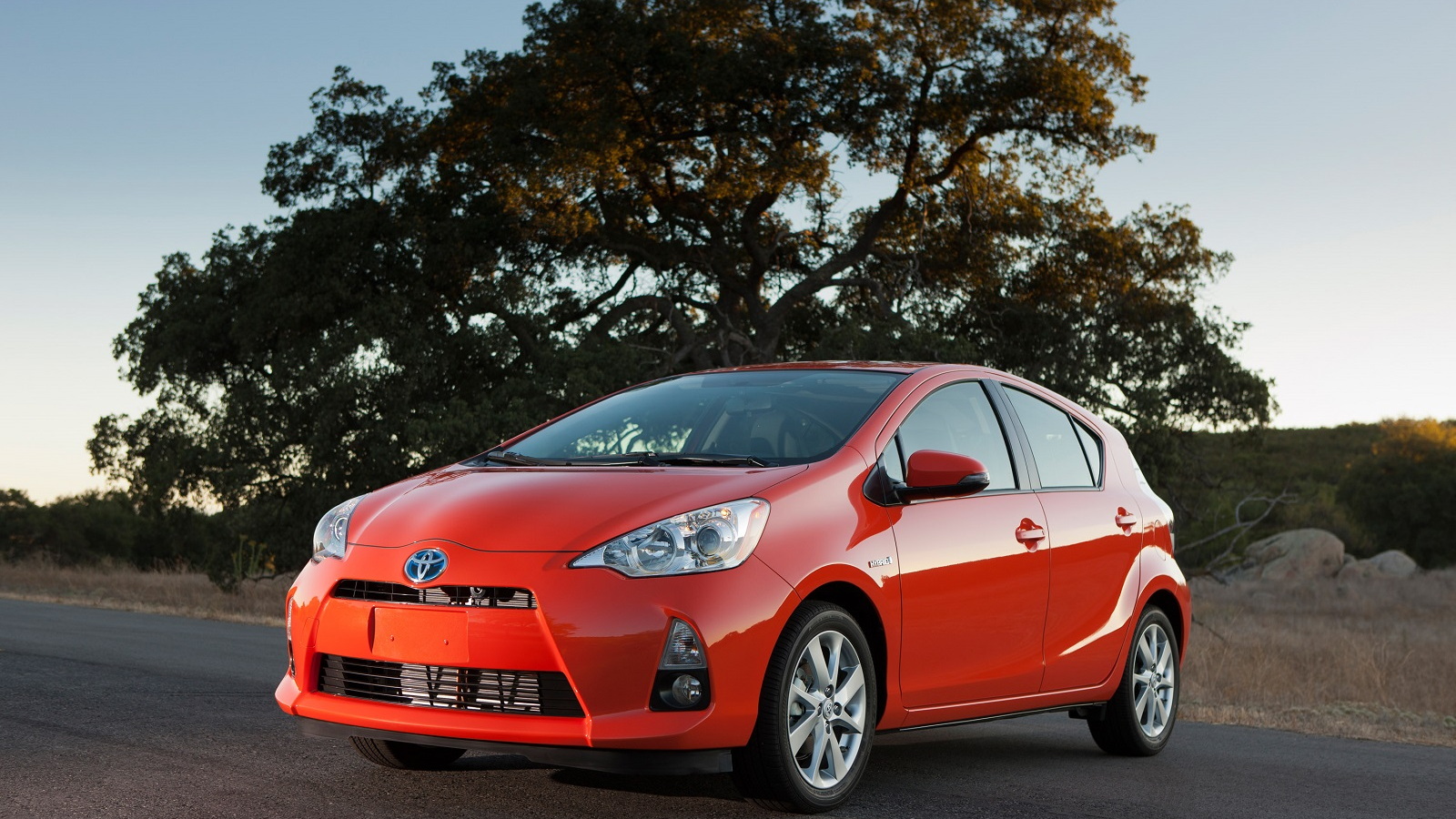
4) 2012 Toyota Prius C - $19,500 / 50 MPG = $390/MPG
Where others in this list muscle their way in on bargain prices, the Prius C takes a different approach - it offers some of the highest MPG figures of any car on sale, at a price lower than that of the standard Prius. With the Prius name, it's also the more overtly green of all the cars here, which may suit some drivers.
5) 2012 Ford Fiesta Manual - $13,200 / 33 MPG = $400/MPG
While Ford does offer a more economical Fiesta - the 40 MPG highway Fiesta SFE - it both costs extra to buy the SFE package, and you need to specify a higher trim level in the first place - so the cheapest Fiesta in terms of dollars per MPG is the base, manual-transmission sedan. The Fiesta is known for its fun handling though, so more than any other car here you won't have to sacrifice fun for value and economy.
There are a few things to note from our choices above - firstly, that jerky smart gearbox and the Toyota's CVT aside, the cheapest options are usually base models with manual transmission. That may not suit everyone, and expect the list above to change if you prefer automatics.
The next point is that, although some cars are cheap to buy initially, if you intend to keep the vehicle for several years and drive higher distances, then you might want to spend a little extra to get a more economical vehicle in the first place.
As ever - shop around for whatever suits your needs best!
+++++++++++
Follow GreenCarReports on Facebook and Twitter.
Have an opinion?
If I look at the 10 year costs for fuel (based on EPA) and purchase price, the numbers look totally different from above.
gasoline
make model cost mpg gas $/yr TOC
smart fortwo $12,490 36 $1,613 $28,620
Nissan Versa $10,990 30 $1,795 $28,940
Hyundai Accent $12,545 34 $1,584 $28,385
Toyota Prius C $19,500 50 $1,077 $30,270
Ford Fiesta $13,200 33 $1,632 $29,520
with the Hyundai being the best and the Prius C being the worst(sadly).
Of course, if gasoline price increases by 35% over the next 10 years, the Prius C is the winner. Oh, and there is all that pesky environmental concern that seems to be completely lacking as typical in GCR.
We're not ignoring the environmental impact, it's simply that among small-capacity gasoline engines the impact is very low in the first place.
I would say that if you are willing to brush off 40% worse emissions as "very little harmful emission" then that is sufficient proof that GCR continues to ignore the environment.
No, I'm referring to hydrocarbons, carbon monoxide, and oxides of nitrogen, all of which the Prius produces in greater quantities than the smart, large enough in comparison that you could lower the smart's fuel economy further and it would still produce fewer hydrocarbons and less CO.
Even so, all small-capacity gasoline engines produce only trace amounts of these emissions, particularly compared to diesels, which are usually lower on CO2 and CO but worse on particulates (of which gasoline cars produce none), nitrogen oxides and hydrocarbons.
I've done some math, based on UK figures for those cars. EPA mileage is 32% lower than EU for the smart, 17% lower than EU for the Prius.
To balance it out, I've added a third to UK emissions data for the smart, and 17% to the Prius to give us rough EPA equivalents, as I couldn't find precise EPA data for pollutants.
Carbon monoxide, g/km: Smart 268, Prius 302
Hydrocarbons, g/km: Smart 34, Prius 68
Oxides of nitrogen, g/km: Smart 14.5, Prius 7
While Toyota does good work on NOx (all Toyotas/Lexus are low here), CO and HC are much higher - the smart would need even *worse* fuel efficiency to produce more of these pollutants.
Second of all, this may surprise you to know, there are more than a few people in this world interested in CO2 emissions, even as you have zero interest.
Prius C = 178 g/mile CO2
Smart = 247 g/mile C02
making Smart 40% worse in GHG.
Many people are also interested in energy security, another factor you have zero interest in mentioning.
Prius 6.6 barrels of oil/year
Smart 9.1 barrels of oil/year
Making the Smart a comparative gas guzzler.
The Prius C dramatically better.
Prius = 9 (out of 10 with 10 the best)
Smart = 6
for smog forming pollution.
http://johncbriggs-electricvehicles.blogspot.com/2012/02/prius-vs-smart.html
The smart is much worse on both CO2 and smog forming emissions.
Note: I used the Prius, rather than Prius C due to shortage of data on the epa website. I also used an older SMART due to lack of data.
Secondly, I don't have "zero interest" in CO2, it just isn't the be-all and end-all of pollutants (indeed, it's not technically a pollutant at all) and others are often conveniently forgotten while CO2 is pushed to the forefront.
Lastly, the whole point of this article in the first place was a financial focus - expressly implied *in the title* - so the absence of a green focus in this one article is hardly unforgivable.
You are clearly missing the point, up till, and including now.
You have not tried to accept any blame for failing to mention the dramatic improvements the Prius C offers over these other vehicles, and continue to try to justify your own indefensible position that the cars are similar.
Let me put it in terms that you can understand. It would be like comparing two sports cars, one with a 0-60 accel of 8 seconds and the other with 11.2 seconds (40% worse) and failing to mention it.
That is exactly the problem. You "implied" a 40% more polluting vehicle was comparable with the Prius C without mentioning the fact that it was 40% more polluting. That, sir, is grossly neglecting to provide context.
I was need to learn to press my point without crossing that line.
Total cost of ownership includes maintenance costs. When maintenance costs is added in, the Prius C will win against all those other conventional cars.
Prius C brake pads will last past 150,000 miles due to electric regenerative braking.
Prius C transmission is a single-gearset power split device, no clutches, no belts, no pulleys, no torque converters, no gear-shifting. No fluid change necessary unlike normal cars.
Prius C has no timing belt, no alternator, and no starter motor. Those things in normal cars do wear out and require replacement.
And before you mention battery replacement, remember the Prius battery is warrantied for 10 years in the CARB states.
You forgot the cheapest car with the lowest bucks per MPG (with unlimited range):
THE Chevrolet VOLT!!
40 000$ + 10 000$ (solar panels for free electricity) -7500$ (federal incentive = 42 500$ / 150 MPG = 283$ !!!
And there is lots of people doing 200 MPG, 250 MPG and even more !!!
Moreover, you get a car that seats four people, high tech, keyless entry system, On Star, iphone remote control app, LOW greenhouse gas emissions, etc ...
And people that do not need a car with unlimited range, can go for an ALL electric car like the leaf ... the cost per MPG can get near ZERO !!
Sly
I excluded the Volt from the list due to its electric drivetrain. While as you point out there are plenty of people getting huge recorded figures from the Volt, those are "MPG equivalent" figures and can vary wildly depending on the driver.
Had I included electric drivetrains, the Leaf and Mitsubishi i would no doubt have hopped onto the list too, with their 100 MPGe-approximate figures.
make model cost fuel $/yr TOC
Chevy Volt $39,000 $1,614 $55,140
Nissan Leaf $36,000 $612 $42,120
Scion Xb $16,300 $2,325 $39,550
Toyota Prius C $19,500 $1,077 $30,270
The Volt is by far the worst, the Prius C is by far the best. and the Scion and LEAF are in the middle.
Considering environmental impacts, it would be difficult to ignore the benefits of the LEAF and the Volt (depending on driving scenario of course).
do you assume that the volt uses gas only
Prius 15,000 miles /50 mpg = 300 galons * 3.59 = $1077
Volt 15000 70 % are electric 10500 electric 36 kw per 100 miles 10500 / 100 * 36 = 3780 KWH * .12 usa Average $453.6 4500 Miles Gas / 37 *3.59 =$436.62 comes out to $890.22
Robin
Also, I agree the Volt numbers look high and I am not sure what mix of gasoline and electricity the EPA uses.
Sorry, I messed up the Volt calculation. The EPA has two numbers for the Volt, gas only b($1614/yr), and electric only($648/yr). They don't opine on the mix. Let me ASSuME 15% gas and 85% electric (hope that seems reasonable).
make model cost fuel $/yr TOC
Chevy Volt $39,000 $793 $46,929
Nissan Leaf $36,000 $612 $42,120
Scion xB $16,300 $2,325 $39,550
Toyota Prius C $19,500 $1,077 $30,270
The Volt is still the most expensive, though with incentives..., close to the Scion. The Prius C is still the least expensive by a good margin.
But for the Environment and energy security, you have to give a tip of the hat to the LEAF and Volt.
Toyota has developed a vehicle (Prius C) where the hybrid system arguable pays for itself over a 10 year period. As a result, the financial impact to the owner is zero whether he buys I Prius C or a, say, Ford Fiesta.
However, the impact on the planet (environment, energy security, etc) is 40% less with the Prius C.
So the "lead" on this story could have been, Do 40% more for the environment and your family with no financial impact to your family finances.
...my weekend car is a 2005 Corvette, but it gets 30mpg on the highway (low Cd and a very tall sixth gear), so still more economical than my 1969 440 Plymouth GTX which gets about 10mpg.
Have an opinion?Join the conversation!