The impact of fuel costs on family budgets is a big topic of national discussion right now.
A front-page article in my local paper said that an average family paid more than $4,000 per year for gasoline, whereas we paid only $450 total in fuel and service costs for a Nissan Leaf electric car and a Chevrolet Volt range-extended electric.
And thanks to new standards kicking in for 2012 and rising steadily thereafter, all vehicle classes are getting better fuel economy than they used to.
Compared to the cars of 20 years ago, the careful buyer can find options across all vehicle classes that are 30 percent more efficient--or better.
Honda Accord
The 1992 Honda Accord was one of the most popular cars that year, and Honda engine technology was one of its attractive factors. That Accord averaged 24 mpg, and 10 years later it was still getting only 24 mpg overall.
Now, the latest 2012 Honda Accord delivers an EPA average of 27 mpg--and the all-new model coming in 2013 is likely to improve on that still further--just as the 2012 Civic compact delivered significantly higher numbers than its 2011 predecessor.
Toyota Camry and Prius
The Toyota Camry has often been the best-selling car in the U.S. In 1992, the EPA reported a 22 mpg overall efficiency--rising to 24 mpg for 2002. By 2007, a new generation of Camry was tested at 25 mpg overall--but also offered a hybrid version with 34 mpg overall.
2012 Toyota Camry Hybrid
In 2012, an all-new evolution of the Camry was introduced, with its standard engine producing 28 mpg in EPA testing. The hybrid made another huge improvement to 41 mpg overall .
Then there's the Prius, another mid-size alternative vehicle, but one without a gasoline alternative. The most recent 2012 Prius received an overall 50 mpg rating in official testing.
So the basic has improved more than 25 percent in efficiency, the hybrid Camry is 86 percent better, and the Prius is now more than twice as fuel efficient as that 1992 Camry. And a plug-in Prius model is coming later this year, which should roughly triple the mileage of the 1992 standard.
Chevrolet Lumina v Malibu (and others)
American car companies are not to be left behind in the evolution of better mileage, as Chevrolet has done some very good engineering with its mid-size entry.
In 1992 the Chevy Lumina was rated at 21 mpg overall, with its 2002 replacement Malibu coming in at exactly the same 21 mpg. By 2007, the Malibu had been tweaked to 25 mpg overall, and for 2012, this has improved to 26 mpg.
For 2013, the Malibu Eco (the only Malibu on sale at the moment) uses a mild-hybrid system and aerodynamic extras to further improve economy to a 29 mpg average.
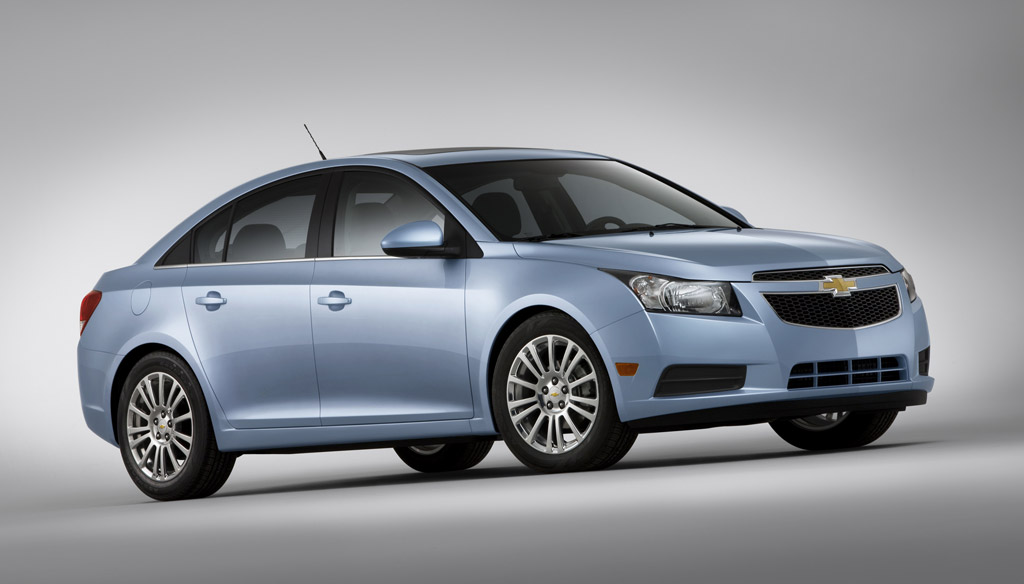
2011 Chevrolet Cruze Eco
For 2012, Chevy also offers the Cruze model--which meets mid-size standards--and its Cruze Eco version recorded an impressive 30 mpg overall. That's almost a 43-percent improvement over that 1992 Lumina.
There's also the pricier and more advanced Volt range-extended electric car. After covering more than 12,000 miles since January 2011, our family Volt is getting 112 mpg!
Ford Taurus v Fusion
Back in 1992, Ford‘s standard bearer in the mid-size family sedan category was the Taurus, tested with a 21 mpg average that hadn't changed by 2002.
In 2007 the family sedan from Ford became the Fusion, which the EPA rated at 23 mpg overall.
Now, in 2012, the newest Fusion gets another small improvement at 24 mpg. Ford introduced the Fusion Hybrid in 2010, which delivered an overall 39 mpg average--or more than a 60-percent improvement in gas mileage.
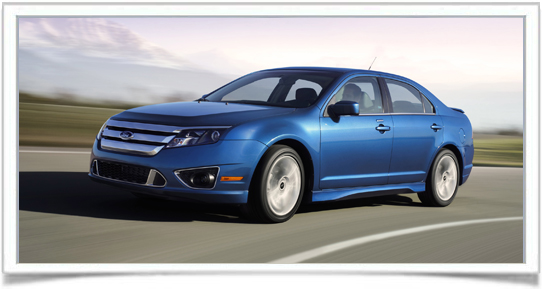
2012 Ford Fusion Hybrid
The all-new 2013 Ford Fusion--shown at January's Detroit Auto Show--will likely deliver far better mileage, as it dispenses altogether with a V-6 option and instead offers three four-cylinder engines: 1.6-liter and 2.0-liter EcoBoost direct-injected and turbocharged options, along with a standard base-level 2.5-liter four.
The new model will include not only a Fusion Hybrid, but Ford's first-ever plug-in hybrid sedan, the 2013 Fusion Energi--using the same technology that will also appear in the five-seat hatchback C-Max Fusion and C-Max Energi.
Ford has said the 2013 Fusion Energi will beat the Toyota Prius Plug-In Hybrid in its overall MPGe fuel-efficiency equivalent rating.
Volkswagen Passat
Among German mid-size family sedans, the Volkswagen Passat has followed the same path. In 1992, it produced 22 mpg overall--and that number stayed constant 10 years later, in 2002. Five years later, in 2007, it had improved slightly to 24 mpg, and for 2012, the base Passat delivers 26 mpg overall.
For 2012, there's also the diesel-engined Passat TDI, which is EPA-rated at 35 mpg overall. And owners of the smaller Jetta TDI say their real-world mileage is higher than the EPA ratings, so the Passat TDI may be even better than its 35-mpg rating.
Hyundai
The best improvement in general fuel mileage by a now major player comes from Hyundai. In 1992 the standard bearer for the Hyundai mid-size segment was its Sonata, at 20 mpg overall--actually one of the worst ratings in that competitive category.

2012 Hyundai Sonata
By 2002, the Sonata was EPA certified at 23 mpg overall and in 2007 incremented again to 25 mpg.
The newest Sonata for 2012 produces 28 mpg overall, a 40 percent improvement compared to that 1992 version.
In addition for 2012 Hyundai offers a hybrid version of its Sonata, which the EPA rates at 37 mpg overall--or an 85-percent improvement over the fuel use for the Sonata 20 years ago.
Gas gets better, alternatives more so
Clearly, the message in this overview is that with conventional gas engines, incremental improvements of 20 percent are possible over a 20-year span, and we will see further advances in the future from smaller engines that use less fuel to develop the same power.
For really large gains, alternative technology seems to be necessary. Diesel as a fuel option has given VW a huge forward step in reducing fuel use, but the major increment appears to be from hybrid applications.
Hybrid powered vehicles should regularly produce 40-plus mpg in the near future, and plug-in hybrids and full electrics have the promise to reduce our weekly fuel bills and free us from dependence on the international oil market.
+++++++++++