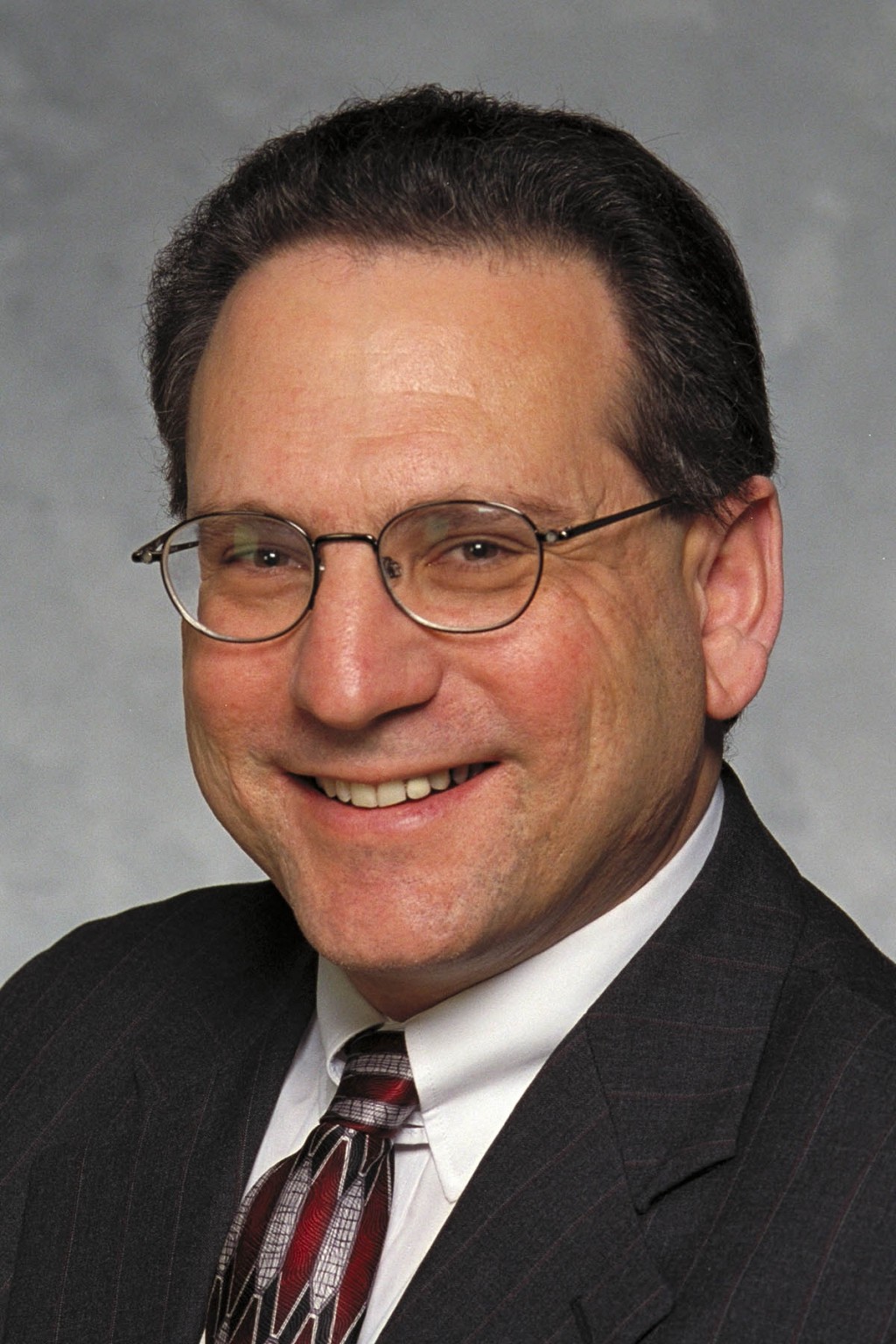
Alan Taub, General Motors head of Research and Development
Alan Taub, 54, is currently Executive Director in charge of Research & Development at General Motors. He joined GM R+D as executive director in 2001, and on October 1, he will replace Larry Burns as the company's Vice President of R+D.
GreenCarReports.com interviewed Dr. Taub directly after his promotion was announced, one of a series of upper management changes made last month as GM started to emerge from bankruptcy with tens of billions of dollars of US government loans.
Taub worked at Ford Motor Company for eight years, where he managed the materials science department, oversaw North American vehicle crash safety, and ran vehicle engineering for Lincoln. He spent 15 years in research and development with General Electric, where he earned 26 patents.
Dr. Taub received his bachelor's degree in materials engineering from Brown University, and master's and Ph.D. degrees in applied physics from Harvard University.
Now that GM's global R+D has been integrated into Product Development, how will its role change?
Alan Taub: In the old structure, vehicles and powertrains were engineered by two different organizations, so R+D had to be neutral territory. Now, Product Development Engineering handles both of those, and also manufacturing.
That means we can be work more closely together. The process will be much more streamlined. We'll have to negotiate fewer organizational interfaces, and we can better integrate our portfolio of advanced technologies into the vehicle development process.
What's the balance between customer-driven development and "pure research"?
Taub: I have two roles. I lead our Science Labs, and I also coordinate GM's entire portfolio of advanced technology work, including the people who do the advanced engineering within the vehicle group.
We strive for balance among the parts of R+D, but we don't do any research just for its own sake. We have to go in with some application to a vehicle in mind--even if it's really high-risk, or we're not sure if and how we can do it.
We explore at the outer fringes of what's possible for vehicles, versus generic research. For that kind of thing, we partner very heavily with research universities.
In our portfolio of projects, high-risk, long-term, exploratory research is about 30 percent. That would include smart and biomimetic materials, how neural networks might be used in autos, even integration of large data bases with onboard vehicle controllers.
Then, about half of what we do is large innovation programs with our colleagues in advanced engineering. There, you might find homogeneous charge compression ignition (HCCI) engine technologies, active safety systems, and next-generation integration of the vehicle with its surroundings.
Finally, the remaining 20 percent is short-term development activities.
What do you see as the key areas for R+D over the next 10 years?
Taub: [chuckles] Well, we manage by a list of key strategic technologies. We don't publish that list!
But basically, all our work revolves around three sustainability themes, plus work that will surprise and delight our customers.
The first sustainability theme is energy and environmental impact: high-efficiency propulsion systems, improving today's gas and diesel combustion processes, partial and full electrification (meaning hybrid and electric vehicles), and renewable energy. The goal is to be a much more efficient consumer of all fuels.
We already know we can package both extended-range electric vehicles, like the 2011 Chevrolet Volt, and hydrogen-powered fuel-cell vehicles. We can meet the volume and weight requirements. The challenge is cost, cost, and cost.
We spend a lot of resources on improving battery packs, hydrogen storage, and the fuel cells themselves. We go after power electronics and electric motors, since electric vehicles are "electron-source agnostic"--they don't care where the electricity comes from.
We want to make more of our powertrain systems work with renewable fuels, both E85 and biodiesel. We are concentrating on the tank-to-wheels efficiencies, but we also work with energy companies on the wells-to-tanks portion of the equation. Our joint ventures with Coskata and Mascoma fit there, and we're hoping they catalyze the industry (no pun intended).
Second, there's safety: We continue to improve passive safety (how a car protects occupants in a crash), and we're entering the era of active safety. We will have a future, one day, where there are no crashes.
Active safety work includes giving a vehicle 360-degree awareness, using onboard sensors, and communication both between the vehicle and other vehicles, and between the vehicle and the infrastructure it's passing through.
All those sensors can equally apply to a move toward more autonomous driving, which we will use to improve safety. We already have adaptive cruise control and panic braking; at some point, the vehicle will execute other standard processes, like lane changes.
And third, there's dealing with congestion. More and more of the planet's people will live in urban areas over the next decades. And as they do better economically, many of them want cars.
When you combine some degree of vehicle autonomy with dynamic routing in real time, you can grow the number of vehicles on the roads without worsening congestion.
We already know that some people consider driving a distraction from other tasks. How can we make vehicles more autonomous, and begin a changeover from driving to personal mobility--having a machine handle the driving? Or at least some of the worst parts?
What kinds of new products and services will we see in GM cars in the next five years?
Taub: I'm already on record as saying the technology for autonomous driving will be there by 2020. And not just for the highway; that's almost there today.
You can imagine a vehicle "back office" that will determine the optimal route for you, taking you where you want to go in the most fuel-efficient way possible. You could choose to be engaged with the driving, or have a chauffeur driven experience where you can select a work environment, or just relax in a lighted interior with music.
In the next five years, we'll see huge changes in infotainment systems. Voice commands for search requests and e-mail responses; reconfigurable displays that are much more compatible with third-party devices; seamless connectivity; and automatic syncing among the car and all your devices.
In our labs, we have car interiors where the seating is much more like business class on an airplane. Imagine that level of services, in an electrically driven car or one operating on renewable fuels, that you know is using energy in the most efficient way possible.
Smart materials will let us add motion to parts of the car where we can't fit another electric motor, perhaps grab handles or spoilers that are simply on or off. And when they activate, it's utterly quiet. We have intriguing new ways to light the insides of vehicles.
Of course there will be adaptive cruise control, then perhaps lane centering. The vehicle will be able to do more of the driving.
If you were writing this, what would you want buyers to know about R+D at GM?
Taub: From CEO Fritz Henderson on down, everyone knows we're at the beginning of an entire reinvention of the whole "vehicle". GM is committed to being a technology leader in that process.
For 80 years, we did our R+D in Warren, Michigan. Now, we have science labs in Warren; two in California (Malibu and Palo Alto); and others in Shanghai, China; Tel Aviv, Israel; Bangalore, India; Mainz-Kastel, Germany; and Honeoye Falls, New York.
Each of our laboratories collaborates heavily with universities and other entities. Our motto is: We will partner and collaborate with the best researchers, anywhere in the world, who have great ideas. We're looking for great ideas.