Nissan Slashes Leaf Price To Sell Electric Car...
2013 Nissan Leaf: Driven Through Tennessee...
2013 Nissan Leaf: Longer Range, Faster...
It's no secret that Nissan hasn't sold as many battery electric cars over the last two years as it had planned.
The company just sold its 50,000th Nissan Leaf last month, but it had hoped to sell up to twice that number between the start of production in late 2010 and the end of last year.
Now the company is continuing its shakeup of executives overseeing the electric-car unit.
Bloomberg reports today that starting April 1, its COO Toshiyuki Shiga will directly oversee the electric-car business and its share of the associated battery joint venture with NEC.
Hideaki Watanabe, a corporate vice president who had run the electric-car group to date, was shunted aside to become a senior vice president at a supplier.
In the U.S., expected to be the largest long-term market for plug-in electric cars, Nissan sold 9,674 Leaf electric hatchbacks in 2011, the car's first year.
Last year, however, in the face of more plug-in models entering the market, including plug-in hybrids that alleviate range anxiety, Nissan sold barely more than that, at 9,819 units.
Nissan had said for almost two years that it would sell 20,000 Leaf electric cars in the U.S. by this March.
It wasn't until last October that Nissan CEO Carlos Ghosn admitted that the company wouldn't reach its ambitious electric-car sales goals.
That month, Nissan appointed Billy Hayes as its global electric-vehicle sales chief, and reorganized some of its U.S. communications functions as well.
Hayes reports directly to Ghosn, as does COO Watanabe.
Last summer, Nissan's U.S. sales chief Al Castignetti attributed the low sales to three factors: a transition from online reservations to standard dealership retailing, a core misunderstanding of electric-car buyers and what they might want, and greater competition in the key California market from a greater range of plug-in vehicles.
Car dealers and local salespeople may be the weakest link in electric-car sales, in fact, for those reasons and more.
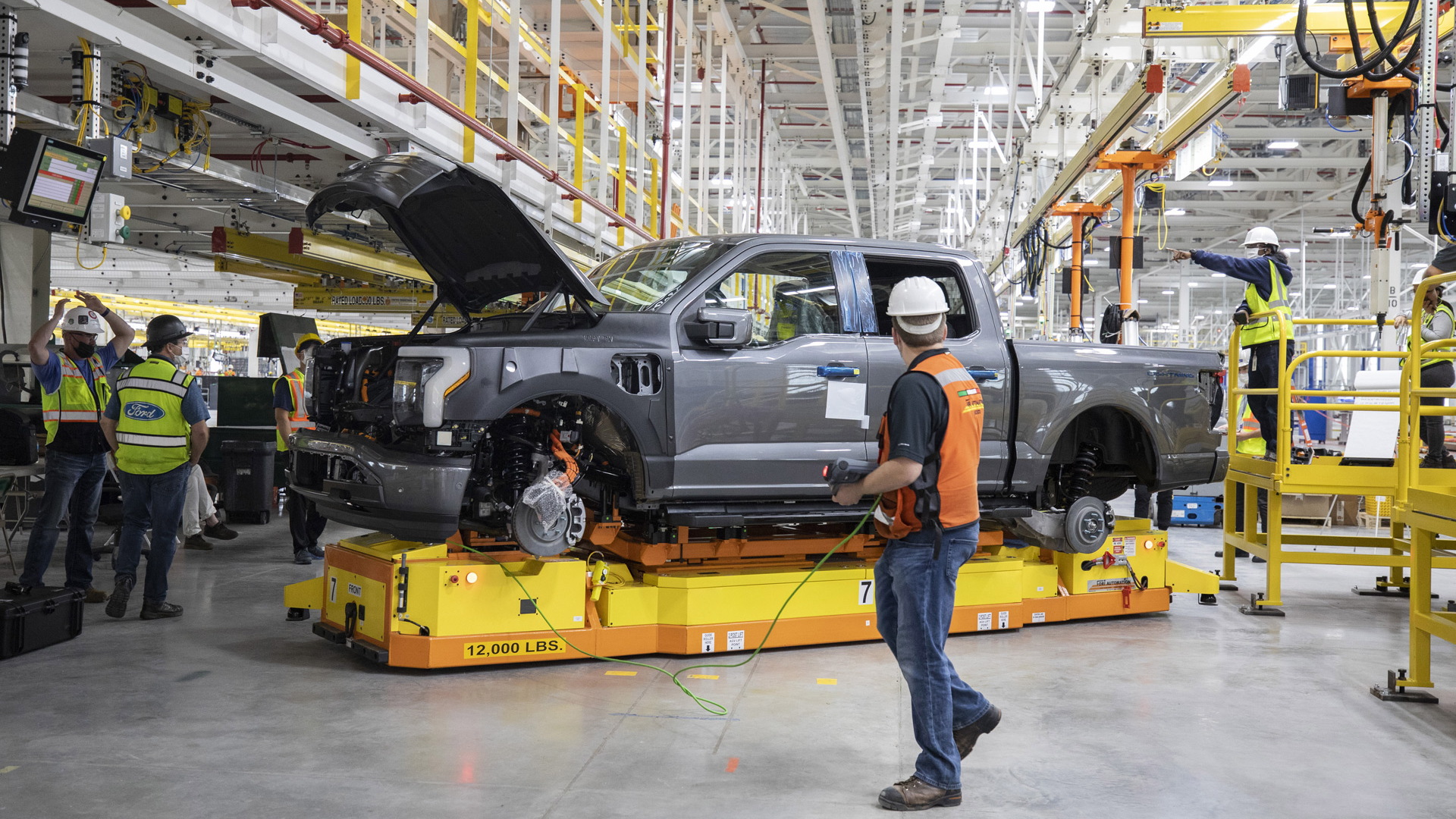
The 2013 Nissan Leaf went into production in January at the company's assembly facility in Smyrna, Tennessee, with some equipment upgrades, a new base trim level, and lower prices.
+++++++++++

Follow GreenCarReports on Facebook and Twitter.
Have an opinion?
a while back, someone asked me if they should get a LEAF, i said yes but they were hesitant over the range and got a Volt. Last time i saw him, he had had the Volt just under a year and was still on his original tank of gas.
But fear not. the LEAF is not Nissan's end game nor is it the real reason TN was built. The real fun starts late next Spring!!
I'm not one of the people who thinks you need a 300+ mile range. 100-140 would be plenty. On the other hand, the lower priced S is perfect for people who don't drive those extra miles and just want a lower cost alternative. I can see that hitting a sweet spot.
http://www.greencarreports.com/news/1080376_nissan-finally-admits-leaf-sales-are-slow-its-not-happy
That's almost a 20% increase in global sales over the last four months! Perhaps the year-end incentives & lower MSRP have spurred sales momentum? Will be interesting to see US sales numbers in next couple months as TN ramps up its production capacity.
I would love to read more about that. Will you please devote an article to it?
http://www.greencarreports.com/news/1077615_nissan-leaf-electric-car-sales-slump-whats-happening-here
While very important indeed, styling is not everything.
Range needs to increase to at least 300 miles. Even the biggest "gas guzzlers" manage a 300 mile radius.
Charging needs to be on the order of five minutes, going from completely empty to fully charged. Right now, charging takes hours. That is unacceptable to most people, as evidenced by low take rate.
Infrastructure for re-energizing is simply not there. Electric vehicles are purely in the domain of enthusiasts right now.
Most charging can be level 2 240V 20-40A. It does not have to be expensive high power DC chargers except on interstate highways.
so what can they do? increasing the range 50% will require a big jump in price, a complete redesign of the car (cant just throw a few hundred lbs of anything into a car and not have it matter)etc and it would all be for nothing.
What is really needed is for people to simply create a driving log. write down how far they drive every day and do it for 2-3 months...simple as that
Make the Leaf cheaper, longer range with better battery design...
Double the energy density and you will ,qua-triple the sales. PERIOD?
I paid $190 in electricity for the 7300 miles I drove.
Because somewhere in the extreme cold and with some aging degradation, your Leaf will be a 40 miles per day car...
Remember? 80 mile range with 70% for aging (after 5 years), 70% for extreme cold weather with heat usage and 80% for high speed cruising and charge up to only 80% of full battery will give you 80x0.7x0.7x0.8x0.8 = 25 miles worst case range...
That's how long its drivetrain is warranted for, isn't it? Or does another logic apply just for ?
First of all, Volt only uses about 10.5KWh out of the 16KWh battery. So, Volt already did the "degradation" for you and NOT 100% charging. And in 5 years, the Volt would still be under the Warranty. Volt in CA are warrantied for 10yr/150k miles.
Now with that range, Volt will lose about 20% of its range in very cold weather, sometimes even more with more heat usage. So, let us say about 70% of that range in cold. But Volt doesn't lose nearly as much in its high speed driving as the Leaf due to its second motor to increase the efficiency of main traction motor at high speed. It loses about 10-15% of its range at high speed.
So, 38x0.7x0.85 = 22.61 miles worst case. Oh, no need for a tow.
I don't know what logic do you use, but most of the time, when you multiply a positive number by a fraction, it will never reach zero....
If A is greater than 1 and B is between 0 and 1.
AxB^n > 0 (for n= 0, 1, 2....)
If you go by the worst case for the Leaf (70% at year 5), then it's only fair to go by worst case for other vehicles incl the Volt: drivetrain quits at year 5 -- therefore going 0 mile per charge/tank from then on.
If you think this approach is flawed, good, that's exactly what I was trying to illustrate: obviously the overwhelming majority of vehicles -- not just your favorite brand -- will vastly exceed the minimums set by their respective warranties.
So, you are talking about the warranty of the ICE powertrain of the Volt vs. its electrical drivetrain. The battery and electric motors are considered as part of the "emission" system in order to qualify for the 10yr/100K miles warranty in CA. So, in this case, the "apple to apple" comparison is 10 yr for Volt and 5 yr for Leaf.
Also, another flaw in your logic, a "failed" powertrain and a "low" range battery are completely different thing. I don't think I need to go into details on that.
Nissan's warranty doesn't apply if you still have 70& of the range at 5 yr. Volt's powertrain has no capacity limit.
Also, you can buy extended warranty on Volt's powertrain, can you buy the same on Leaf's battery?
Have an opinion?Join the conversation!