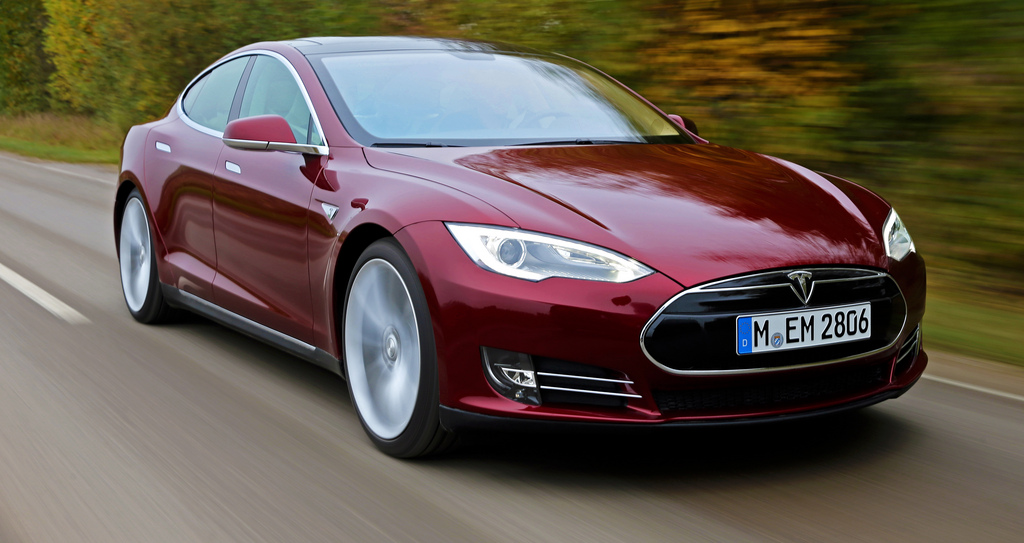
Tesla Model S
Tesla Motors announced its fourth-quarter and full-year results late yesterday, and offered some good news to the company's shareholders.
That would be the projection that Tesla Motors [NSDQ:TSLA] will operate at a profit in the current quarter, which ends March 31.
"We expect to be slightly profitable (excluding only non-cash option and warrant-related expenses) in Q1 2013," it wrote in a letter to shareholders on its financial results just after the stock market closed yesterday afternoon.
The prediction advances by almost a whole year the company's timeline for profitability, which had previously been set for the fourth quarter of 2013.
The company lost $90 million in the quarter on revenue of $306.3 million. Its losses per share were $0.65. And it repaid another $12.7 million of its $465 million low-interest loan from the U.S. Department of Energy.
Tesla said it built 2,750 cars and delivered 2,400 to customers from October 1 through December 31; it expects to deliver about 4,500 in the first quarter.
The company's stock, which had opened the day at $39.30, closed down slightly at $38.54 before the results were released.
[UPDATE: Shortly after the market opened this morning, Tesla shares fell below $35--tripping a so-called "circuit breaker" designed to slow short sales of falling stocks.]
After releasing the numbers, Tesla also held a conference call in which CEO Elon Musk, CEO Deepak Ahuja, and George Blankenship, vice president of sales and ownership experience, responded to questions from industry analysts and offered additional color on several issues.
'Cautiously optimistic'
Musk summarized the company's achievements and prospects this year as follows.
"We promised to do three things: We said we would start production in July (it was actually June), deliver 20,000 units in 2013, and by the end of 2013, we will exceed 25 percent gross margin--not including regulatory credits," Musk added.
He said at the end of the call that he wouldn't commit to being profitable in all quarters this year until he knew more about how the company's production, deliveries, and sales rolled out during the first half of the year.
"Maybe I'm hedging too much, but I don't want to be overconfident," said the usually quite confident Musk.
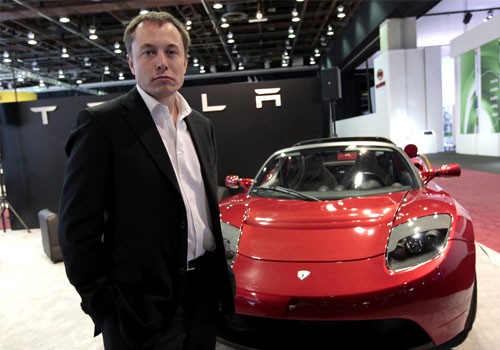
Tesla Motors CEO Elon Musk with Tesla Roadster
"In the absence of some force majeure event--a giant earthquake, for instance--I'm confident that we will be profitable this quarter, and it's our aspiration to be profitable in subsequent quarters as well."
"I do think we'll be profitable in the second quarter, and subsequent quarters too. I'm cautiously optimistic about that."
The following points summarize other topics discussed on the call.
Reservations and waiting time
The company said it added 6,000 additional reservations for the Model S (and also Model X) during the fourth quarter, compared to 2,900 added the previous quarter.
Asked about reports that it was possible to get certain Model S configurations through a Tesla Store in about a month, Musk responded that the average wait time for a car is now about five months.
But, he said, certain high-end Model S configurations--the 85-kilowatt-hour battery model with air suspension, not in the new red paint--were available in six to eight weeks.
"If we were to close all of our stores worldwide right now," he said, "We would still sell out for the entire year."
Tesla Model S
And, he noted, early deliveries have been of more lavishly specified cars than the company had projected.
More than half of Model S orders have specified the 85-kilowatt-hour battery pack, and less than 10 percent are for the 40-kWh version--though, he acknowledged, "that could change in the future."
Expansion into Europe and Asia
Outside North America, the company has done a limited amount of marketing in Europe--right now, Musk said, it only has two cars there. And it has done essentially nothing in Asia.
That will change "dramatically" this year, Musk said.
Reservations are rolling in steadily from Europe, Blankenship said, despite not having cars to display and stores just clearing out the last remaining Roadsters. Asia is even less advanced.
About 25 percent of the company's reservations now come from outside North America, according to Blankenship, and that will increase. The North American stores saw 1.6 million visitors, he said.
In December, Tesla opened a distribution center in the Netherlands and also announced European pricing for the Model S electric luxury sport sedan.
"We've said it before," Musk noted, "but we expect that ultimately, we will deliver 10,000 to 15,000 cars in North America, 10,000 in Europe, and 10,000 to 15,000 in Asia--but that will take time to build up, especially China.
The export drive "doesn't affect us this year all that much," Musk noted. "I'm quite sure we can deliver more than 20,000 cars this year, but we want to make sure we've laid the groundwork for improvements above 20K for 2014."
"It's not really a question of demand generation for this year," he concluded. The question is more, "How to exceed that next year?"
Quality control dataOne question caught CEO Musk off-guard: What were the stats on the number of Model S cars required post-production touching up or rectification of other quality-control issues?
"I don't have that handy," said an obviously surprised Musk. "I wasn't expecting that question."
The percentage, he said, has dropped dramatically since the start of production last June. Cars that have to be pulled off the end of the line to have something fixed are now a "fairly small percentage."
And, he pointed out, any issues related to the cars' software can be addressed by deploying over-the-air software updates--which no other carmaker can do. That, he said, "has worked quite well."
Reservations and waiting times
In its shareholder letter, Tesla wrote:
After deliveries and cancellations, our net reservations at year end, were over 15,000, up from about 13,000 at the end of Q3. New reservations continue at a steady, although slower pace in Q1 2013, as compared to December, due in part to the pull ahead of reservations into Q4 by customers seeking to avoid the price increase.
Q1 cancellations are likely to remain elevated as the remaining older reservation holders are invited to configure their vehicles within a set timeframe or pay the higher price just like new reservation holders.
'Revenge of the Electric Car' premiere: Tesla Motors CEO Elon Musk on red carpet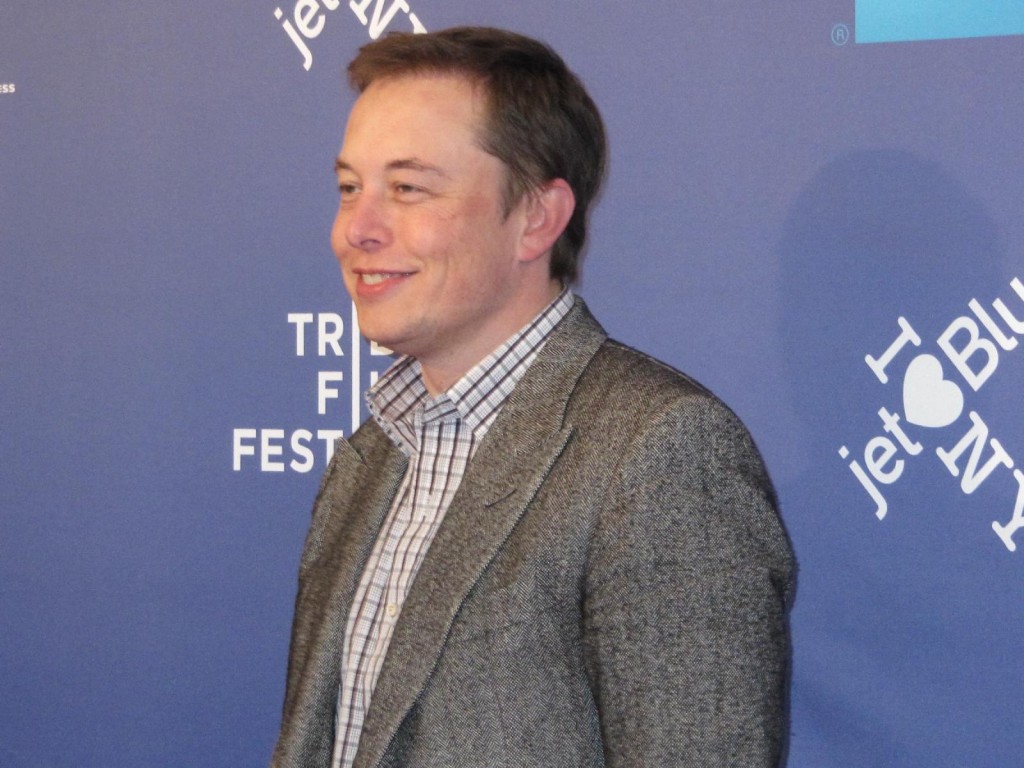
Asked by an analyst whether the net reservations number would fall during the first two quarters as deliveries ramped up, Musk indicated that it might well do so.
In raising the price of the Model S and asking reservation holders to confirm their orders if they wanted the old price, Musk said, "we were trying to clean out anyone who wasn't serious about buying the car."
Tesla expects its reservation numbers to stabilize, he said, though it has "a lot of demand in North America"--more than half its production target of 20,000 cars a year.
"Our intention is not to have people wait six months for a car," he said. "We much prefer that demand generation and production are better synced, so customers can order a car, get it in a few weeks.
"It's not our intent to have a long waiting list," he said. "That's pretty inconvenient for people."
Factory efficiency
But, he said, the company's production numbers have been constrained solely by its ability to achieve 'steady-state production in an efficient way"--not by demand--which he called "a really important point."
"If we wanted to, we could raise production to 500 units a week," Musk boasted, "but it would have a lot of expense for overtime and so on."
It's far more important for Tesla Motors to improve the efficiency of the assembly process at the current level of 400 cars a week, he said.
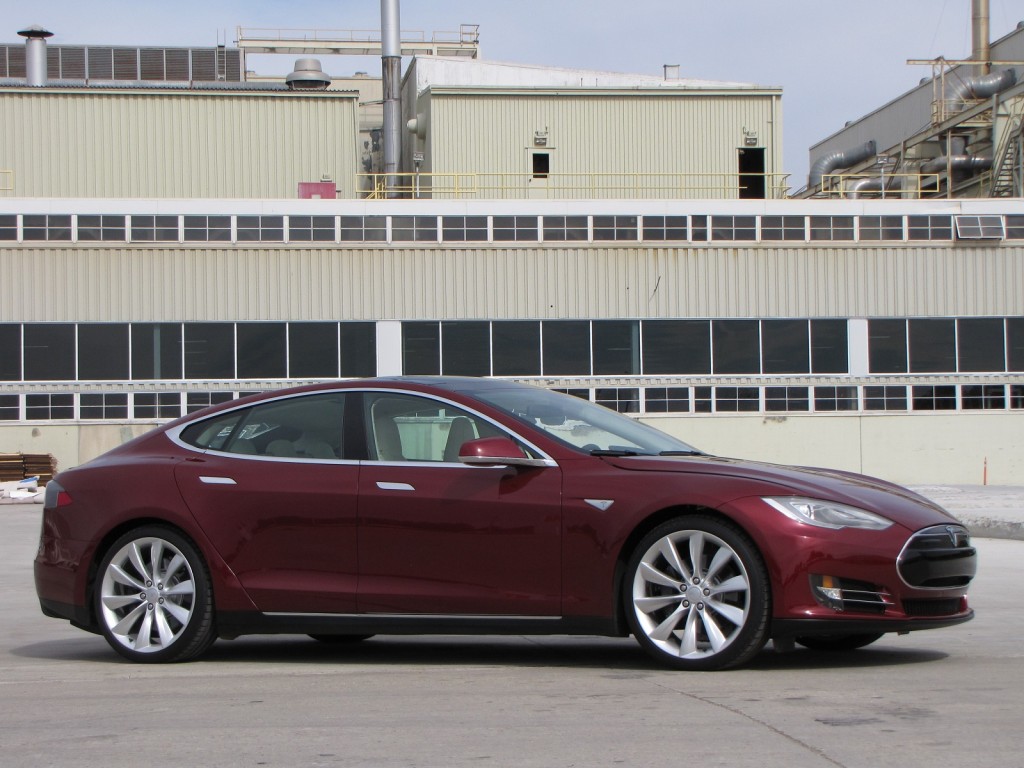
2012 Tesla Model S beta vehicle, Fremont, CA, October 2011
"This is our very first quarter when we're at our target production rate," Musk said, which has really been "very little time to work on production efficiencies."
Those efficiencies include reducing the number of staff hours per car produced, and cutting the number of temporary employees at the Fremont, California plant.
Factory workers averaged almost 70 hours a week in December, which Musk noted cost the company a great deal of money. "It's over time above 40 hours a week," he said, "but it's double time above 60 hours."
Today, workers average almost a 50-hour week, and Tesla's goal is to drive that down to the mid-40s during March.
"The labor hours per car are dropping dramatically," Musk said, saying that "may be the single biggest factor" in the company's drive to Q1 profitability.
Tires from the Czech Republic
Close behind cutting staff hours per car are improvements in logistics, and efficiencies in the parts from suppliers for the Model S.
"We had to fly in a lot of parts in December," Musk said ruefully, at a cost up to 10 times the standard price. "We had to do dumb things like fly in tires from the Czech Republic."
Tesla Model S
Tesla had to fly in the 21-inch tires from Europe because it took longer than 30 days for the tires to arrive from the maker--which required payment in 30 days.
The company, unwilling to pay for goods it hadn't received yet, held its payments until the tires arrived--which caused the tire maker to cancel its credit line. Mayhem ensued.
Once the situation got sorted out, the halt in sea shipments meant Tesla had to pay to fly in the tires to keep its production lines rolling.
"I wanted to punch myself in the face for that one," Musk said.
Slamming an analyst
And he had specially harsh words for one industry analyst, IHS Automotive, which had projected that Tesla would build 1,500 cars a year--not the 20,000 it projected and is now working toward.
With Tesla an unknown quantity to the auto industry's parts suppliers, those companies tended to rely more on third-party estimates than on the volumes of their parts Tesla had actually ordered.
"Suppliers looked at that forecast, and tooled up for some puny number of parts," Musk said, and were "caught flatfooted when we said, 'No, we really did mean the order we sent you'."
Tesla Motors had a number of conversations with suppliers where they "realized we really weren't kidding about that."
Now, Musk said, suppliers are more ready to believe that the company's production goals are serious--and price breaks for higher volumes of parts are kicking in as well.
That includes the price of the lithium-ion cells for its battery packs, supplied by Panasonic (which also owns part of Tesla Motors).
The cost of its cells will fall this spring, Musk said, which will have a beneficial effect on profitability for all Model S variants.
Leasing eventually
While Tesla already has a leasing partner--Athlon--lined up for its European customers, in North America, all deliveries are now outright purchases.
Leasing is something the company wants to offer, Musk said, and it could arrive in the second half of this year. Tesla wants to make sure the terms of the lease are "compelling," and talks with financial institutions are "progressing in a good direction."
Large banks, he noted wryly, tend to like the notion that Tesla will be profitable in Q1--it gives them "greater confidence" that the startup carmaker is a company they would want to partner with.
Next year, Musk concluded, "leasing will be a big factor" for Tesla. In Europe, it will be "at least a moderate factor" this year.
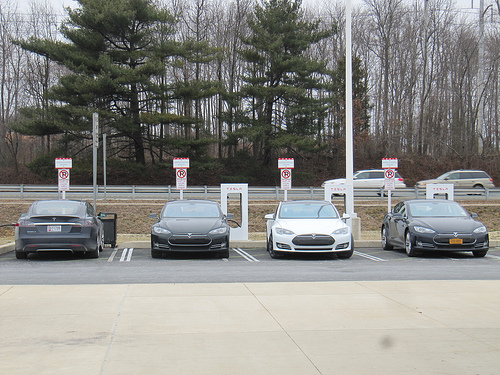
Tesla Road Trip from MD to CT, Feb 2013 - Tesla Model S cars at Delaware SuperCharger location
SuperCharger announcement coming
Musk nodded briefly to the existence of the controversial review in The New York Times, in which a Model S ended up on the back of a flatbed truck.
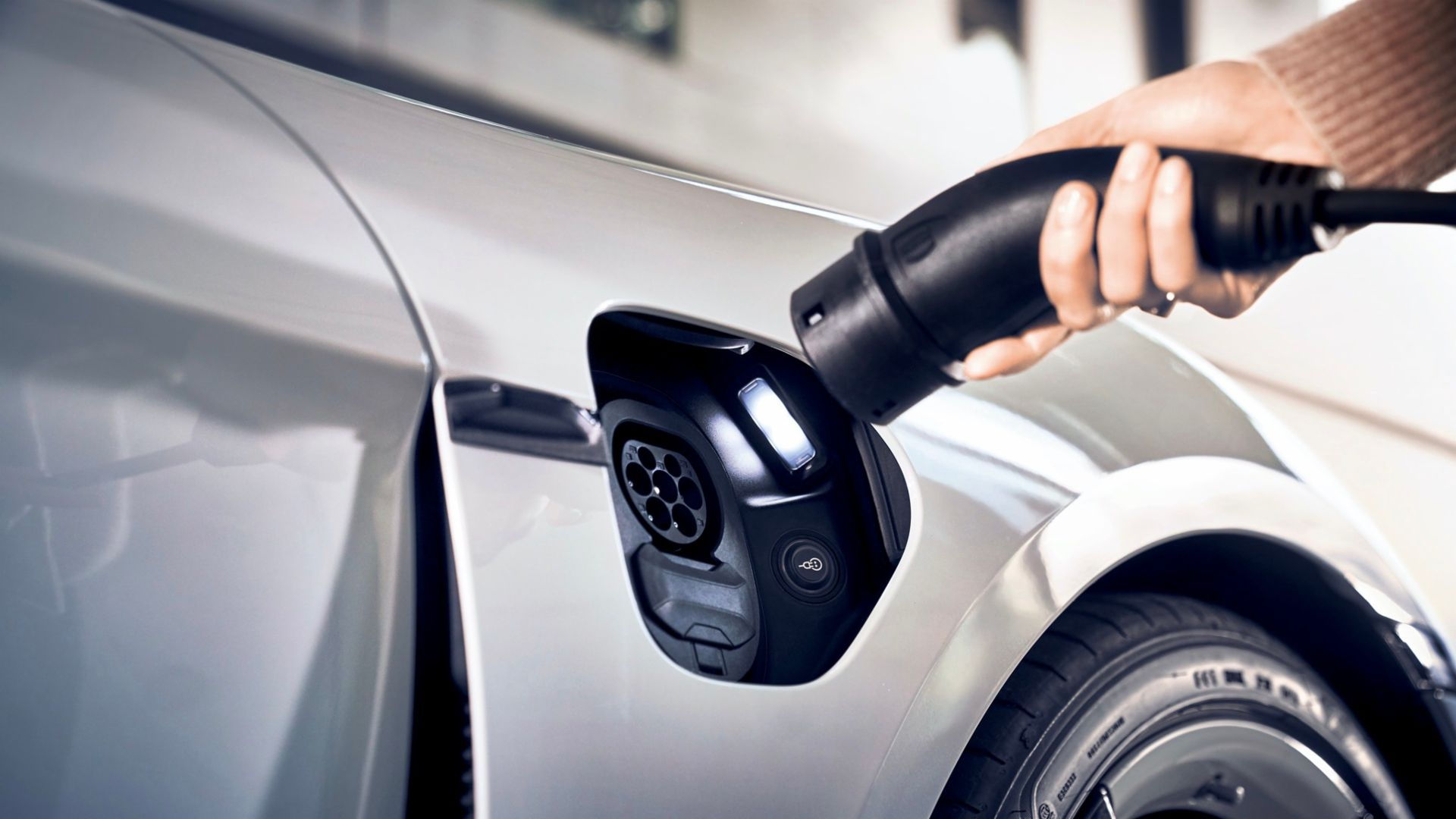
He acknowledged that in colder regions, the SuperChargers should be more closely spaced--120 to 150 miles apart, perhaps, rather than the current 200-mile separation between SuperCharger locations in Delaware and Connecticut.
The company is rapidly deploying more SuperCharger stations, he said, including in Texas, the Chicago area, and other East Coast locations.
And he hinted at future upgrades to the SuperCharger system. "We've got a fairly meaningful announcement about a step change in SuperCharger technology coming later this year," he said.
That had originally been what the company wanted to have the New York Times review cover--so, Musk said, "Who knows?" Tesla might invite the Times to do another review later in the year.
Acknowledging hard work
During the call, Musk paid tribute to the hard work of the entire Tesla Motors team.
The results being reported today, he said, are due to "an enormous amount of hard work by a really dedicated group of people. We're going to be profitable, which is a pretty big deal, but it took an enormous amount of blood, sweat, and tears to get there."
"It's difficult for me to overstate the level of difficulty," he said, "but we're going to do it. I'm really proud of that--and we can say that with confidence."
+++++++++++