Are you in the market for a hybrid car?
You probably want great gas mileage, without switching to diesel fuel, or taking the next step into plug-in vehicles.
The good news is, plug-ins aside, virtually all the most fuel-efficient cars on sale right now are hybrids. Whether you're after a spacious subcompact or a sleek sedan, there's a hybrid to suit most needs.
Below you'll find our run-down of the ten most efficient, rated by EPA combined mileage. Click on each vehicle title to go to its review page, or simply use it as a handy guide to the hybrids with the best gas mileage.
1) 2013 Toyota Prius C - 50 mpg
53 mpg city, 46 mpg highway, from $19,080
It's no surprise to find the Prius C topping the list for gas mileage. With a smaller, lighter body than the regular Prius and a smaller engine, it just grabs the spot from the larger car thanks to improved city mileage. It's more fun to drive too, though its less aerodynamic body belies a car which is less refined and less efficient on the highway.
2) 2013 Toyota Prius - 50 mpg
51 mpg city, 48 mpg highway, from $24,200
The Prius is no longer the most advanced hybrid out there, but the formula was right from the start--borne out by that combined EPA figure. It's taken a smaller version of the Prius line--or plug-in cars--to beat it on economy. If you can live with the looks, the dull drive and the image, it's still well worth a look.
3) 2013 Ford C-Max Hybrid - 47 mpg
47 mpg city, 47 mpg highway, from $25,200
Toyotas may top the gas mileage list, but Ford is catching up fast. The C-Max hybrid has better EPA gas mileage and a lower price tag than its closest rival, the Prius V wagon. It's also the better car to drive. Only lingering doubts about its real-world economy may put you off.
2013 Ford Fusion Hybrid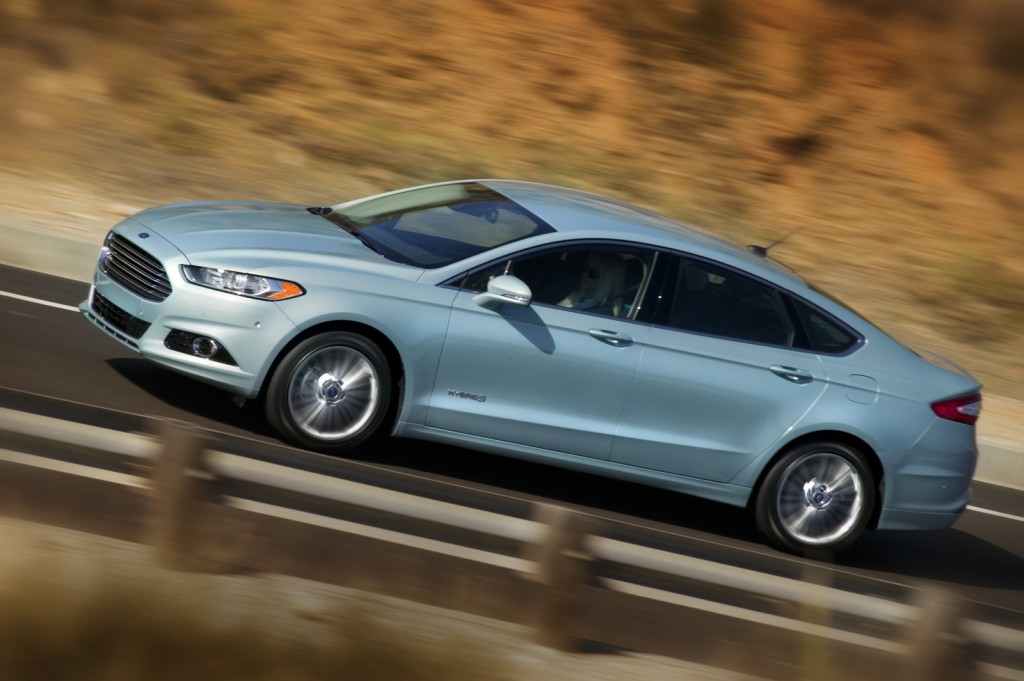
4) 2013 Ford Fusion Hybrid - 47 mpg
47 mpg city, 47 mpg highway, from $27,995
Ford has had its best few months ever for hybrid sales, and the Fusion Hybrid can claim some of the glory. Despite concerns that Ford hybrids aren't getting close to their EPA gas mileage figures, the Fusion looks good on paper and drives well out on the road. It'll even look good parked on your driveway.
5) 2013 Lincoln MKZ Hybrid - 45 mpg
45 mpg city, 45 mpg highway, from $35,925
Think Ford Fusion Hybrid underneath, with a classier, more dramatic exterior. The MKZ Hybrid loses out a few mpg all around to its Fusion cousin, but you get more luxury and a more prestigious name as a consolation. And if you'd said five years ago that a Lincoln would be one of the most efficient cars on sale, people would have thought you were mad...
2013 Volkswagen Jetta Hybrid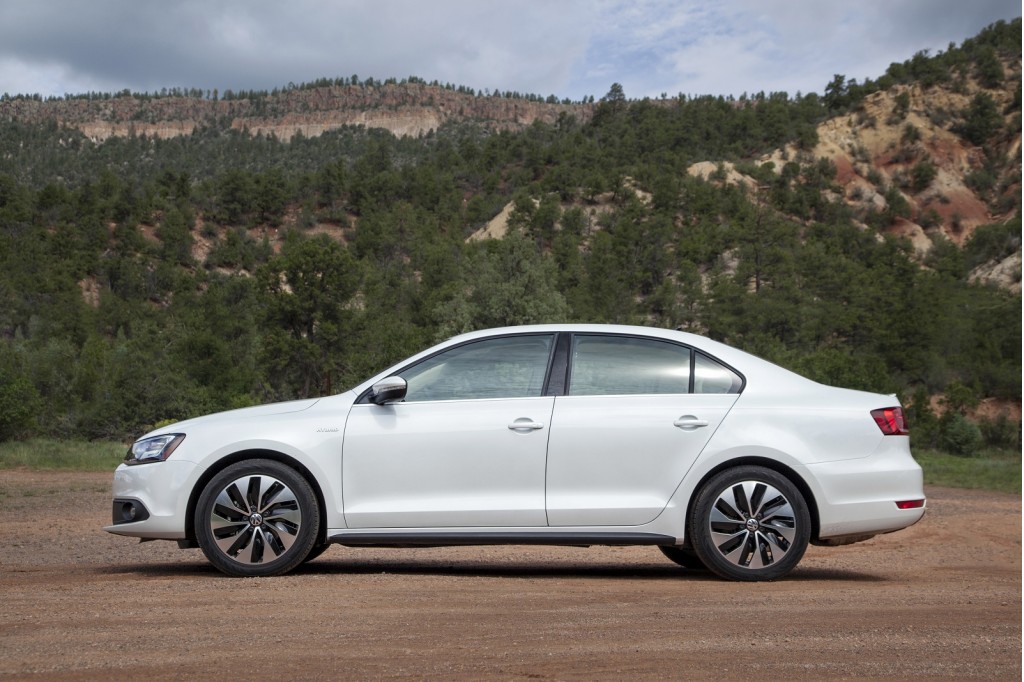
6) 2013 Volkswagen Jetta Hybrid - 45 mpg
42 mpg city, 48 mpg highway, from $24,995
"VW" and "gas mileage" in the same sentence used to be the preserve of diesels--but not any more. The Jetta Hybrid has pulled the carpet from under its TDI brother, with 45 mpg combined economy and an impressive 48 highway. VW is proud of how it drives too--touting the "Sure it's a hybrid. But it's a turbo hybrid" tag-line in its advertising. The 1.4 turbocharged engine certainly offers decent performance.
NOTE: The 2013 Honda Civic Hybrid is rated at 44 mpg combined, so it would logically fall into the list here. We omitted it from this article because fuel efficiency ratings had not been listed on the EPA website at the time the piece was published.
7) 2013 Toyota Prius V - 42 mpg
44 mpg city, 40 mpg highway, from $26,650
Prius fans wanting a bit more practicality do have to drop a few mpg to get there, but the Prius V still makes for a practical, usable family vehicle. 40 mpg on the highway shouldn't be sniffed at either.
8) 2013 Lexus CT 200h - 42 mpg
43 mpg city, 40 mpg highway, from $32,050
Under the skin, the CT 200h isn't that dissimilar from a Prius. The edgy bodywork and a few tweaks mean it isn't quite as efficient, but it's more sporty to drive than the Prius and that Lexus badge on the front will count for a lot too. The real-world economy difference isn't as large as the EPA figures suggest, either.
2013 Honda Insight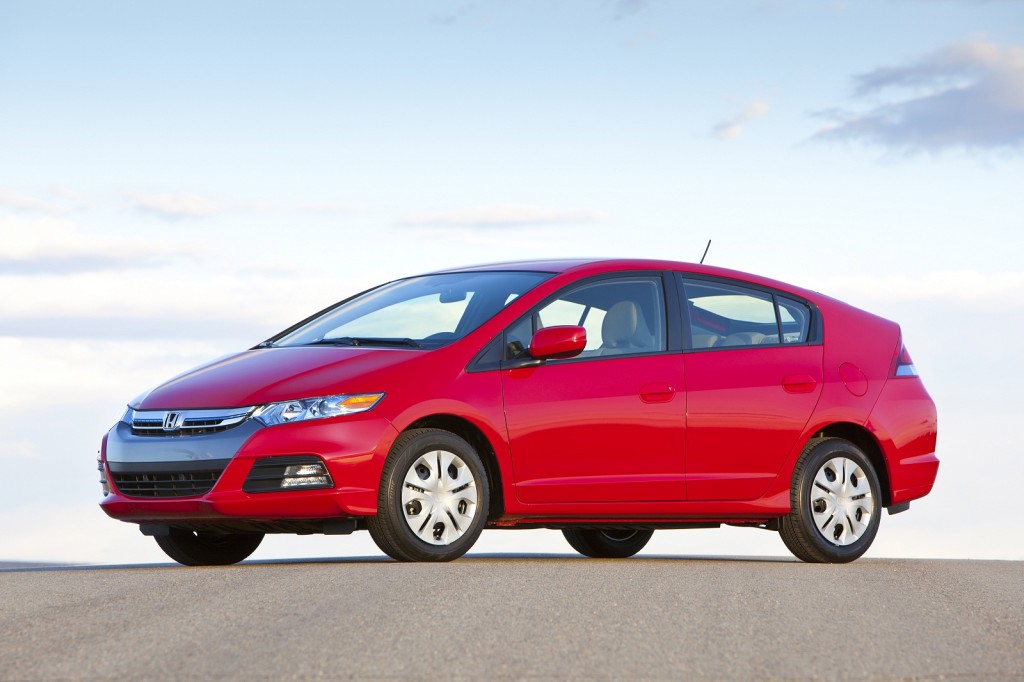
9) 2013 Honda Insight - 42 mpg
41 mpg city, 44 mpg highway, from $18,600
Compare the 2013 Insight to its early-2000s predecessor and it seems to have lost its mojo--it's heavier, less efficient and not as fun to drive. it's more practical though, and the cheapest hybrid car on sale. It still corners better than a Prius too, even if it isn't as comfortable--or fuel-efficient. A redesign in 2012 freshened up the looks a little.
10) 2013 Toyota Camry Hybrid LE - 41 mpg
43 mpg city, 39 mpg highway, from $26,140
Yet another Toyota makes it on to the list. The Camry Hybrid was recently updated, but that official EPA figure looks a bit old-hat next to the Fusion Hybrid. It's cheaper though, so you'll get a few miles of fuel with the difference.
+++++++++++