It's quite easy to forget that cars have been using batteries for years before hybrids and electric vehicles arrived.
The humble lead-acid battery, the planet's most recycled product, has been starting engines and providing power for car electrics ever since such a thing was required.
Now, battery startup Energy Power Systems (EPS), fronted by battery guru Subhash Dhar, has designed a new lead-acid battery which could replace the nickel-metal hydride and lithium-ion units in hybrids.
Using familiar chemistry but a new internal structure, Dhar says his batteries have the same power flow as NiMH batteries, but cost significantly less.
As Wards Auto reports, Dhar's history is impressive. He previously led development of the Ni-Mh batteries now used widely in hybrid applications, and his previous company also supplied now-bankrupt electric carmaker Think.
His idea comes as electric car sales remain low, but electrification in mild hybrid, full hybrid and plug-in hybrid vehicles is increasing.
Dhar believes that costs have to come down in order for hybrids to be accepted widely, and inexpensive lead-acid technology could be the perfect way to do this. Lead currently costs $1.80 per kilogram--cobalt is currently at $44/kg, and nickel at $11/kg.
Low costs and an improved structure make Energy Power Systems' batteries a tempting proposition.
Where normal lead-acid, 12V car batteries feature six blocks of 2V cells, the new battery features a more direct energy path with interlocking cells. Electrical resistance and weight are both reduced.
The net result is a power rating of 1,900 W/kg--four times that of current lead-acid batteries, and greater even than that of NiMH, at 1,450 W/kg. Better still is the cost--$15-20 per kilowatt, compared to $40-60 for nickel and lithium.
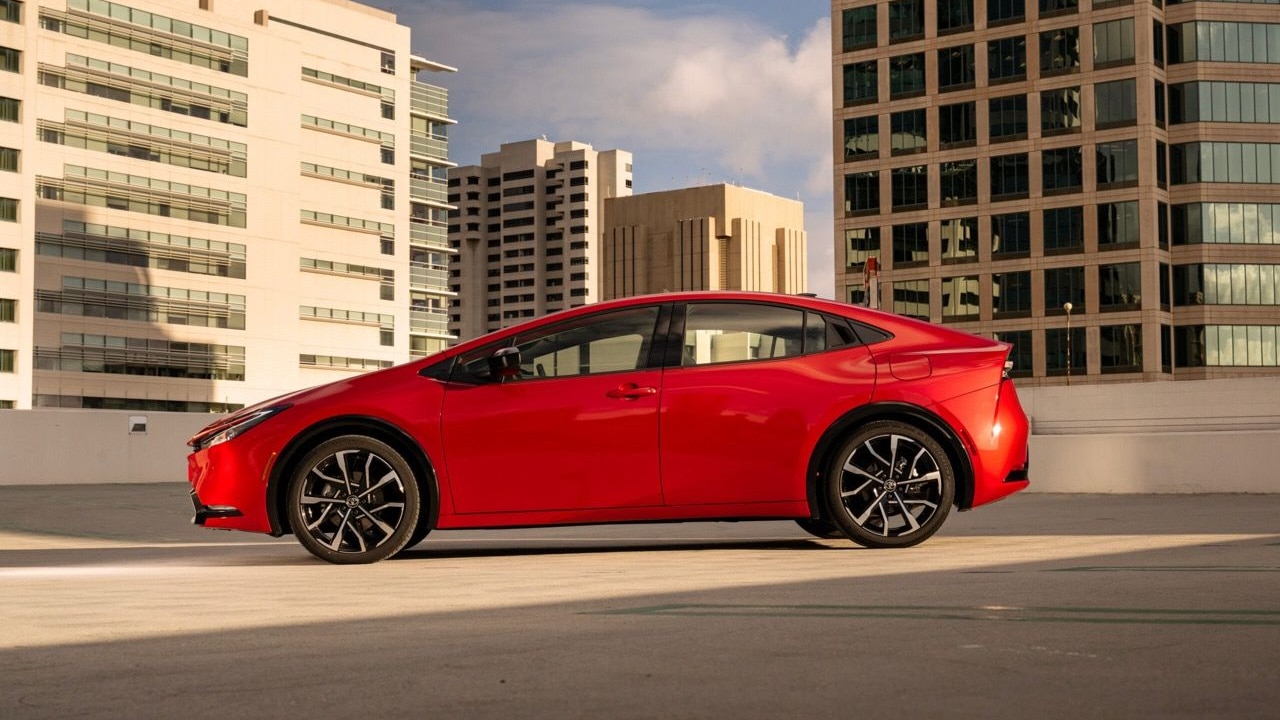
Dhar also says that in a typical hybrid application like the Prius, the batteries would take up less space as they require less thermal management and electronics.
EPS is just one of several other battery makers reconsidering lead-acid, though Dhar thinks his design is the simplest.
Current prototypes have been built by hand, but the company expects to have automation soon and production is expected in the fourth quarter 2014. The aim is to supply the light vehicle market by 2016.
Dhar says he isn't worried that automakers are still continuing down the lithium and nickel paths with small hybrid batteries.
"They have no option - until they find out what we are doing."
+++++++++++