2014 Ford Fiesta Updates: Styling, Interior...
BMW's Three-Cylinder Engine: Same Power, Better...
2013 Ford Escape 2.0-Liter EcoBoost: Gas...
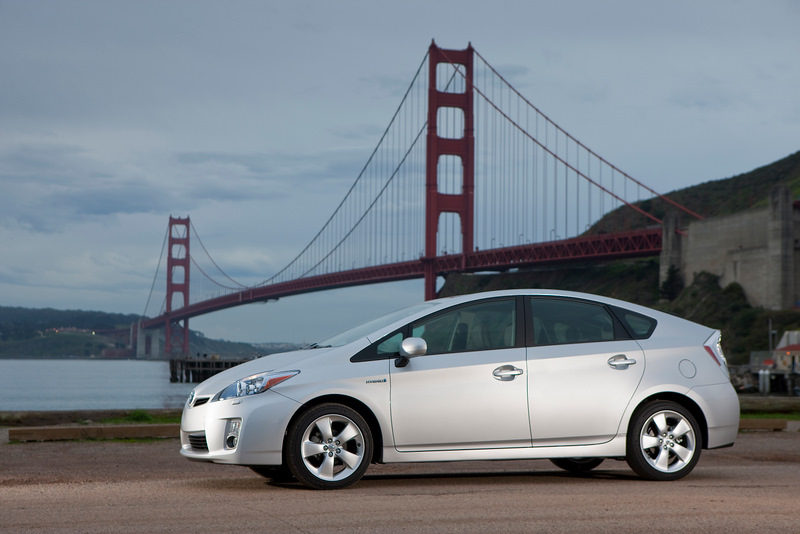
Toyota knew this when it developed the 2010 Prius.
Compared with 2004-2009 models, it used a bigger engine--1.8 liters versus 1.5. Yet MPG still went up, and users on Fuelly are achieving a few mpg more despite having more performance.
While smaller engines should use less fuel (all other things being equal) many seem to struggle doing so when they also have to haul along a relatively heavy modern car body.
And they struggle even more in cut-and-thrust traffic, when the driver needs a little more performance. This is why many subcompacts achieve little better mileage than larger compact cars.
Caveat emptor
So how small is too small, then?
It clearly depends on the application, for a start. While a 900cc turbocharged engine in a Fiat 500 is no better than a 1.2-liter four-pot available in Europe, the 1.2 is recording figures almost 7 mpg better than the slightly larger 1.4-liter unit--so 1.2 liters is probably the sweet spot for the 500.
Likewise, the Toyota Prius may not necessarily be made more efficient by increasing the engine to a 2.0-liter unit. And buyers are over-achieving when it comes to economy in the 1.4-liter, turbocharged Chevrolet Cruze Eco.
But significantly downsizing to chase impressive EPA figures may not be as beneficial as it sounds.
Not only do many of these vehicles seem unable to match their figures in the real world, but the complicated, high-tech engines often cost a little more in the first place.
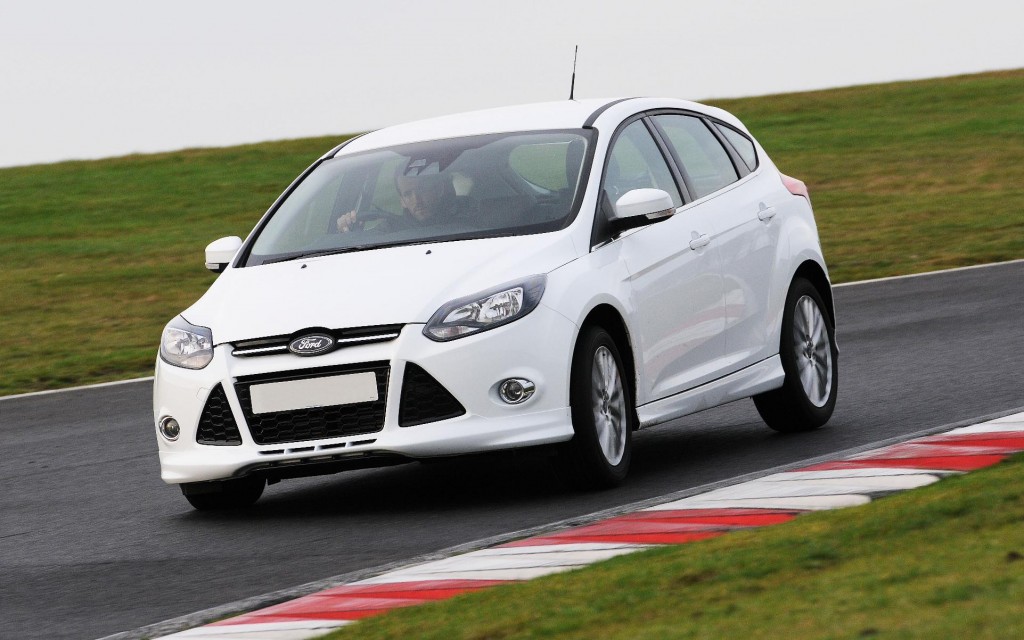
When the 2014 Ford Fiesta hits U.S. shores with the 1.0 EcoBoost engine and a headline efficiency figure, we'd advise you to treat it with suspicion--particularly given recent concerns over Fords missing their official EPA figures.
Of course, in the smaller, lighter Fiesta, the EcoBoost may be fine--which is really our point.
Some engines are better suited to some cars than others--buy too small, and "your mileage may vary" just a little more than you were expecting...
+++++++++++

Follow GreenCarReports on Facebook and Twitter.
Have an opinion?
Antony - exactly where are you getting your numbers? Of the 499 gas V8 F150's currently being tracked on Fuelly, no model year with the V8 appears to be achieving 17 MPG (average).
F-150, 2012, gas V6 (most of which seem to be Ecoboost models): http://www.fuelly.com/car/ford/f-150/2012/gas%20v6
Largest sample of each is 17 mpg. Both have a range either side of that figure too. Safe to say that neither one is more economical than the other.
It's safe to say the actual averages (V8: 15.4 MPG / V6: 17.0 MPG) do not support your argument.
And let's not forget that at the low end of the MPG scale, numerically small changes in MPG equate to significant volume differences: going from 15.4 to 17 MPG saves 92 gallons over 15k miles (typical distance/yr).
Full disclosure: I've removed the anomalous 31 and 45 mpg results from the V-6 one - we don't honestly think most drivers are likely to achieve that, right?
It's daft saying I've "cherry picked", since it's entirely sensible to use largest sample as the basis of the results. If the majority of drivers hit a certain mpg, that rather suggests that it's a sensible, attainable figure.
I'm aware I've used the word "averaging" but really we're reaching the realms of pedantry here - my point still stands. The V-6 is barely more efficient than the V-8 in real-world driving.
Right. And which anomalous results do we get to arbitrarily drop from the 1.0L EcoBoost Honest John "real world" average in order to make *that* number more accurate? Oh, right: none. (Because we have no useful details about that data.)
I'm not defending either the outlying pickup truck numbers or the small Ford engine.
But this exercise is pretty messy with the numbers.
It's absolutely reasonable to assume that the proportion of cars on there is no smaller than for any other model on that list.
In addition (and AGAIN), it isn't just owners who are discovering the engine isn't particularly frugal in real-world driving - you can read similar data in pretty much any review you care to read.
And AGAIN, the concept has precedents. The Fiat TwinAir being one.
Let me try a little different approach using Excel’s median function. Indeed “average” tends to weight bad data points too much, but “median” tends to ignore them.
Ford F-150
2012 16.5/16.2 mpg (V-6/V-8)
2011 17.0/16.8 mpg (V-6/V-8)
In each case, the V-6 is “better” but probably not in a statistically significant way as the difference is only 0.3 and 0.2 mpg. If we were “following the data” we might want to know why the 2012 models are lower mpg than the 2011, but again, this is probably not a statically significant difference.
Irrespective of this, it also reflects rather poorly on the engine regardless. And it's also data corroborated by several automotive magazines, all of which are struggling to get near the official numbers by the same - and occasionally greater - amounts.
"It's also barely above that of the 33 mpg 2012 Ford Focus SFE sold in the U.S.--with its 2.0-liter engine."
Apples and oranges! If one premise of this article is that "real world" MPG doesn't line up with the official ratings, why are you comparing real world numbers from the U.K. with the SFE's *EPA ratings*?
This article started out with a *very* interesting question. Too bad it's undermined by sloppy numbers & analysis.
32 mpg average. That's presumably a mix of non-SFE and SFE models, and it's only 1 mpg below the official of the highest-mpg Focus, the SFE.
There's nothing "sloppy" about my numbers or analysis - it's all based on easily-accessible data.
The answer is NO.
The US markets only engine choice is a 1.6L Duratec Ti-VCT. with a standard 5sp manual or the optional 6sp Powershift Automatic.
Other country Markets did however have a 2.0l option on the 5th Generation Fiesta.
When you "compare" the "real-world" results of the Ecoboost 1.0L Focus, To a (non existing US spec 2.0L fiesta SFE EPA) of "barely above that of 33mpg" (non existant 2012 2.0L fiesta)...
^^ Is that not already an efficiency improvement?! Remove 1 cylinder/reducing its displacement of .6L/reducing weight/putting into a larger and little bit heavier Focus package, and average above 33mpg?!
http://www.ford.com/cars/focus/specifications/engine/
And I don't mean to be pedantic, but no market has been offered with a 2.0-liter Fiesta.
As for your other point, I'm not sure I understand - 34 mpg real-world in the 1.0 is hardly a marked improvement on 33 EPA for the Focus SFE (nor the 32 mpg overall users are getting on Fuelly).
5th Gen fiesta had 2.0l option before complete rework..
What i mean by improvement, is that they accomplished similiar performance, from half the engine size. Better Hp/Liter, weight savings, smaller size/less parts/less materials, lower cooling demands, lower costs, probably even higher manufacturing rate.. Though its smaller can perform similiarly as a 2.0l, how is that not improvement?
The cost of turning a block of metal into an engine isn't really hugely different whether you're making a 1.0 or 1.6.
Turbocharging it adds complication and cost - in the UK at least, a 1.0 Focus costs more than the 1.6.
And as we've discovered, it's not much more economical either. And given the extra complication, would you prefer to have that simple, uncomplicated 1.6 ten years down the line, or the turbocharged tiny engine?
I've nothing against small engines - quite the opposite - but I firmly believe they have to have some tangible benefits.
But the reason I reference the SFE, is because regardless of combined rating, the SFE has the higher highway rating and therefore is the more efficient car.
My point was that the 1.0 varies *excessively* from its quoted figures, to the point where it's barely more efficient than the engine it supposedly replaces (the cheaper, less complicated engine at that).
This is the key point.
I don't think anyone would argue with an independent audit of a vehicle where a significantly higher-than-usual number of owners claim they can't match their MPG ratings in the "real world". (See recent Hyundai/Kia debacle.)
But if the official ratings continue to show better economy under repeatable, controlled conditions, then we know the problem isn't the engine, it's the nut behind the wheel.
If you can't see that the 1.0 EcoBoost (and other small, supposedly efficient engines like Fiat Twinair) are significantly *less* likely to achieve their claimed economy than a more conventional engine, then that's not a problem of mine.
I'll say again: The data backs this up. These are engines deliberately designed to test poorly-arranged economy tests, rather than work for real drivers in the real world.
The ease by which some drivers hit the less optimistic EPA testing is evidence of this - EPA testing is simply a better representation of how drivers drive, compared to the European cycle. But where the 1.0 Ecoboost only gets 70% of its official claims, the average for all new cars in the UK is 88%. Quite a difference, no?
Then why would you go onto say...
"EPA testing is simply a better representation of how drivers drive"
Even if someone drives "normally" as they do, and whined up at say 31-32mpg combined, They are still within the "EPA estimated 34mpg combined" estimation. They are most likely well within the "City estimate rating" also. That would automatically make me assume, that they drove more city, or idled allot, stop/go conditions, excessive warm-up times, driving without efficient load, etc.
As we all know EU does have extreme congestion on the streets, geographical speaking
EPA testing IS a better representation - and we can expect the Fiesta 1.0 to get more attainable numbers - but we'll have to wait and see what people are able to get in the real world.
The discrepancy is undoubtedly higher in Europe - city figures always seem even more unattainable over here, and stop-start traffic can really mess up real-world numbers even further (apart from on hybrids, which get better the slower you go!).
The larger engine will allow the engine to work at a much lower RPM so it doesn't have to spin as hard.
When most people compare engines, they only look at the spec power/torque at the peak. They don't look at the power curve and torque curve. They don't look at weight and transmission ratio. All of those impact the MPG significantly.
Also, didn't Toyota also upgraded the electric motor size when it switched from 1.5/1.6L to 1.8L?
Well, two different sized engine with two completely different torque/power curves is STUPID or STUPID engineering.
There are so many factors here affecting the efficiency than just size. In general, the "smaller" engines usually have more power per liter than the larger engines. That is why it is more efficient. However, if the engine is significantly smaller, and it has to stay at higher rpm to get the same amount of power, then it is NOT going to be more efficient. Many of the 600CC motorcycle engine will easily crank 120HP at 8,000 RPM but have terrible power curve. Dropping it into Econ box to replace the 1.x liter engine will NOT work.
How can you have two different "power output" engine geared to be the same and operate with the same load to spin at the same RPM?
Is that even a technical statement?
Engines have different optmum operating point. Is that load geared for the smaller engine or the larger engine? If the smaller engine has to scream near the redline to produce the same power as the larger engine at much lower RPM for the same given load, will the smaller engine still be efficient?
You already discounted the efficiency of the larger displacement by saying that "putting out the same amount of power". So smaller displacement with same power as larger displacement is more efficiency.
So, they are NOT the same engine. Like I said, find two engines with the same HP/Litter and then re-run your BSFC test and see what happens, especially at a constant load.
The smaller displacement will save fuel when it is "idle" situation.
L4 versus V6
2012 21.1 18.0
2011 21.0 18.4
2010 22.0 18.1
The four banger is consistently better. I am not sure why that relationship works here but not so much with the F-150.
Have an opinion?Join the conversation!