If you're looking to reduce your driving costs, should you buy an electric car?
It's a question many have asked in the past, and the results tend to vary depending on the electric car selected, and the cost of driving in your area.
As gasoline prices hit $5 per gallon in some areas of California recently, the L.A. Times looked into the costs a little further--just how much, if anything, could a 2012 Nissan Leaf save you?
Cheapest to run
Predictably, Nissan's electric car costs very little to run.
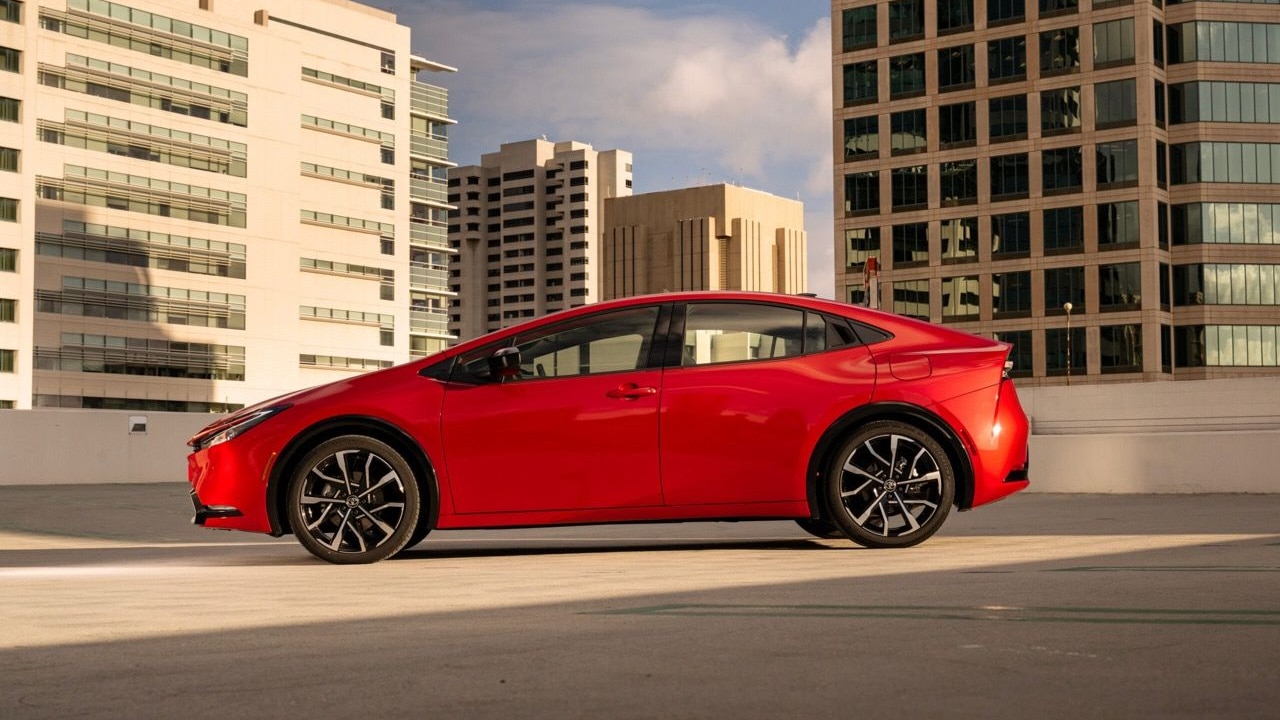
When compared to a selection of other vehicles, including Toyota's ubiquitous Prius hybrid, a Ford Focus, Honda Civic, Honda CR-V crossover, MINI Cooper and Toyota Camry--plus a BMW 328i luxury sedan--the Leaf came out cheapest.
In fact, based on the reporter's figures, it costs only 22 cents per mile in 'fuel'--with the Prius runner-up on 29 cents, and the Focus and MINI at 33 and 34 cents per mile respectively.
Over the course of a year, the Leaf would cost only $2,629 in electricity, while the BMW costs almost double that in gasoline.
Using the Department of Energy's Alternative Fuels Data Center tool, it also suggests that, while the Leaf is cheaper to run, the extra purchase price means it would take 15 years for price parity with the 38 mpg Focus.
Only... it won't. As one reader pointed out, the data tool didn't take incentives and tax breaks into account, and a driver making use of these would quickly swing figures back in the Leaf's favor. In fact, after only 6 years it would already have repaid its pricing difference thanks to low running costs.
Price isn't everything...
Of course, for those concerned about emissions and cutting down on fossil fuels, the Leaf is a no-brainer--even if it does take a little longer to pay off its purchase price.
And, as is often brought up when comparisons like this appear, not everyone cross-shops among vehicle classes alone. Someone with $35,000 in their back pocket is unlikely to compare Leaf and Focus, even if the Focus is considerably cheaper to buy--they're more likely to compare a $35,000 Leaf with another $35,000 car, one even less likely to be a gas-sipper.
Figures are also likely to move further in the electric car's direction as gas prices rise further, and the price of electric vehicles falls.
Overall, the conclusion is fairly predictable. Hybrids and electric vehicles are only set to make more sense as market conditons swing in their favor--but even today, a Leaf could make some degree of sense on purely financial grounds.
+++++++++++