It’s fair bet that by now, we all know gas mileage depends on many factors, including how well-maintained a car is, the pressure of the tires, how full the car is, and the road and weather conditions at the time.
How fast you drive also affects your gas mileage, with the energy required to push the car along growing exponentially the faster you go.
On paper, that particular rule represents itself as a neat equation, but what does it mean in real life? How much can you improve gas mileage by slowing down a little, and how fast should you drive?
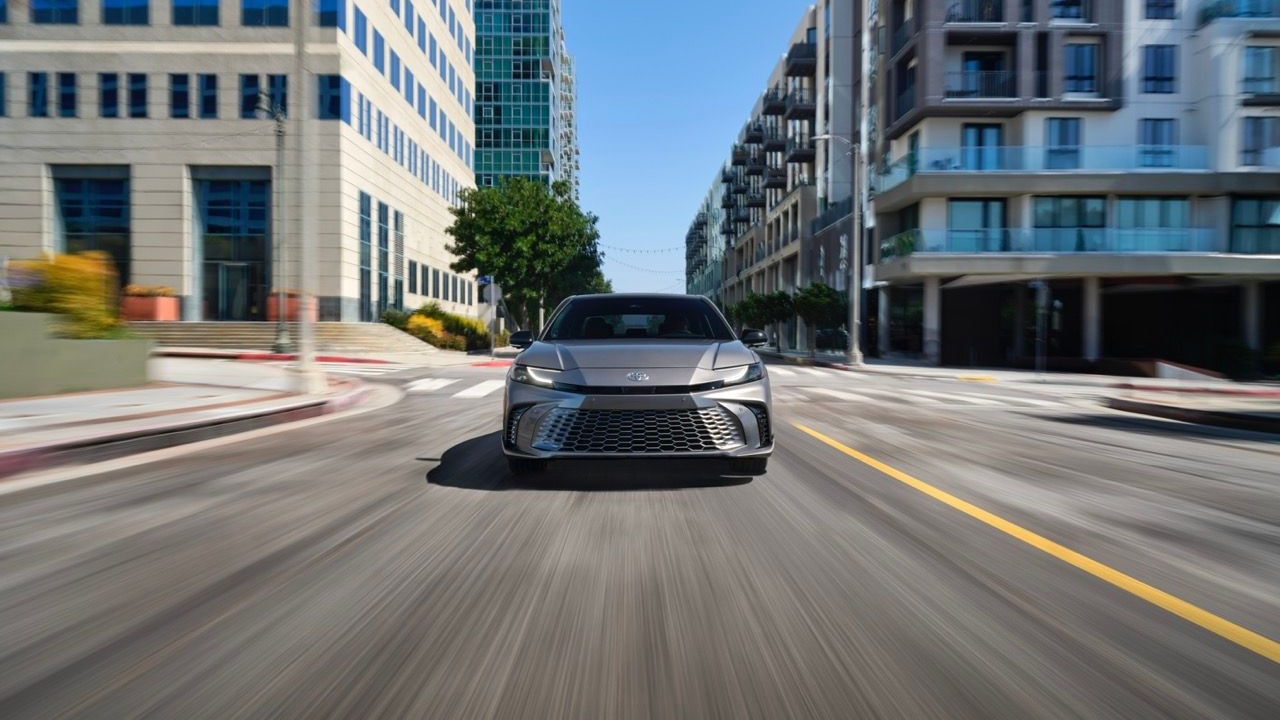
To find out, we made a 500-mile round trip in a 2008 Toyota Prius, driving the outward leg at 70 mph, and the return leg at 60 mph to see just how different our gas mileage would be.
70 mph = 45 mpg.
With a full tank of gas, we headed out on the outward run, driving where possible with cruise control engaged at 70 mph.
Although we stopped twice en-route, the car was not left long enough for the engine to cool down, while our start and stop locations were within 50 feet of each other in terms of elevation.
60 mph = 51 mpg
On the return trip, with similar traffic patterns, we kept our cruise control set to 60 mph.
The drop in speed may have resulted in the return trip taking some 30 minutes more, but it resulted in a gas mileage of 51 mpg, far higher than our outward journey.
Big savings
2008 Toyota Prius
Calculate the gas mileage increase over our Prius’ entire 11.9 gallon tank, and you’d be looking at a total range of 607 miles per tank.
That’s nearly 114 miles more range per tank than the official EPA estimate for that particular car.
Put it another way, that’s the equivalent of getting $9 of extra fuel per fill.
The perfect speed?
On the roads we travelled on, 60 mph allowed us to keep up with the flow of traffic in the slow lane, ensuring we didn’t hinder the progress of 18-wheelers and other slower-moving traffic.
But it also meant that we were traveling at a speed slow enough to maximize the gas mileage of the car we were driving.
For most cars, that’s somewhere between 45 mph and 65 mph.
What speed to you drive at on long-distance trips, and why?
And have you saved gas by doing so?
Let us know your experiences in the Comments below.
+++++++++++