2013 Ford Escape 2.0-Liter EcoBoost: Gas...
2013 Dodge Dart Limited: Gas-Mileage Drive...
2013 Hyundai Sonata Hybrid: Gas Mileage Test...
With the announcement of final rules for corporate average fuel efficiency of 54.5 mpg by 2025, the NHTSA and EPA have done two things.
The agencies have given carmakers both a major technological challenge--double the effective gas mileage of your vehicles in 12 years--and something they have long wanted: regulatory certainty.
If the definition of a good compromise is that no one is entirely happy with it, then perhaps the new, stiffer CAFE requirements are good indeed.
But many economists, industry executives, and policy wonks feel that stiffer gas-mileage rules are not the best way to reduce gasoline consumption.
The problem is that they throw the entire burden onto carmakers, rather than getting consumers to change their behavior to demand less of the commodity.
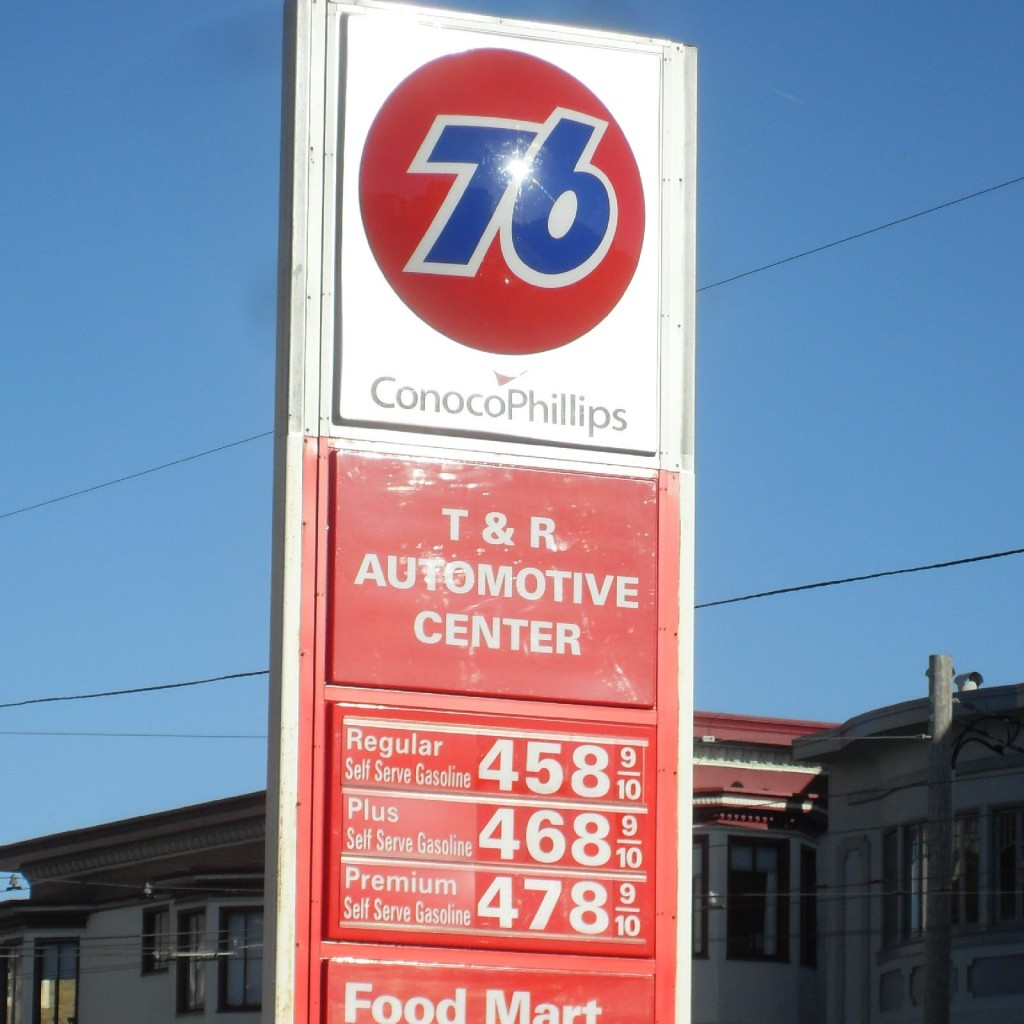
If gasoline prices in the U.S. were in line with those in almost every other industrialized country--closer to $8 a gallon than $4--consumers would be incentivized to cut their consumption, both by buying different cars and by driving less.
You can argue that we've now spent 60 years designing a built suburban environment that requires a car to survive.
Already, Federal gas-tax revenue isn't nearly adequate to cover the road repairs it's supposed to fund to make that suburban Utopia possible.
Certainly, in the currently poisonous political environment, raising gas taxes is a non-starter. Even proponents like GM CEO Dan Akerson and Ford Motor Co. chairman Bill Ford acknowledge that.
Advocating raising any tax for any reason, in fact, appears to be roughly equivalent to proposing government-sponsored matricide.
Nonetheless, yesterday an economic analysis in The New York Times made the case that higher gas taxes would be a better, and more cost-effective, way to cut gasoline consumption than are the new CAFE rules.
It's a well-reasoned case, with lots of data.
Read that article here, and then give us your reactions. Are the current CAFE regulations really the best way to cut our gasoline use?
Would a predictable, gradual rise in the gas tax be better (especially if the revenue raised were rebated directly to the drivers who paid it)?
Or are the new 54.5-mpg rules the only thing we can practically enact in the current political climate?
Leave us your thoughts in the Comments below.
+++++++++++

Follow GreenCarReports on Facebook and Twitter.
Have an opinion?
Also, how daft are these economists anyway? Why do they think these vehicles will be any more expensive than the current ones? Aren't people already buying the largest most expensive cars they think they can afford (Voelcker rule)? If so, they will be forgoing some options (leather seats) in the future to pay for efficiency (hybrid drive). Therefore no more expensive.
Hummer existed b/c consumer demand. GM wasMORE THAN WILLING to pay the penalty and make up the "CAFE average" by selling small and "cash losing" fuel efficient cars to compensate for the "HUGE PROFIT" generated by the Hummer sales. Was it shortsighted? Absolutely. But it made "short term" business sense at the time.
Even Toyota did it with FJ Cruiser, Sequoia. Nissan did it with their ARMADA, QX56... Those two company didn't suffer as much b/c they still had profitable small and fuel efficient cars.
But at the end of day, it was gas price that killed Hummer NOT CAFE rules.
But in any case, the goal of CAFE or Gas Taxes isn't kill brands like Hummer, it is to shift the average population of vehicles more to the fuel efficient side.
Also, to say CAFE rules don't work would be to ignore the rapid rise in fuel efficiency in the early 1980's. Best guess is that is primarily due to CAFE, and secondarily due to gas price (but we just don't know).
In most cases, I suspect that CAFE accelerates the move to greater efficiency, but there are weaknesses.
Personally, why would I give up anything if my vehicle costs $3k-$4k more but saves me more than that? Most people keep a vehicle for many years and I just don't think as many will sacrifice comfort as you think.
But perhaps I'm just spoiled and willing to pay more than most...?
Personally, I was shopping for a Prius or a Sienna. The Prius was less expensive.
I just object to the economists having a "static" model of consumer purchasing behavior. It seems unreasonable.
And too, where is the discussion of peer pressure. Why not have the EPA label show a grade from A to F based on efficiency. Hell, have them spray paint the letter on the rear bumper of the car. Who knows, might be more effective than either CAFE or taxes. Taking it one step further, place an MPG gauge on the rear bumper of every vehicle. Perhaps that will get people to pay attention.
Well, you are assuming the general public have the brains to understand reason and logic.
Remember that half of the population are on the "other side of the IQ bell curve"...
Well thanks for bringing about a topic to debate which we can do little if any action about. As admittedly the author Porter relays, the feds raising gas taxes currently or any time soon is VERY unlikely. However, the issue is worthwhile to discuss but the article has flaws and does not include a few relevant items. I also offer a "test" market for the much higher taxes scenario.
Corrections/problems w/ article:
1) Most other industralized nations have much higher gas taxes because they must.
Most of these countries do not produce oil in significant amounts or any at all to supply their oil needs. And many of these countries must import their oil from unstable, undemocratic nations a long distance away.
The above situation is different for the US. We produce much of our own oil for consumption and most of our imports come from our cozy, immediate neighbors to the north(Canada) n south(Mexico).
2) Porter assumes US driver behavior is tremendously elastic and that they are not now using fuel efficiency as a primary factor in purchasing new vehicles.
Many, if not most, Americans are already have changed their driving behavior at $4/gal in terms of driving less as well as purchasing the most efficient vehicles.
3) Porter spouts out many of his numbers w/ no footnotes or even specific names to the groups or "government" agencies he does cite. Where's the proof?
4) Just BS w/ the 72mpg for the Brit Fiesta.
Yes, the US Fiesta gets 33mpg combined...which is about tops in its class btw. But show me a Fiesta anywhere that gets 72mpg combined on unleaded! The devil is in the details here I think. I suspect Porter is using just the hwy mpg for the smallest diesel Fiesta. Any one got the facts?
Then there's the difference in test cycles, since the EPA ratings are usually tougher for identical cars than the Euro ratings.
Moral here: Make sure comparisons are apples to apples.
FYI, here's a 2011 article on the Focus Econetic:
http://www.greencarreports.com/news/1058386_europes-ford-focus-econetic-67-mpg-diesel-better-than-hybrids
Since the feds won't act soon, why not have some of our fair states deploy the higher gas tax? These states should have most of their driving populations a considerable distance from other nearby lower gas tax states.
Geographically states like HI, AK, TX, AZ, OR, WA, FL, NV, NM, and many others fit. Politically its likely only HI, CA, OR, WA, and NM could do it soon. Slowly, up 3% a year, raise the gas tax to 50% of cost of a gallon of gas. Gas tax revenue goes to road maintenance only
1. Gas taxes haven't kept pace with inflation. Let's face it, asphalt is way more expensive than it was 10 or 20 years ago.
2. Ask anyone pumping 100$ of gas into their car if they wished their car got better mileage and if they would have paid a couple of hundred bucks for better mpg?
CAFE standards cause more driving, more vehicles, traffic congestion, commute times, accidents, road rage, and obesity, gas taxes less.
The $1 increase in gas prices 4 years ago resulted in 18% less vehicle miles driven, according to a 2008 news report, and not the recession.
With GAS TAXES, you and I could drive any car we want, "just pay the gas tax". Less traffic equals better MPGs. It's a boon for bike riders. For the poor, a $12999 new car @35-40mpg is reliable though not for driving hither and yon.
High MPG goals are very good becaus companies can design and deliver new products that trickle down through the economy. I'd rather see cheap gas being used for employees to get to work to design something that is high mpg. It's a for-the-positive change rather than a forced cultural negative (the gas tax). A whole lot of poor people are out there and gas prices are impacting them now.
Have an opinion?Join the conversation!