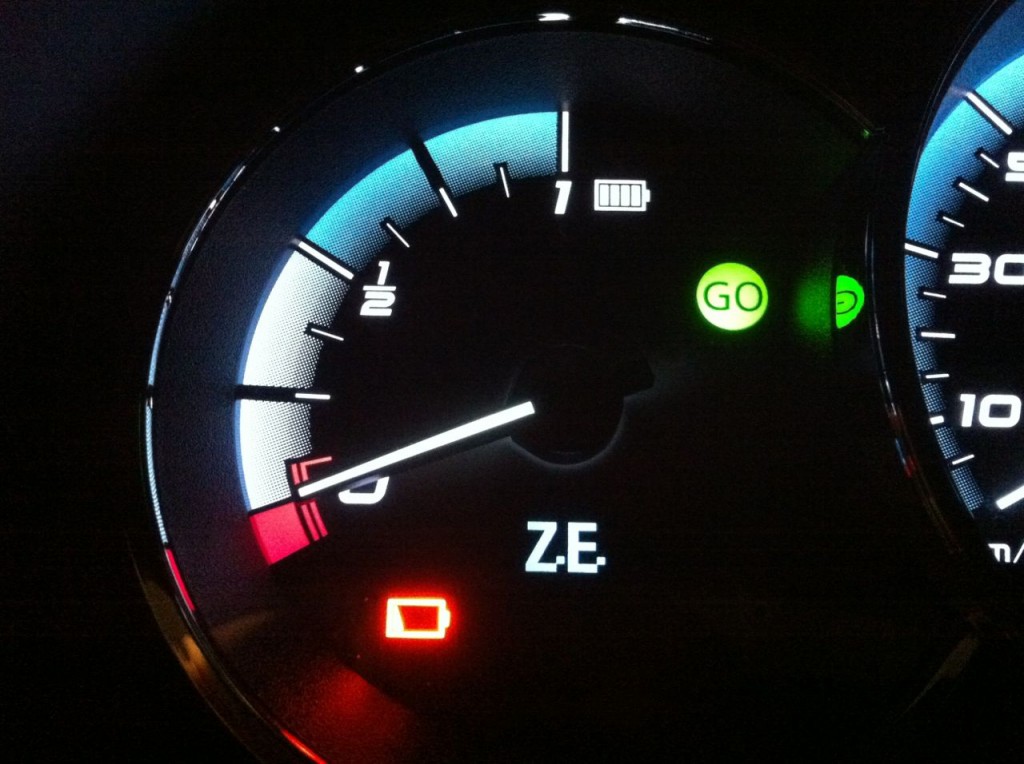
Low-battery red warning light on Better Place Renault Fluence ZE, Israel
It's been a little more than 100 days since I drove away in my first electric car, a Renault Fluence ZE, as one of the first 100 private paying customers of the Better Place company in Israel.
Here's the rundown of how I've used the car, including my likes and dislikes.
In 113 days, I've covered 3,700 electric miles, and I'm averaging 30 miles a day. I've pre-paid Better Place for 12,400 miles per year, which works out to 34 miles a day.
The car was stationary on 25 days. On 15 days, I've gone beyond the car's "low anxiety" realistic range of 75 miles per charge. I fit the pattern of a driver whose regular requirement is within the range of overnight charges, but also takes occasional long-distance trips.
Fifteen times, I've gone further than 100 miles in a day; on three of those days, I went more than 150 miles.
To cover the longer distances, I was able to switch batteries during a 5-minute stop at a Better Place switching station. I've now switched 23 times, though only 14 of those times were absolutely necessary. (I've demonstrated the process to interested passengers several times, which accounts for the rest.)
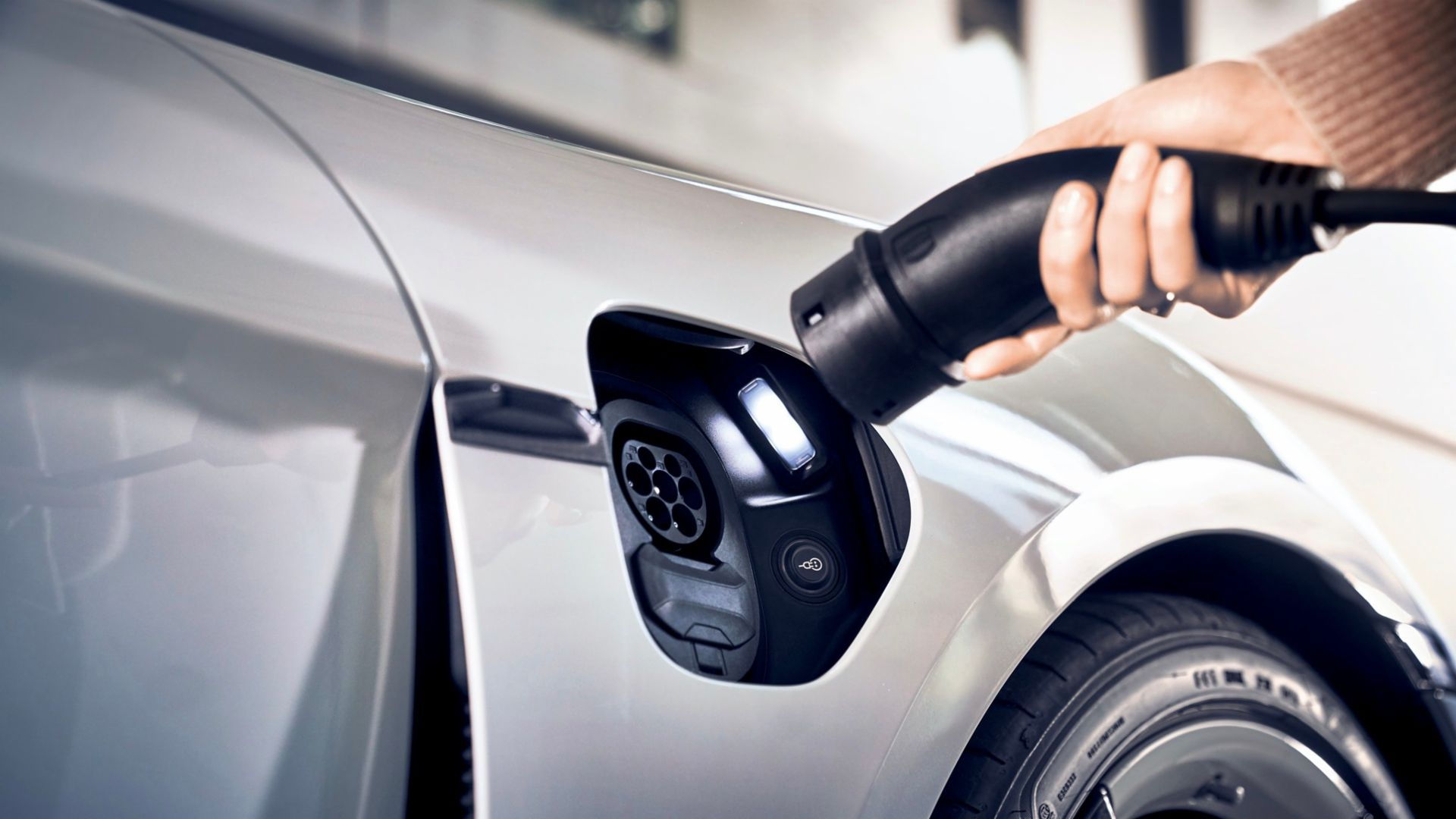
Those 14 required switches happened over 10 days. One was necessary because I came home with a low battery and failed to plug it in properly: I could blame my 5-year-old, who plugged me in that day, but that would be unfair! Luckily, I have a switch station just 8 miles away from my home.
The most I've switched in a single day is twice, on four days. Future battery switch stations to be built (we now have only 14 out of 38 planned) will mean three of those trips would become possible with only a single switch.

Daily driving distance distribution for Better Place Renault Fluence ZE, Israel
On two occasions I've had to take a different route than I might otherwise have traveled, because of a non-functioning switching station.
The car's in-dash system alerted me to the problem, and after calling to confirm the outage, I decided to divert.
I've been called three times by Better Place when my battery level dropped below 12 percent, to check if I was going to be OK. Twice I was a few miles from home, and the other time I had just pulled in to switch the battery.
There is no extra cost to me for unlimited switching: I don't pay any more whether I charge at home or in a public parking space, or by switching batteries.
All of htis works out to roughly 260 miles between battery switches; I used to fill up my gasoline car more often than that!
Stopping, pumping, and paying for gasoline took longer than the switching process does, so I've saved a little time overall.

Coffee and keys to Better Place Renault Fluence ZE, Israel
Ignoring the value of items like tow-truck coverage and OnStar-like tracking included in the Better Place subscription, I've saved at least $300 on fuel compared to my previous Honda Civic.
What do I like?
- The car's performance around town is a joy: fast and responsive while easy to drive slowly in Tel Aviv's notorious traffic.
- The air conditioning cools the car fast, and I've enjoyed having the car precooled by a timer while parked in my hot garage through the summer.
- Service on the phone and in person from Better Place continues to exceed my expectations. Money they owe me is a paid promptly and inquiries are dealt with quickly and efficiently.
- Better Place has added a very slick parking app so I can pay for on-street parking anywhere in Israel, directly from the car's dashboard.
- The switching stations work as designed when needed.
What don't I like?
- Who decided that headrests in new cars must permanently touch your head? I can't put the Renault's headrest back far enough, and it's annoying.
- The air-conditioning fans are too noisy, perhaps because everything else in an electric car is so quiet.
- The range-prediction system isn't great at predicting downhill range; descending from Jerusalem, I frequently beat its range projection with 20 percent less battery usage, meaning I have to ignore warnings to pull over and switch batteries.
- The current placement of switching stations aren't optimal for me; I can now drive anywhere in Israel, but when more stations come online, I'll need fewer stops.
- The Israeli Electric company and Better Place still haven't managed to install a separate electricity supply for my car at home. Better Place promptly repays me each month for the power I use, which I pass on to my building's condo board, but this remains a broken promise that makes both Better Place and me look bad.
However I look at it, I'm still a happy Better Place customer and--as regular readers surely know by now--I still recommend the car and service to everyone who questions me at traffic lights or comes up to me when I park.
Brian of London emigrated from the UK to Israel in 2009. He owns and operates his own import company in Israel with more than 15 staff. Today he regularly blogs at Israellycool.com about life in Israel, technology & business topics and, lately, his electric-car driving experiences.
+++++++++++