You might have noticed, driving through the summer months, that you're filling up the car a little less often than you would over winter.
It's not your mind playing tricks on you, but a fairly common occurance for all drivers. Cars simply get better gas mileage during warm weather than they do when it's cold.
There are several reasons for that, and we've picked the most relevant ones below.
Warm air
There's a scientific explanation for why you use less fuel in warmer weather, and it's to do with air temperature.
As you may know, your engine uses air, as well as gas, in order to generate energy. In fact, it uses huge amounts of the stuff, though only the oxygen is used in combustion. These oxygen molecules combine with carbon in the fuel during combustion, to form--you guessed it, carbon dioxide.
Anyway, one property of air, like many substances, is that it expands when it warms. This makes it less dense--molecules of the various gases are spread further apart. This means that every gulp of air your car is taking during combustion has less oxygen in it at warmer temperatures, and if there's less oxygen, the engine compensates by using less fuel.
This is bad from a power perspective, but good for economy. The engine is combusting less fuel due to the warm air, improving fuel economy. During winter, the reverse is true--denser air encourages the engine to chuck in more fuel, boosting performance and harming economy.
2012 Audi A6 all-LED headlights 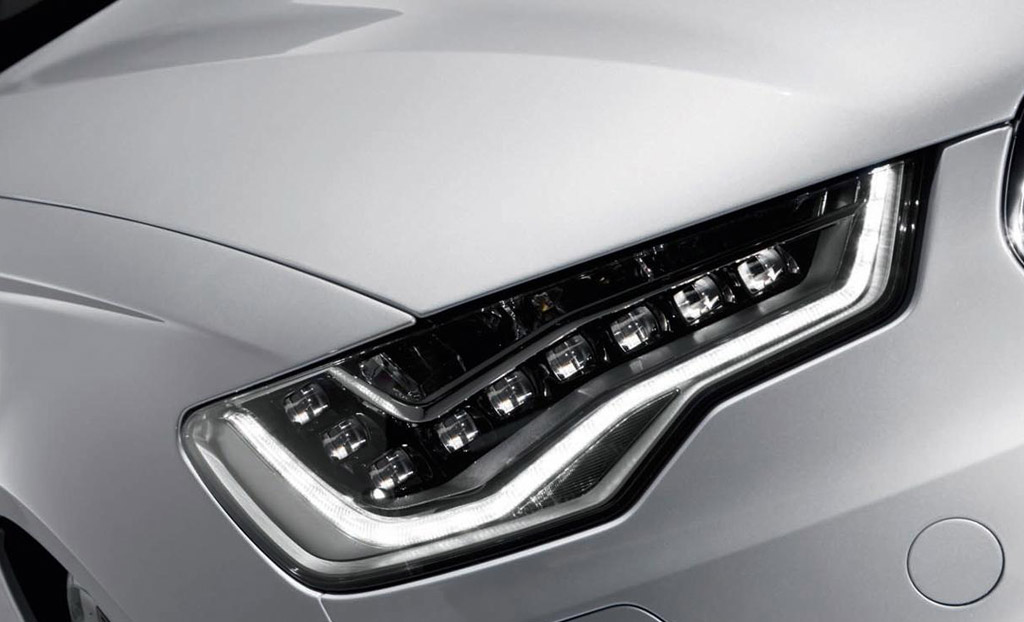
If you live in a particularly warm climate, then you probably use your air conditoning or climate control most, if not all the time.
This naturally uses fuel, but the draw in colder weather is even greater, with heaters constantly on, more use of headlights in the longer winter nights, and even spells on the driveway with the engine idling, simply to defrost the car.
By comparison, you'll use less gas in warmer weather simply from not running as many accessories. All those accessories have to get their power from somewhere, and that somewhere is usually the alternator, which draws engine power as it spins. Fewer accessories mean less gas.
Weather
We've already covered air density, but the weather itself can affect your mileage too. It goes without saying that conditions are more likely to be adverse in winter--particularly in some areas, where heavy snowfall or rain is more likely.
Racing Green Endurance - A rainy Start
Then there's traffic. Although you might get caught in long queues during vacation times, poor weather conditions do slow down traffic and result in queues. With fewer queues in summer, you save a little more gas than you would in winter.
If you live in a state with particularly defined climates, then you may well use dedicated summer and winter tires, too. Winter tires are great for improving grip and safety in adverse weather, but the softer rubber compounds used in winter tires increase rolling resistance. Those summer tires slip over the road surface more easily--again, improving gas mileage in clement weather.
Other factors
There are other factors increasing rolling resistance too. One of those is air pressure. Though we've mentioned how warm weather means lower pressure outside, in your tires--where the air cannot escape--that increase in temperature results in higher pressures.
That, as you can imagine, helps improve rolling resistance, compared to the winter months when lower tire pressures result in more drag.
Warm air also affects oil viscosity too. Oil becomes thinner when it's warm, which is fairly academic once the engine is up to temperature, but important when the engine is cold and can spin with less friction--and of course, it takes less time for an engine to reach its ideal working temperature in warm weather.
Finally, some states sell different grades of gasoline in the winter than in the summer. In summer, gas has higher energy content, burns more efficiently, so more of that gas is used to move you down the road, improving mileage.
So there you have it--want to know why your car is getting better gas mileage now than it was six or seven months ago? Plenty of reasons! Just enjoy it while it lasts...
+++++++++++