Visiting family this Memorial Day weekend?
If so, you're probably driving, as it's still the most convenient way for many people to cover most distances. With millions of people simultaneously hitting the road though, that's a whole lot of fuel being used.
That's why we've compiled a list of ten tips to improve your gas mileage this Memorial Day weekend--everything from preparing yourself and your car before you even set off, to little hints aimed at improving your fuel efficiency once on the move.
If you can think of any more, feel free to share them in the comments section at the bottom of the page--after all, it'll benefit others as well as yourself.
1 - Plan ahead
In these days of satellite navigation it's so easy to just set off and follow the instructions. The trouble is, everyone else is following the same instructions. You end up on the same road as a billion other cars, and sit there immobile, wasting fuel.
If you plan ahead, you can potentially avoid all this. It might mean taking the road less-traveled, but it could also be the more pleasant, scenic route, free of traffic and even if it's longer, it might prove quicker. A moving car that spends less time on the road is more efficient than one stuck in traffic for hours.
2 - Check your tires
If you read our recent article about ensuring your tires are in good condition, you'll know the importance they hold for saving fuel.
Check the pressures, ensure there's no damage, and make sure they're not overly worn. Apart from severely worn tires being illegal, they're also dangerous and grip is reduced massively, particularly when the roads become wet.
3 - Check your car
As well as the tires, do a few quick checks over the rest of your car. Ensure the engine has sufficient oil, make sure all the lights work, and give it a clean.
Although you'll likely be loading the car up with people and luggage, do a check around to make sure your car isn't full of junk or unnecessary paraphernalia - it all adds weight, and weight is the enemy of efficient driving.
4 - Set off earlier
This seems like a simple one, but it can make a real difference. It's part of planning ahead. Once you've picked that fuel-efficient route, set off proportionally earlier than you might normally to make your journey.
Not only will this give you a buffer should you get caught in traffic, but it'll allow you to drive more slowly (saving fuel) and you'll be more relaxed too--with less need to rush, waste fuel and potentially drive more dangerously.
5 - Drive smoothly
Now we're onto techniques. The first is to treat all the car's controls with some respect--use smooth, measured inputs. Not only will it make things more pleasant for your passengers, but accelerating, braking and steering smoothly will mean less engine, brake and tire wear.
That's not to say you need to travel everywhere at a snail's pace either. It's better to accelerate briskly--but change gears earlier, and reach your economical cruising speed sooner--than it is to draw out your acceleration. The more time you spend in the process of accelerating, the less time you'll spend at low revs in top gear, where the best economy can be had.
Traffic
6 - Consider other traffic
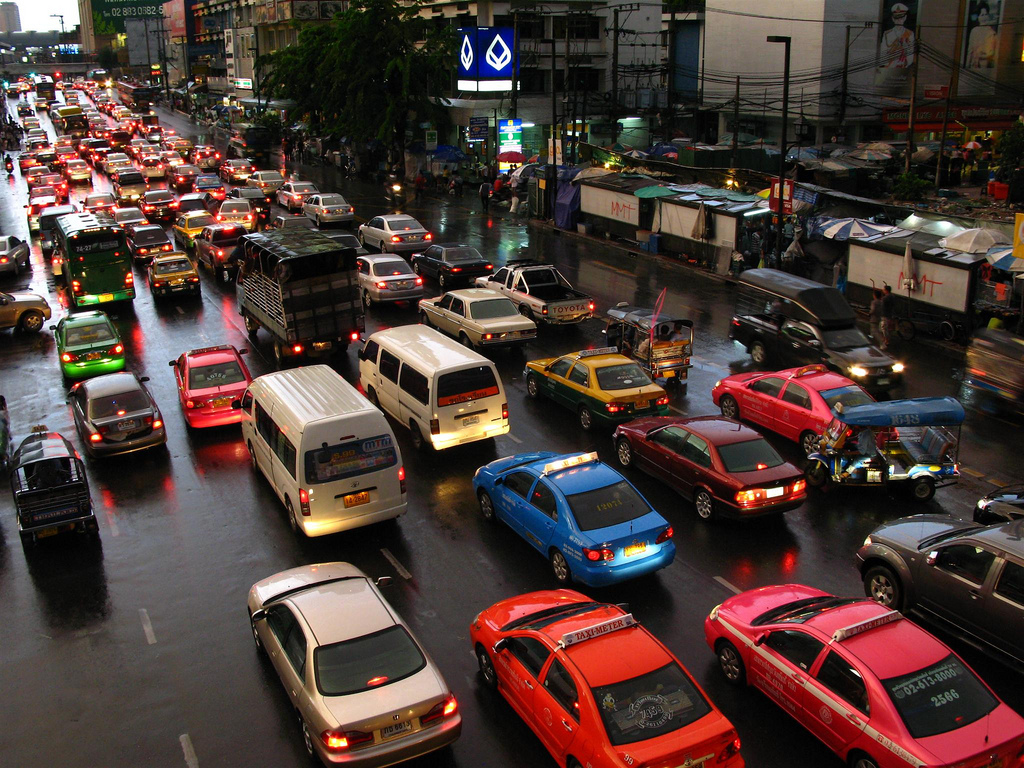
What are other cars doing around you? If you can anticipate their movements to some degree, you can plan ahead. Is there a decent gap on the freeway you're joining? If there is, you may not need to accelerate as hard on the on-ramp, wasting fuel. Is there a line of slow-moving cars in the distance? Slow down a little earlier yourself, so you take a little longer to reach them, rather than speeding up and then braking at the last moment, wasting momentum.
Red light cameras found to cause more accidents
It also means being considerate to other road users. After all, it's no use you saving a few drops of fuel here and there if your driving is making other drivers waste gallons of the stuff.
7 - Read the road
This ties into the point above, but while you're keeping an eye out for other traffic, consider the road conditions too. Hills are a good place to start. They're poor for fuel-sipping driving if you're going up them, but great if you're going down the other side. Ease off the gas on the way up so you're not using as much fuel (though not enough that you hold up traffic behind), and accelerate down the other side for easy momentum with less fuel required.
Traffic signals up ahead? Ease off the gas early, and you may even find the light turns green before you reach it.
8 - Turn it off
Unavoidably stuck in traffic? Consider turning the engine off. Having the engine running while it's not powering you anywhere is a sure-fire way to waste fuel.
Of course, don't try this if your car's best years are behind it and it may not re-start again--even worse than wasting a little fuel is being stuck in the middle of a five-lane freeway while everyone else is moving again...
9 - Use equipment sparingly
We're not about to suggest you stop using your air conditioning while you drive through Death Valley, but it may not need to be on max the whole time. Likewise, if you're driving the city streets at lower speeds, you may save some gas by opening the windows instead. At higher speeds, use AC instead of opening windows, for the aerodynamic benefits.
Try and avoid using headlights unless the road conditions demand it too--they can be a big drain on power, which uses more fuel.
10 - Slow down!
Believe it or not, one of the best ways of improving your gas mileage is simply to travel a little slower. At lower speeds, there's less resistance on the tires, less aerodynamic drag, and your engine isn't working has hard. That all leads to lower fuel usage.
Even if you only drop your speed by 5mph, you may be surprised how much gas you save over a longer distance, without really noticing the handful of extra minutes a journey may take. A 60 mile journey at 60mph takes sixty minutes. A 60 mile journey at 55mph only takes about 5.5 minutes longer, but you'll have saved some useful extra fuel.
+++++++++++