Ask most non-electric car drivers why they haven’t even considered an electric car, and the reason they give will undoubtedly involve some form of range anxiety: the idea that an electric car will run out of juice before it reaches its destination.
On the other hand, as those who own an electric car will tell you, the average range per charge of electric cars offered for sale today is more than twice the distance the average U.S. car travels in a single day. As a consequence, electric cars can be used to satisfy 95 percent of all trips made in the U.S.
In short, most people charge their car at home and never visit a public charging station. But that hasn't stopped a burgeoning industry that has sprung up worldwide from offering a plethora of charging solutions designed to let electric cars make longer trips.
But is the infantile charging industry helping or hindering the image of the electric car?
We think it might be the latter. Here's why.
Early charging stations unreliable
Charging Station Shares Handicapped Parking Space
In the past year, we’ve driven over 15,000 miles in a 2011 Nissan Leaf. The car is used daily, and a single overnight charge to 100 percent has been enough to satisfy most of our driving needs.
For longer trips however, we've had to use charging stations located at rest stops, shopping malls and dealers, often with limited success.
In fact, during the past year, there have been at least 15 occasions when we've arrived with only a few miles left in our car to find a broken charging station. The causes have been everything from broken RFID readers to a blown fuse, vandalism and even a software fault on an expensive DC charging station.
In most circumstances, we’ve been able to find a regular wall outlet to at least provide a slow trickle-charge. On three occasions when alternative power hasn't been available, we have had to take more drastic action, calling for a tow.
Too many payment plans
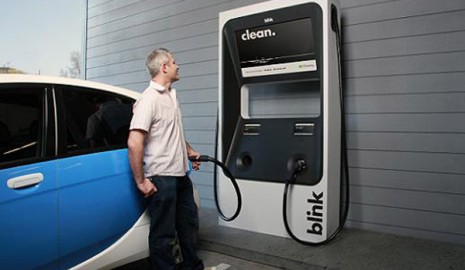
Blink EV charging point at IKEA store
Although most electric car drivers don't use public charging stations all that often, it doesn't diminish the frustration of arriving at an electric car charging station to find out that it requires an RFID smart access card that you don’t have.
In fact, it's become a joke among electric car owners to see who has the largest number of different RFID smart access cards, including everything from free-to-join networks to those that charge expensive monthly fees.
If you’re lucky, another electric car owner helps out, you can then ring a number printed on the charging station to gain access remotely using a credit or debit card, or use cell-phone style ‘roaming’ between a charging network you are a member of and the station in question.
Sadly however, it is often more fruitful to look for somewhere else to charge.
Finding charging stations is tough
Because most electric car owners spend most of their time charging their car at home, they’re often unfamiliar with the location of public charging stations for the rare occasions when they really need them.
Some cars, like the 2012 Nissan Leaf, can assist owners in finding a charging station using on-board satellite navigation, but we’ve found these lists are often inaccurate or outdated.
Worse still, each charging network has its own smartphone app and website listing the location of charging stations, making it hard to obtain a comprehensive list of charging stations in one place without hours of planning
Add to this the frustration that many charging station firms advertise charging stations that aren't fully operational yet, and things get rather messy.

omg parking ticket
"Public" charging stations: actually private
Sometimes, finding a charging station is the easy part.
Because those companies providing charging infrastructure are keen to boast about the number of charging stations they have installed, it is fairly common for them to incorrectly advertize a private charging station as public.
Take a recent experience we had in Washington, D.C. After arriving at the location of a charging station listed online as being publicly accessible, we became painfully aware that the parking lot it was located in was anything but.
In fact, we were warned, parking there without appropriate permits from the attached office block would result in a $200 fine and our car being towed.
It isn’t uncommon either.
We’ve heard of Nissan’s CarWings service directing a Leaf owner to a supposedly public charging station, only to be met with a burly security guard and his equally fierce dog.
Access to the charging station was denied.
In another instance, an electric car owner turned up to a charging station to find out that it was switched off outside of business hours, while a sign brusquely proclaimed that it was for “Staff Only”.
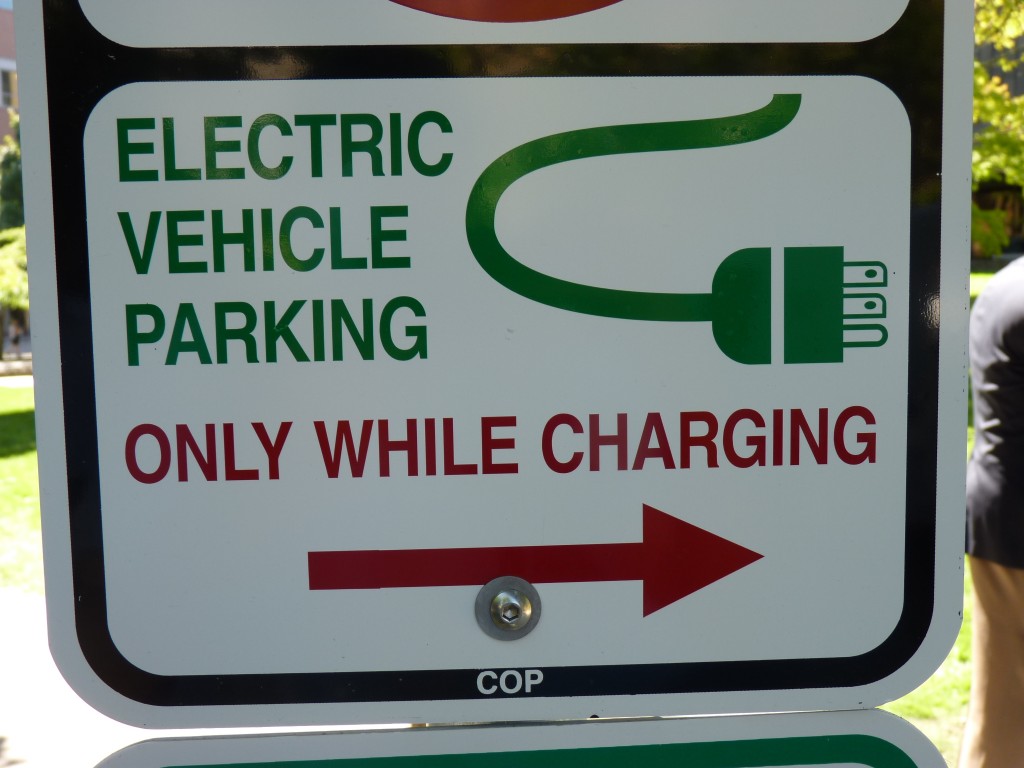
EV parking sign, Portland OR
Early adopters resourceful, but...
Admittedly, these problems will remain rare for most electric car early adopters. Most electric car owners recharge their cars at home almost entirely, driving at most 40 miles a day.
In addition, many early adopters are resourceful when it comes to charging on long-distance trips. Instead of relying on public charging stations, many keep a bag of adaptors in the trunk, along with specially-modified portable charging equipment designed to give them the fastest possible charge wherever they are.
But for mainstream car buyers looking to buy an electric car the prospect is entirely different.
Many buying an electric car will want to use it for occasional longer-distance trips. In those situations, they’ll want to make use of charging stations that are as easy to use and simple to find as a gas station.
Like early adopters, they’ll normally charge at home and may rarely use a public charging station. But on the rare occasion that they will need to plug in when away from home, they’ll want to know they can.

Charging Cable and Socket
They won’t want to spend hours planning where to charge, or spend money on joining a charging network they may only use a few times a year.
Nor will they want to arrive at a charging station to find that it is out of order.
The solution? More collaboration between competing charging infrastructure companies, more reliable hardware, and a concerted effort from owners, automakers and charging infrastructure firms to ensure that whichever charging station an electric car is at, it can always get a recharge.
It's early days yet, and the nascent charging industry is moving quickly. The early days of cellular phone networks were similarly chaotic, without roaming and with spotty coverage and incompatible standards. Over time, it all got sorted out--and we suspect the same will happen here, especially if the early adopting electric car community reports faults and incompatibilities on Internet forums and directly to the companies involved as they arise.
+++++++++++