It's an assertion that comes up a lot in comments on our stories.
It goes, essentially, like this: No one recognizes the horrible pollution problems that will arrive when hybrid and electric cars are junked, and their nickel-metal-hydride and lithium-ion battery packs go into landfills.
It's a worthwhile concern. But that's just not going to happen, for two reasons:
(1) Automakers are well aware of the concern, and they already have programs set up.
They're eager to reclaim and dispose of wrecked or defective battery packs from hybrids. Electric-car makers are doing the same.
You may not know it, in fact, but the old-fashioned lead-acid starter battery is probably the most-recycled consumer good in the world. Close to 99 percent of them (p. 9) of lead-acid batteries are now turned in for recycling.
In part, that reflects decades of effort, because lead is a highly toxic substance that's harmful to humans.
Lithium, on the other hand, is an inert and non-toxic substance--although lithium-ion batteries, to be fair, do contain some metals as well.
(2) Used hybrid and electric-car battery packs will be worth more than their scrap value.
In the case of nickel-metal-hydride packs, they contain a number of valuable metals. While we don't know the economics of tearing down an old hybrid pack, the commodity price of those metals is likely to give the pack a scrap value notably higher than zero--just as the precious metals in catalytic converters give them value.
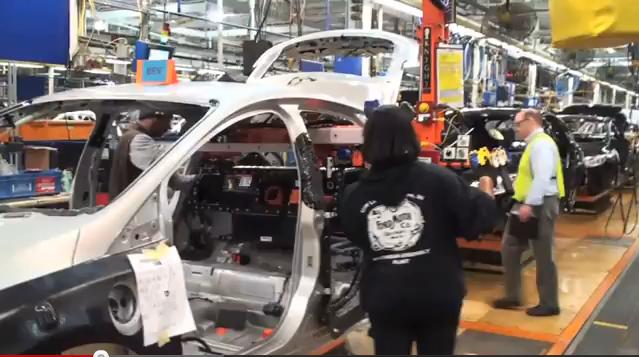
Lithium-ion battery pack installation in 2012 Ford Focus Electric at Wayne Assembly Plant
And for all packs, the remaining energy content will probably give them a secondary life as energy storage in new, stationary applications.
We like the idea, for example, of pairing an old plug-in vehicle battery with a photovoltaic solar panel to provide a way for buildings not only to capture renewable energy but to store it for later use.
So...
GM will take back lithium-ion battery packs from the Chevy Volt and be responsible for the recycling or any potential secondary use for the battery pack.
"We can't just landfill them," said GM's Roger Clark. "The responsible thing to do is to take them back and that's why GM is doing it."
In the end, the answer to the headline question is, "No, by and large, electric-car battery packs won't cause a new pollution problem."
The idea that pricey battery packs will end up in landfills or tossed over cliffs isn't realistic. Every automaker has plans in place for recycling old or damaged battery packs.
But we don't blame anyone for asking.
+++++++++++