What Happens When the 2011 Nissan Leaf Battery...
2011 Nissan Leaf Electric Car: First Drive...
Why The EPA Is Wrong about the 2011 Leaf Range...
If you're holding out for an electric car that gets similar range to your fossil-fuelled car, then don't hold your breath for one from Nissan.
That's the message implied by Nissan North America's director of product planning and strategy, Mark Perry.
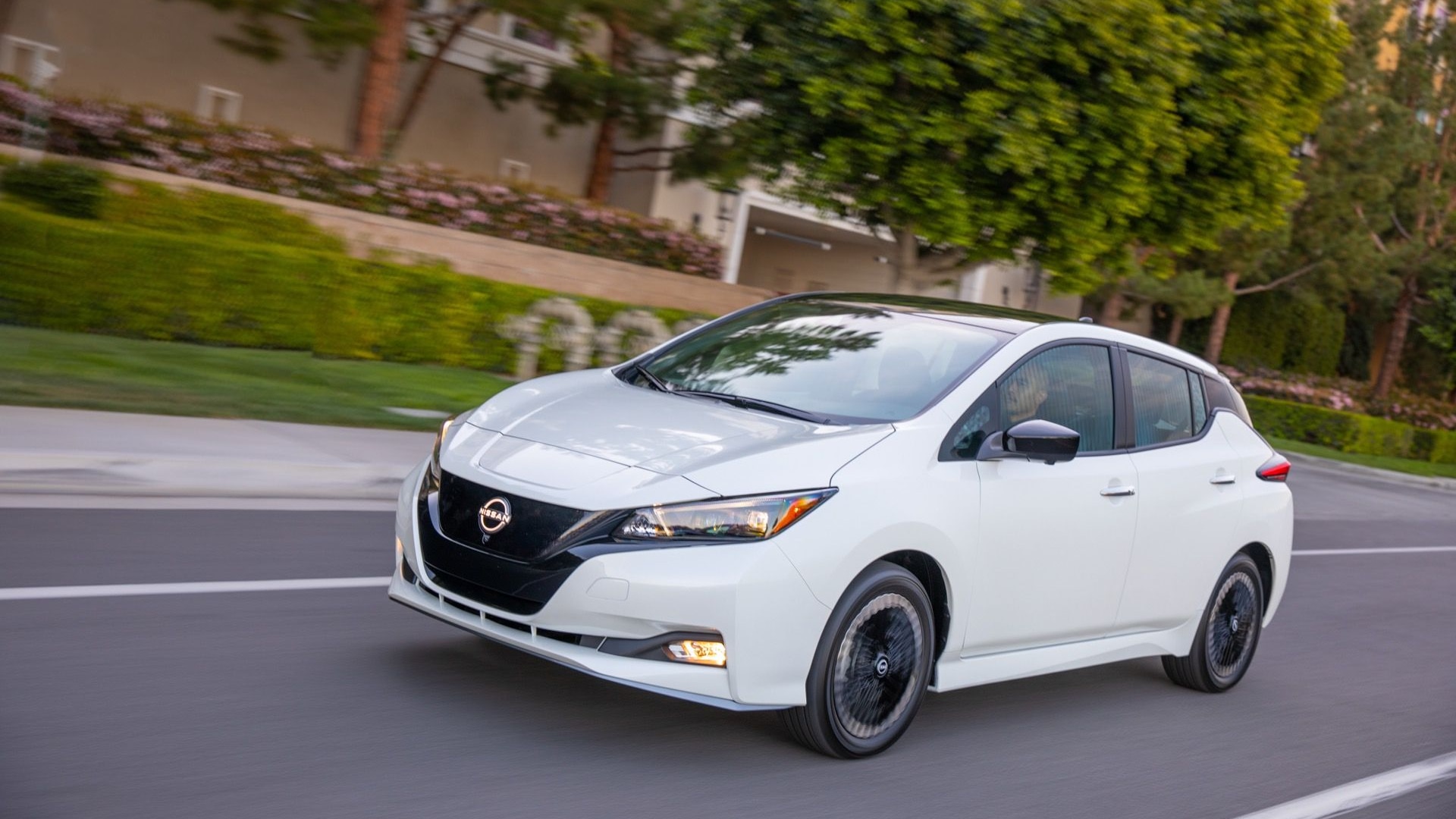
Speaking with Auto Observer, Perry says there is "no market need" for an electric car that gets hundreds of miles between charges. Nissan's own research shows that, despite a range approaching 100 miles, the average Leaf owner only does 37 miles per day.
The average journey length is even shorter, at only 7 miles from power on to power off. The data shows that owners of the first large volume electric car on sale use less than half their car's range per day. That makes a longer range unnecessary, in Nissan's eyes. Independent studies have shown that 95 per cent of drivers in America do fewer than 100 miles per day.
It's fair to say that Perry's claims aren't unfounded. Nissan has been able to collect unprecedented user data from Leaf owners and a huge amount of anecdotal data too from online forums, blogs and email. Nissan also relies on a 1,500-person owner panel for research and feedback.
Much of that feedback has shown that in multi-car households, the gas-powered vehicles become the secondary vehicle, with most trips - the more regular, shorter trips - taking place in the Leaf. Range anxiety? Pah. Studies show it disappears after only three months. When you regularly do short trips, there's no range to be anxious about.
It's perhaps worth pointing out that although Nissan's research stands up to scrutiny and also reflects wider research on vehicle usage, 2011 Nissan Leaf owners probably wouldn't have bought their cars had they not already known their driving habits were suitable for the car. Those who truly need greater range are unlikely to buy a Leaf. After all, if you had to ford a river every day, you'd probably buy something fit for purpose.
What the research more reliably shows is that electric cars are suitable for a great many drivers, even with their current relatively low ranges.
Once the price of electric cars comes down, we expect to see a great deal more of them on the roads. In times of austerity, it's value, not range, that will help sell electric cars.
+++++++++++

Follow GreenCarReports on Facebook and Twitter.
Have an opinion?
I bet Nissan will also find 99% bicycles are not used daily for interstate trips too.
Firstly, the battery would be very expensive, and would be very seldom used. So you would be paying a lot for something you will not use.
Worse, you would be carrying this battery around with you every day. The added weight would significantly decrease the efficiency of your EV.
It is the real weakness of EVs. To increase range, you must add more battery, that adds more weight, decreases range, so you need to add more battery. Annoying.
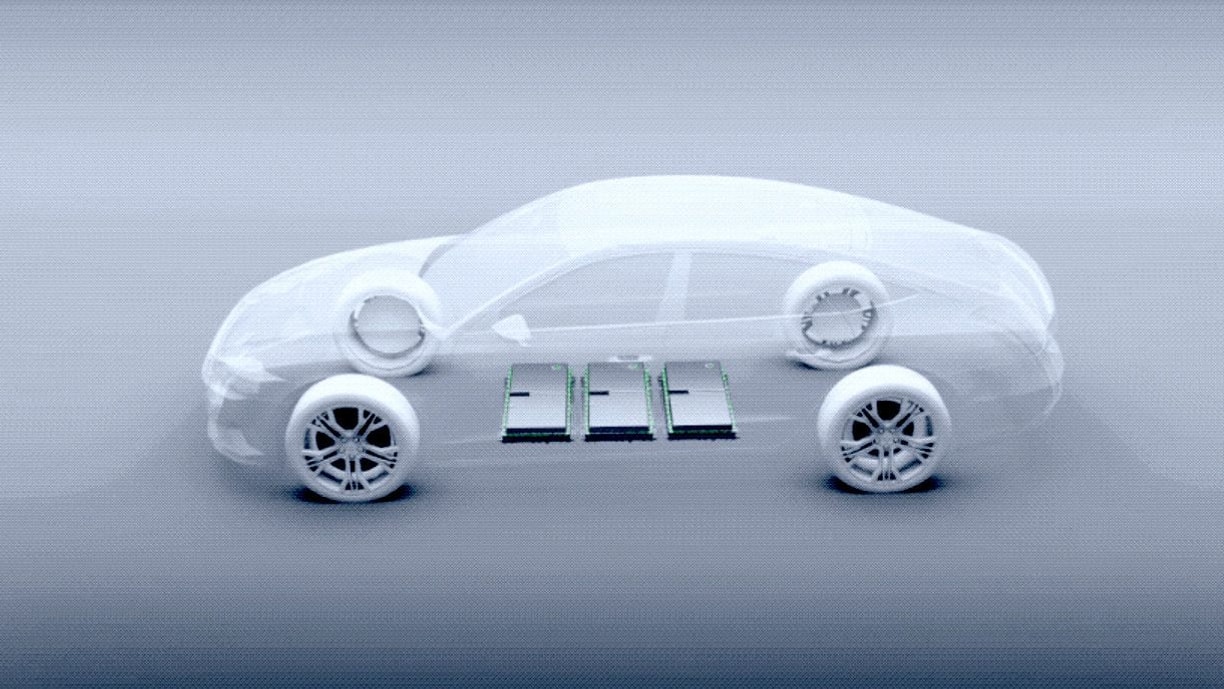
Still, the economics for a bigger battery than what Nissan uses may be better than you think. It wouldn't get cycled along most of it's capacity so much like Nissan's battery which would expand battery life/lower battery cost per mile. Also a bigger battery would have more "spare" capacity to deal with capacity loss after many cycles of use again increasing battery life and decreasing battery $/mile.
Weight is a valid consideration but I still think Nissan might have gone for a slightly (25%?) bigger battery.
Note: fast recharge times and batterysizes are substitutes to a certain extend. The faster a battery can be recharged, the smaller the optimal packsize will be.
I stand corrected. With the Model S at 160 miles MINIMUM Tesla is clearly voting for a larger battery pack that Nissan. The only thing undecided is how much bigger.
and like michael just stated, there are trade-offs. the price of the ev today keeps more people away than the range does.
and that will come down as supply goes up.
companies just need to start making more. it is a big change for them, and it is gonna take some time.
too-tiny battery because "it won't take as long to recharge" was the ultimate example of overly-enthusiastic, non-discriminatory
brainless pumping of electric vehicles. Now we have a contender
from Nissan. The art of salesmanship , my computer science professor once told our class, was to present a defect as though it were a "feature." A car's not claustrophobic, it's "cozy."
An extended range electric is not needed because it "costs too much." And "takes too long to charge."
Kind of depends on what YOU want to pay for...
Jack Rickard
http://gas2.org/2009/12/01/with-new-battery-nissan-plans-to-double-ev-range-by-2015/
Nor does Marc Perry deny that of course, he only suggests that the technology Nissan currently has on offer offers plenty range for what current users do with it. But Nissan knows very well that the bigger the range, the bigger the market.
About 9% of the people NEVER drove more than 100 miles per day. This is a very difference statistic than you hear from EV advocates.
I think it represents what most of us already know. Most days you drive well less than 100 miles but occasionally you take longer trips.
The more relevant question is how often the travel goes over that. If it's just twice a year, at some point it will become cheaper to rent a vehicle and buy a cheaper plug-in car (that may not happen til 2020 or after), but if it's twice a week, then indeed it makes sense to buy a car for the household that can do that.
Ultracapacitors (UCs) powered it. Although UCs, hold considerably less charge than lithium, consider several UCs be wired-together for a battery of them, much like lithium cells in Tesla’s drive trains. Would multiple UCs maximum total charge be < or > Tesla’s lithium cells have in an equivalent sedan’s available space and weight? Durability’s > electrochemical’s. Does Nissan’s faster recharging time begin to suggest how to reduce a lot of range anxiety with recharging perhaps, as fast or faster than a gasoline car of equivalent range’s refill time?
The only way I was able to purchase my EV (a Th!nk City) was to get (very) actively involved with the City where I work and the power company and bring them together to get a Level 2 charging station installed in the City garage where I park all day. That should be completed soon. In the meantime, I use the 110V to charge, so I can return home. I have a 120 mi. round-trip commute and let me tell you, 100 mi. range is optimistic....I have to travel on highways (higher speed), use headlights, wipers, defrost, etc., so while I don't have 'anxiety', I do use caution.
If automakers sold a reasonably priced electric car that needed little refueling or no refueling at all (wishful thinking) then that would be the car to buy. If automakers want meaningful studies, than ask the common Joe or Jane “appropriate questions”. They’ll be amazed on the responses in favor of electric vehicles. I think Mr. Perry is a pretty smart guy, perhaps he is feeding the gasser industry what they want to hear, as opposed to volunteering the complete story.
The Leaf population is not derated because they KNEW they needed less range when they bought the Leaf.
Actually, most of them DID worry about range when they bought the Leaf. They found, in LIVING with the Leaf, like almost all lithium powered electric car drivers do, that for 90% of their use of a car, they just don't NEED 100 miles. The national average is 39.4 miles per day. And the Leaf owners seem a little lower at 37 miles per day.
There are two main questions about electric cars - range and recharge time. And these questions are ONLY posed by people who have never driven an electric car. Why don't you just ask one that has?
Jack Rickard
http://www.evtv.me
if we needed a lower price, the price would be lower. if we need a higher range, the range would be higher.
you guys still arent getting it - they arent gonna give you anything that they dont need to. like all businesses, they want as much money from you as they can get.
so, when the weakest link (supply) improves, and more cars are made, the price, range, etc. will be good enough to attract enough buyers such that the cars are sold.
today, they are able to sell the evs at a high premium, cuz demand far outstrips supply.
these next 10 years will see dramatic changes in the ev evolution.
Have an opinion?Join the conversation!