
By
Kurt Ernst
Kurt Ernst
Contributor
BIO
Kurt has been fascinated by anything with wheels and a motor for a long time. Growing up, he spent his spare time turning wrenches and pumping gas in...
More
LATEST ARTICLE
2014 BMW 328d Diesel To Be Unveiled At NY Auto Show
Though we’ve known since last summer that BMW would once again sell a diesel-powered 3-Series...
Read More
- N/ALEADERBOARD RANK
- 2940ARTICLES CONTRIBUTED
- 152COMMENTS POSTED

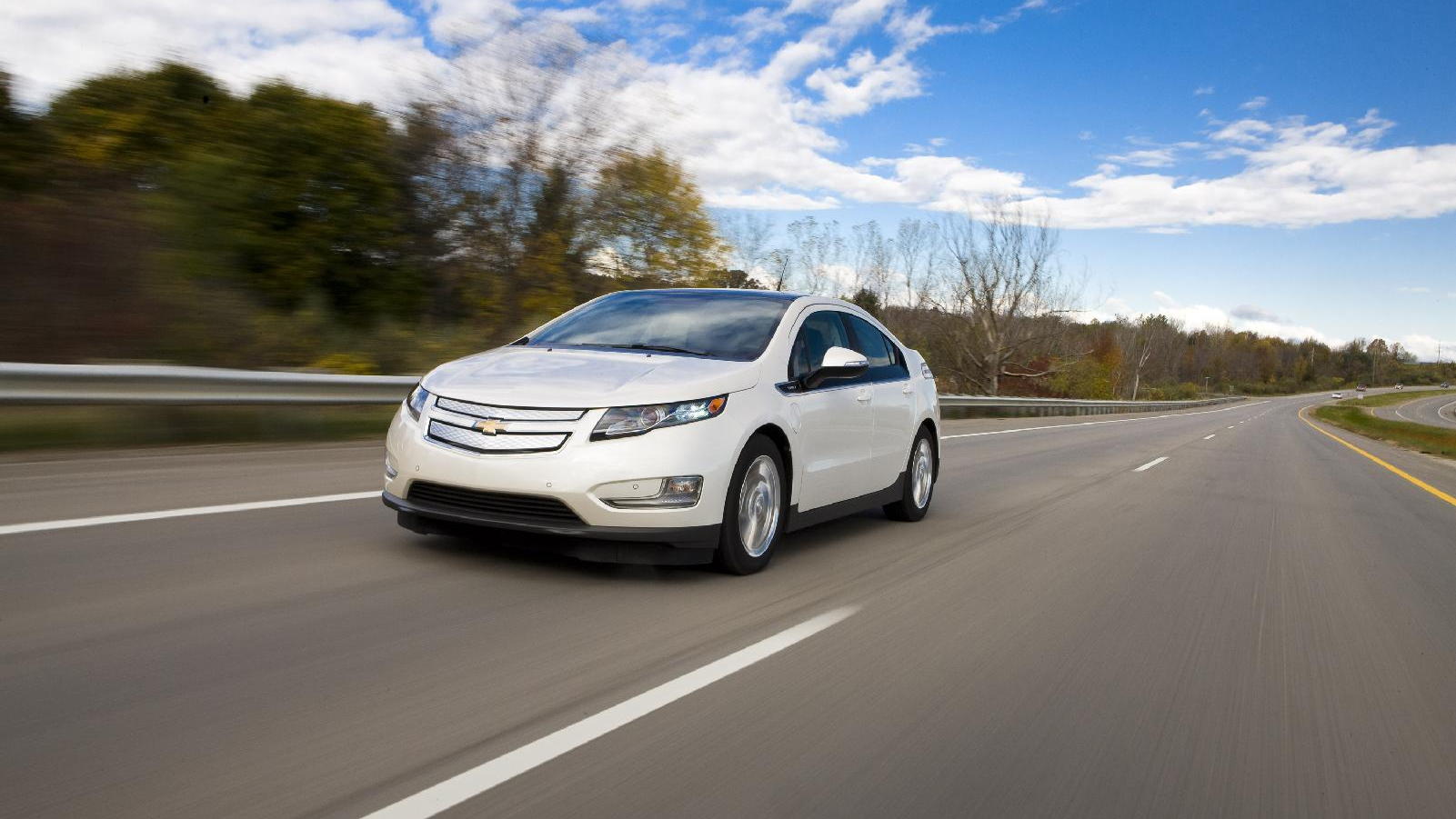
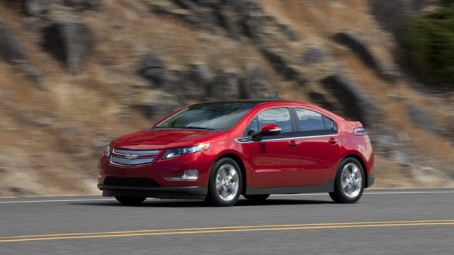
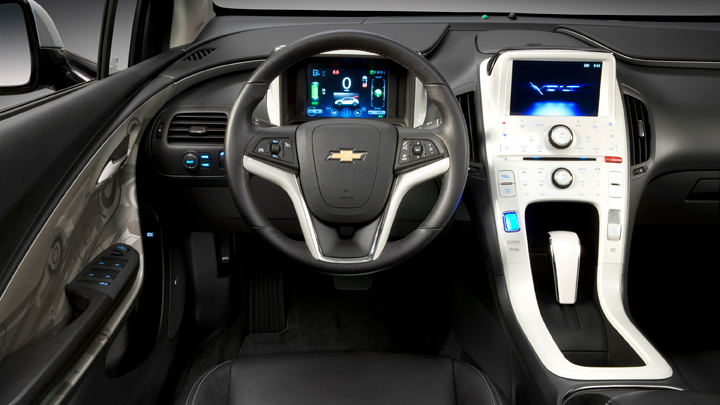
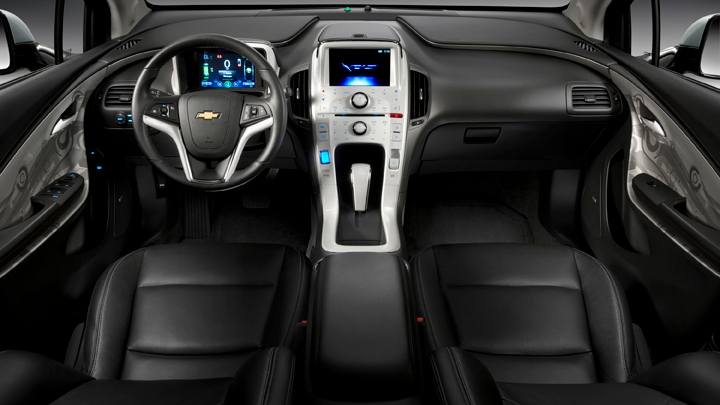
2011 Chevrolet Volt
Related Photo Galleries
See more photos »
Extended range electric automobiles like the
2011 Chevrolet Volt are at the cutting edge of automotive technology. When something goes wrong, there are often twice as many systems to consider, which can make repairs more complex than with a conventional gasoline powered or or a battery-electric car.
Take crash repairs for example. As
Kicking Tires recently found out, the cost to repair a crash-damaged 2011 Chevrolet Volt can be considerably higher than the cost to repair a
2011 Chevrolet Malibu with the same amount of damage.
In May, a
2011 Chevrolet Volt owned by Cars.com (parent to
Kicking Tires) was involved in a frontal collision. Fortunately, no one was seriously injured in the impact, which was severe enough to trigger steering wheel and knee airbags.
Initial written estimates quoted a repair price of $11,588. By the time the car was completed, however, the cost had risen to $14,187, thanks to additional repair parts being required. Furthermore, a coolant leak was discovered after the car was reassembled, prompting the need for a replacement cooling pump.
Since the Volt uses separate cooling systems for its batteries and gasoline engine, there are five heat exchangers (or radiators, in more common terms) used in the Volt, compared to two or three in an average automobile. The Volt also has a significant number of computerized systems that require reprogramming after a serious crash, adding to the expense of repairs.
If the Volt cost $14,187 to repair, you'd assume that a comparable repair on a 2011 Chevy Malibu would be far less. The difference, however, is less significant than you probably think: the same damage on the Malibu would have cost the insurance company $12,006, a difference of $2,181. Given the Malibu’s lower purchase price, that amount of damage probably would have led the insurance company to declare the Malibu totaled.
To give you an idea how focused
General Motors is on ensuring customer satisfaction with the Volt, a dedicated Volt adviser checked in with the repair shop several times per week. A single Volt representative handled the incident from start to finish, and GM was quick to point out that no special treatment was given because the car was owned by Cars.com.
While we hope none of our readers crash their own cars, we’d love to hear from any Chevrolet Volt or
Nissan Leaf owners requiring body work on their cars. What was your repair experience like?
[
Kicking Tires]
+++++++++++
Follow GreenCarReports on
Facebook and
Twitter.
Have an opinion?
The Volt is not a good vehicle and no matter how many times you say that it is, that will not make it true. The Volt is an unusually expensive vehicle to buy and maintain and the common class cannot afford it, and if GM doesn't change their pattern of greed and stupidity soon, that vehicle will bankrupt them...again
So, John, am I being harsh or realistic?
http://www.greencarreports.com/news/1051574_2011-nissan-leaf-greencarreports-best-car-to-buy-2011
(7) Your cynicism about automotive media--that any carmaker that provides test cars can then "dictate how you are to write articles about them and the car"--is not something I can do anything about. It's inaccurate, and mildly insulting, but you're welcome to your beliefs. However, please base your criticisms on actual facts, backed up with links, rather than misrepresenting what this site has actually said and published. Thank you.
If you don't like the Volt because it is too expensive, the Tesla vehicles are probably not your cup of tea either.
The main weakness of EVs is battery and its cost. GM has shown real leadership in trying something different in the Volt. Their small battery keeps the costs lower than Tesla's approach, even if the gasoline engine adds complexity.
I appreciate the interest in "pure" EVs but it will be nice to have hybrids and E-REVs available as well to see what technology works in the real world.
So there is a point to comparing GM's choices versus Tesla. Tesla got range by spending $30,000 on a battery, GM did it using a ICE generator.
On the other hand, I love the fact that automotive journalists are "given" cars for extended testing. Despite whatever biasing impact that might have, the journalists get real world experience with the vehicle and can report knowledgeably about the vehicle.
There are actually intelligent, rational arguments against EVs, not that you or Kent B would know... Now, please, for your #1 lie, stop w/ your excuses and show anyone where any magazine claimed a 1 mile EV limit for the Volt at 25 MPH.
We're waiting...
There are actually intelligent, rational arguments against EVs, not that you or Kent B would know... Now, please, for your #1 lie, stop w/ your excuses and show anyone where any magazine claimed a 1 mile EV limit for the Volt at 25 MPH.
We're waiting...
I know John remembers the article I refer to (and probably even the reporter who said it and the mag the reporter was with) when I said that during the performance test on the Volt, the reporter said that the electric motor could only take you one mile at 25 MPH. A lot of the comments said that isn't even enough distance to get you past your neighbors drive way.
The Volt is the worst of the worst of both ICE and EV and GM is the worst of all the American automakers. All the other hybrids puts the Volt to shame in...
Again, the can't go over 25 in EV mode for more than a mile has been completely discredited since people drive them at highway speeds for miles...
The Volt is meant for people who can drive mostly in electric mode. Again, everyone but you seems to get this.
So which is it, are you wrong or are people imagining driving their Volts 30+ miles on electricity alone? I just drove 6-7 miles on a test drive, want to contradict that?
Volt 80% gas...Dumb.
39 KWH/100 miles SMART Ed
36 KWH/100 miles Chevy Volt
34 KWH/100 miles Nissan LEAF
30 KWH/100 miles Mitsubishi i MIEV
30 KWH/100 miles Tesla Roadster
So the Volt is a bit of a pig for electricity, but not much worse than the LEAF.
As for the Volt being the least efficient hybrid, at 37 MPG combined, the Volt is a bit of a gas guzzler, but far from the worst. The 2011 Camry hybrid only gets 33 MPG combined, for example (the 2012 is better at 39).
But that misses the point. If you are going to buy a Volt, make sure that you are able to mostly drive on electricity.
gm used anti-ev marketing when advertising their volt. if that does not give people a clue, they will remain clueless.
it will be hilarious watching gm and their supporters remove both feet from their mouth when gm is forced to come out with a real ev.
Have an opinion?Join the conversation!