How Much More Does It Cost To Repair A Crashed...
Opel Ampera News - Euro Volt Price Revealed...
What You Need To Know About Nissan Leaf, Chevy...
Volt-Based 'Amp' Due In Detroit: Wise Move By...
Elon Musk, Bob Lutz On Red Carpet At 'Revenge...
Just like any eligible plug-in electric or plug-in hybrid car, buying a 2011 Chevrolet Volt will save you around $7,500 off the sticker price thanks to a generous Federal tax credit.
But will the Chevy Volt save you money in the long run?
That’s the question Consumer Reports sought to answer over the past seven months, as it put a factory-standard 2011 Chevrolet Volt through a dizzying number of tests to find out how the Volt compares to other green cars when it comes to your wallet.
Their conclusion wasn’t that different from something we realized while driving the 2012 Toyota Prius Plug-in Hybrid: It depends on how you drive it.
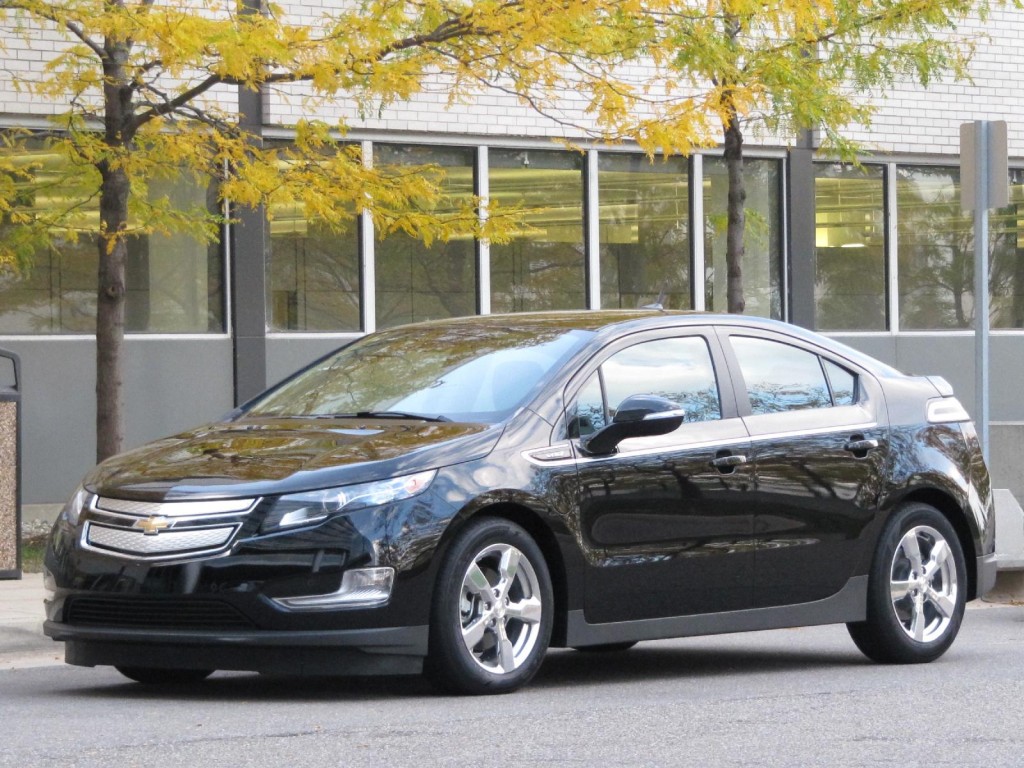
Through a remarkable range of test drives, from winter commutes through to summer country cruising, Consumer Reports concluded that the Chevrolet Volt could travel between 21 and 51 miles of range in all-electric mode--averaging out to the same 35 miles-per-charge figure the EPA gave the Volt last year.In all-electric mode, and averaging 2.93 miles per kilowatt-hour, Consumer Reports estimated the Volt cost 3.75 cents per mile to run, using the national average price of electricity at 11 cents per kilowatt-hour.
Use the extended-range gasoline engine however, and the cost per mile rockets to 13.69 cents per mile, more than 5 cents per mile higher than a 2011 Toyota Prius.
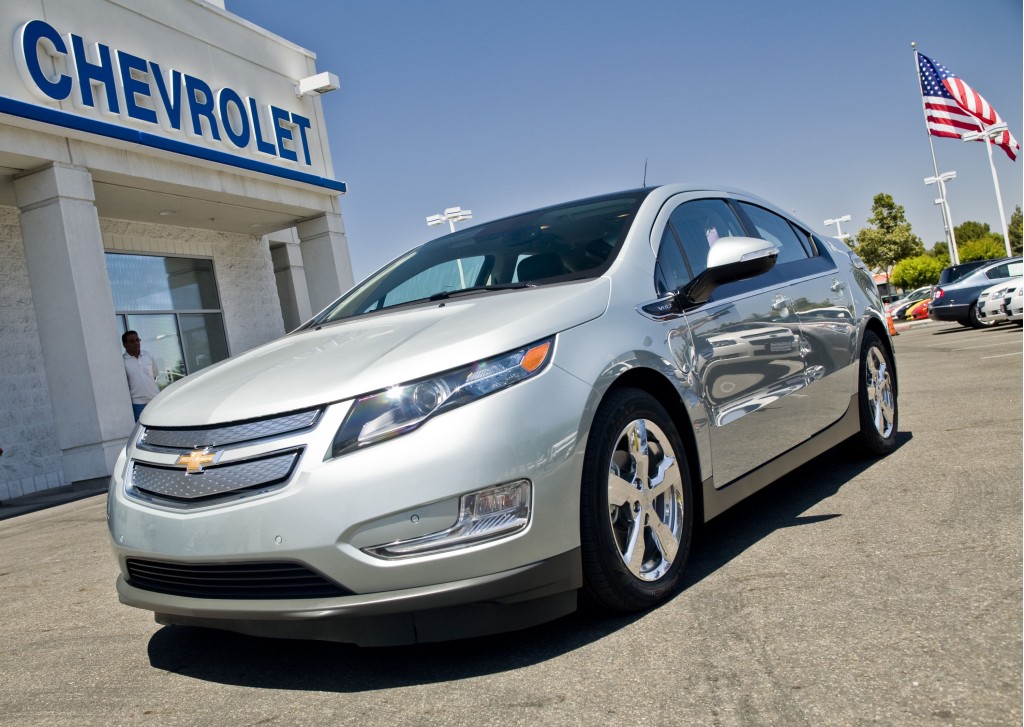
Assuming an average trip length of 50 miles per day, including 35 miles of all-electric driving, the consumer magazine concluded that in terms of cost, running the Chevrolet Volt just about equals the Toyota Prius.But of course, not every trip in the 2011 Chevrolet Volt will even use gasoline, with most daily trips falling well within the Volt’s all-electric range.
The message is simple: If you’re looking for a long-distance, economical, ecological car then you might be better off with a plug-in hybrid like the 2012 Toyota Plug-in Hybrid.
If you can plug in regularly, however, with occasional longer trips that need the help of a gasoline engine, the Volt still wins on both costs and environmental impact.
+++++++++++

Follow GreenCarReports on Facebook and Twitter.
Have an opinion?
certainly not available for everyone, even today. My estimate is that the Volt is far more expensive to own and drive than the Prius, regardless of how it is driven. I can count on the fingers
of one hand the valid cost estimates I've seen over the past 40 years. They are all either biased or fail to take into account everything that needs to be included.
But regarding this story, can you point readers to the backup for your assertion that the Volt battery pack is "likely to last no more than 8 years," please? It would contribute greatly to the discussion.
We do not know the cost of battery replacement. It will likely be $10,000 and could be as much as $15,000. It will be expensive.
So far (10 plus years), Prius batteries have typically lasted the life of the car. We have not seen the end of that story, yet.
In reality, absent blanket cynicism, we don't really know how long electric-car battery packs will last. They are warrantied to last AT LEAST 8 yrs/100K miles, but *may* last longer. We just have to wait and see. If you're not comfortable with that: Don't buy an electric car, or buy it and make sure you sell it before then.
This issue which I think needs to be considered by all who might purchase an electric car is that a battery change is very possible during the life of the car as is a transmission change or an engine replacement in a more usual car. Batteries are expensive and will likely cost more than the book value of the electric car when they go bad. This is a factor which needs to be counted in the cost. As a former electric car owner (two actually), I would assume that I needed to purchase a new battery with a used EV.
I recommend leasing rather than buying the car. If you drive less than 40 miles between charges, your gas savings will definately offset a chunk of the lease payment. And the next version is likely to be better (and possibly cheaper) than this one.
check out my test drives of electric cars on my blog and comment if you feel like stirring conversation!
http://thespeculativetechinvestor.blogspot.com/
Have an opinion?Join the conversation!