Earlier this week we told you about the Danish town refusing to allow charging station and battery provider Better Place from installing charging points unless it painted them green.
Now the electric car craziness has headed south to France, where officials at the French Ministry for the Environment have detailed guidelines which could dramatically affect the way in which electric car charging stations are deployed and used throughout France.
If implemented at its most severe, the guidelines could lead to laws allowing only one public charging station per floor of a public parking garage, or requiring parking lot owners to separate electric vehicles being recharged with fire-walls.

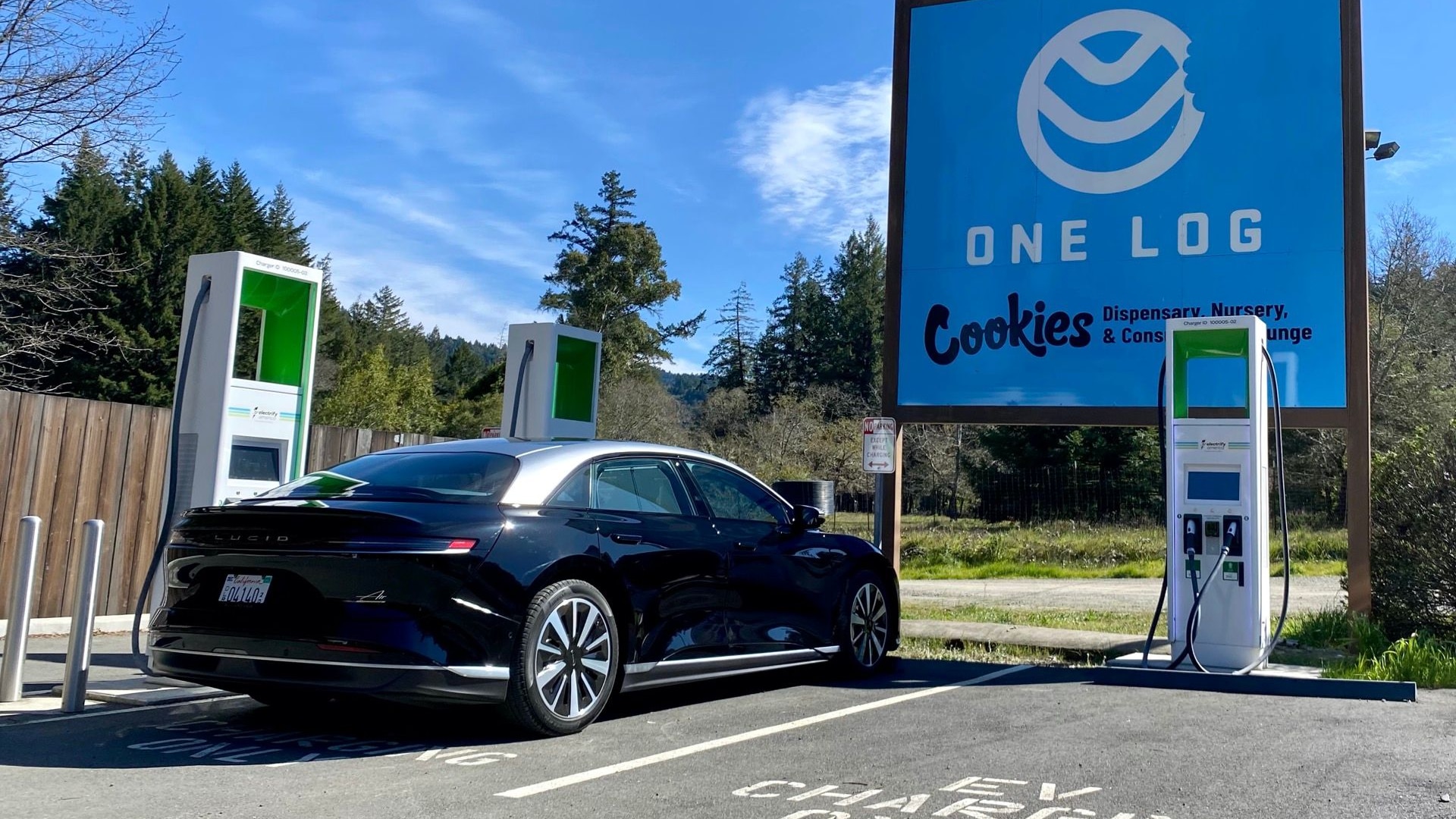
2011 Chevrolet Volt using Level 2 240-Volt charging station in Vacaville, California
A less draconian version of the law would mean public charging points would have to be sited nearly 50 feet apart or placed together in a semi-confined space, increasing the cost of installing multiple charging points significantly.
The charging guidelines continue into domestic installations too, with the ministry imposing strict laws to limit the charging of electric cars on domestic outlets.
While charging from a 230V power outlet will be allowed, the ministry wants to restrict the charging current to only 12 amps. That would result in a charging time for cars like the 2011 Nissan Leaf of around 12 hours.
If an owner wishes to drop the charging time to a more acceptable 10 hours, they will have to pay for their home to be inspected and verified for 13 amps, or have a dedicated, hard-wired charging station installed.
Both options are unlikely to be cheap.
Why the laws? The ministry claims it is to help prevent electric cars from bursting into flames when charging due to badly designed battery packs.
Burning electric cars? Either French electric cars are more combustable than electric cars from other countries, or French authorities are seriously overreacting.

Ultra-Capacitor Bus in Shanghai after fire; photo from Eastday
Okay, we have to admit we’ve heard stories of electric cars bursting into flames, but they represent a tiny proportion of the electric cars in the world today.
About the same as the number of gasoline cars which burst into flames then.
Of those electric vehicles which have spontaneously combusted, all of them have either been custom-made electric vehicles, conversions of gasoline cars or vehicles made by automakers we’ve never even heard of.
In other words, we think that France’s potential new electric car laws go a little too far, especially for a country in which it is possible for someone to drive a tiny, underpowered, gasoline automobile without so much as a crumple zone or airbags on the road without even owning a drivers license.
Only in France...