Are There Too Many Battery Packs Being Made for Electric Cars?

 
Follow Nikki

Advanced Battery Pack

Advanced Battery Pack

Enlarge Photo

According to a report from gigaom earlier this week, the electric auto industry will soon be producing battery packs at a rate far greater than the number of electric cars being built. 

Caused in part by a slower uptake of electric cars by consumers than was initially hoped, the article warned that the upcoming battery glut would force some battery firms to go out of business unless they could forge partnerships with electric automakers currently producing vehicles or find alternative uses for the battery packs. 

The recent financial crisis hasn’t helped either. With automakers like Think declaring bankruptcy, battery packs which had been built for the compact city car are currently surplus to requirements. 
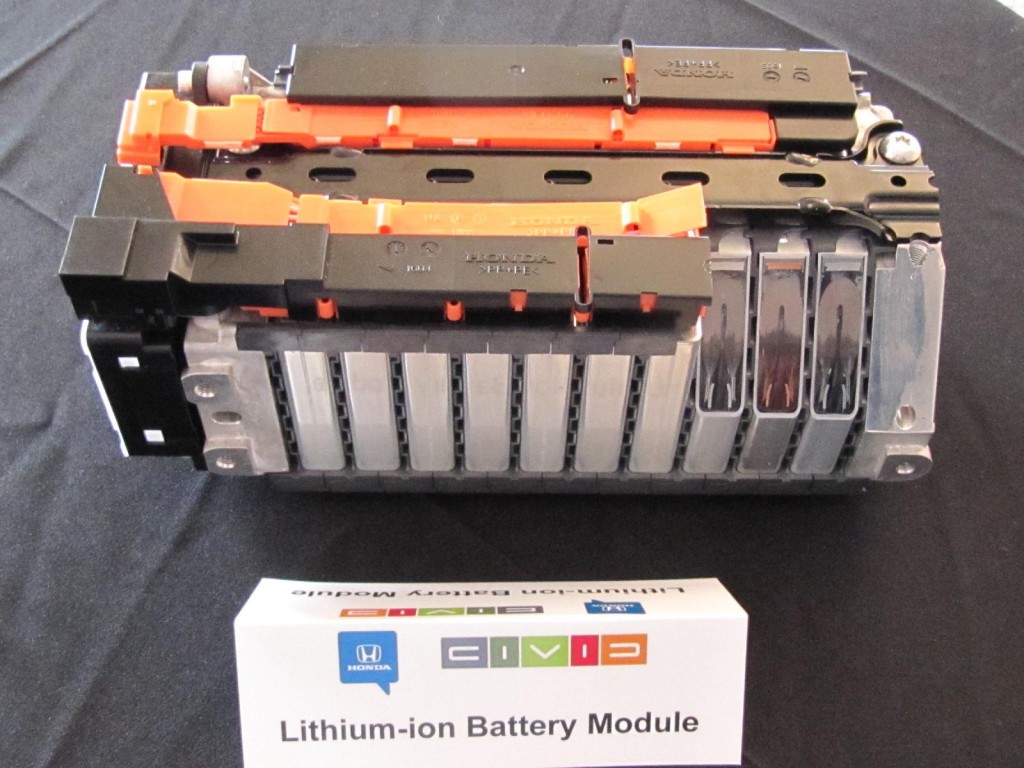
2012 Honda Civic Hybrid - cutaway of lithium-ion battery pack

2012 Honda Civic Hybrid - cutaway of lithium-ion battery pack

Enlarge Photo

Also contributing to the glut of battery packs was the way in which governments incentivized the electric car industry, according to Oliver Hazimeh, partner and head of the global e-Mobility practice at global management consulting firm PRTM.

“Manufacturers rushed to build out capacity ahead of demand to (a) capture stimulus funding and (b) try to drive scale to reduce cost,” explained Hazimeh. “In the near term, we can expect to see some consolidation in the battery industry, with a few leaders taking the lead. We expect that some battery makers will be targets of acquisition or bankruptcy.”

But while the short term future is bleak, the growing number of hybrid electric and plug-in electric cars being made means that the surplus of batteries will be short-lived.

2011 Coda Sedan electric car, lithium-ion battery pack, 2010 Los Angeles Auto Show

2011 Coda Sedan electric car, lithium-ion battery pack, 2010 Los Angeles Auto Show

Enlarge Photo

“While EV growth has been a little slower to ramp up than expected, adding to over-capacity issues, PRTM estimates that by 2020 we will see a 9%-10% adoption rate of PHEV/EVs and a 15%-20% adoption of HEVs,” Hazimeh predicted. “This means that we will need 3x more battery capacity investments to meet 2020 EV demand.”

What does the future hold for battery firms? 

That depends. According to Hazimeh, the smart firms are producing batteries for more than one market, meaning that they can continue to survive even if demand for electric vehicle battery packs fluctuates dramatically. 



Follow Us


Have an opinion?Join the conversation!

  • Posting indicates you have read this site's Privacy Policy and Terms of Use
  • Notify me when there are more comments
Comments (12)
  1. I am calling BS...what slower uptake by consumers? Do we see any LEAF's or Volts sitting on lots? Nope....
     
    Post Reply
    +4
    Bad stuff?

  2. Exactly. Nothing but B.S. in this article, sorry.
    If not used for electric cars they'll be useful for energy storage both for individual buildings as a UPS or as an offset when electricity is at it's peak price, or by the utilities for green energy storage/regulation.
    There's not one but a few markets that are open to the product, so the demand will fill in from another market.
    Also on demand;
    Nissan can't keep up with demand and explain why GM decided to halt their assembly line when they're launching a new car? Well turns out they underestimated the demand for the Volt.
    Leaving differences aside from the two, a lot of people want to get away from gas and those are our options right now.

    *More than two choices.
     
    Post Reply
    0
    Bad stuff?

  3. Give me a price and I'll start budgeting for one or two to replace the lead/acid bank I use to power my star powered home (and that EV I'll buy when the price is right) ...
     
    Post Reply
    +1
    Bad stuff?

  4. I don't think this is really happening. Battery Prices have held steady and if there was an oversupply prices would come down. That hasn't happened. Increased competition would also mean the battery price should come down. Both haven't happened. Wish it would.
     
    Post Reply
    Vote
    Bad stuff?

  5. The problem is complex but the root cause is that there are no standards for sizes of Li batteries cells or modules. Europe is moving along with ISO/IEC but they are focused on cells. I believe the future is standardized modules at higher voltages than single cells and much high energy (cells in parallel). Today there are no standards and every battery company is making cells that are not interchangeable with anyone else's. In US, the taxpayers have funded about 9 companies to build Li batteries for EV's and not one battery being made is interchangeable with another.
    You must realize that the car OEM's really do not want EV's because they are a very disruptive technology to their gas engine car business.
     
    Post Reply
    -1
    Bad stuff?

     
  6. Standardization will come eventually, but battery design is evolving too rapidly now. Maybe after 2020.
     
    Post Reply
    Vote
    Bad stuff?

  7. If this becomes a reality then the price of the battery packs should go down a lot, lowering the price of BEV and PHEV and therefore making them more affordiable to the average consumer, (which would be very nice!!!)
     
    Post Reply
    Vote
    Bad stuff?

     
  8. The price won't go down just because they can't sell them. They have to be able to manufacture them cheaply. My suggestion to these companies with surplus batteries is to sell directly to hobbyists. All of these are only available to OEMs.
     
    Post Reply
    Vote
    Bad stuff?

  9. From the source article: http://gigaom.com/cleantech/theres-a-severe-oversupply-of-electric-car-batteries-comin/

    "On the other hand, Lux says A123 Systems and Ener1 face “an uphill climb” — marking both of them as “caution.” Lux also issued caution takes for International Battery, K2 Energy Solutions, Valence Technology, Leyden Energy, Electrovaya, and gave a “strong caution” to Altair Nanotechnologies (ouch)."

    I think each of these may be different, but the main thing they have in common is that they do not have contracts with major OEMs. Electrovaya has contract for Indica EV from Tata Motors and for Chrysler prototypes. Electrovaya also produces one of the leading designs similar to LG Chem's. Oops, out of space.
     
    Post Reply
    Vote
    Bad stuff?

     
  10. This is a rapidly evolving industry, and I think some companies thought they could build commodity standard Li-ion cells and make a business. Not so, automakers need leading edge designs to get required performance and life. Price has to come down a lot and new-comers like http://www.planarenergy.com/ will walk away with the prize. I feel bad for the people who invested in these companies, but they should have realized that without a leading edge design they had no chance.
     
    Post Reply
    Vote
    Bad stuff?

     
  11. Roy,
    Standardizing the size of batteries, either cells or modules is the right thing to do right now! It has nothing to do with chemistry, but the size of the building block you build the battery pack from. A common size will increase the rate of technology, because the new battery can be configured like a more popular one, the better performance and lower cost and most important a known application for the battery. I visited Planar Energy and all I see is claims. Where is the battery and its test results? No where in sight. Let's see them build a battery and test it. Not a single cell but and entire battery pack and test it. It is not a chemistry lab experiment to produce a large scale battery plant with consistant high quality
     
    Post Reply
    Vote
    Bad stuff?

  12. Are any of these batteries easily swappable in existing or planned EVs or hybrids? If so,it may make sense for EV owners or prospective car owners to buy an extra battery or two now at lower prices based upon excess demand. This way they could increase the range or have a back-up plan to swap out a battery on a longer trip. It would be nice it the charges could be kept up in the interim using a solar panel on or integrated into the car. By now we would have reserved a LEAF but my wife commutes to Modesto from Stockton, Ca and there is not enough charge to get home.

    If she could unplug one battery and plug in the next, nestled in a swappable shelf of two or three trays, for the trip home, I'd buy one.
     
    Post Reply
    Vote
    Bad stuff?


Have an opinion?Join the conversation!

Find Green Cars

Go!


© 2011 Green Car Reports. All Rights Reserved. Green Car Reports is published by High Gear Media. Send us feedback. Stock photography by Homestar, LLC.