We don’t normally cover French automaker Renault, but when we were invited to drive its its first all-electric production car - the 2012 Fluence Z.E., we jumped at the chance.
And we’re glad we did. Unlike its geeky cousin the 2011 Nissan Leaf, the Renault Fluence Z.E. is full of no-nonsense Gallic charm.
Cousin? Here’s a brief delve into Renault’s family tree.
Back in 1999 Renault joined forces with Japanese automaker Nissan, sharing everything from CEO Carlos Ghosn through to new vehicle technology. Naturally, that includes electric cars.
In short, the $36,500 five-seat electric sedan Renault is bringing to market is based on the same technology found in the 2011 Nissan Leaf, but presented in a very different way.
Built on an existing platform
Unlike the 2011 NIssan Leaf which was designed as a completely new car, the 2012 Fluence Z.E. is an electrification of the gasoline-powered 2012 Renault Fluence.
With the gasoline Fluence already popular in Europe, Australia and parts of the Middle East, the Fluence Z.E is a less assuming electric car than the Leaf.
Instead of yelling its green credentials from the rooftops like its gadget-filled cousin, the Fluence Z.E. whispers them quietly as it passes, although its dual power sockets, lack of tailpipe and redesigned grille would give the game away on closer inspection.
No gimmicks
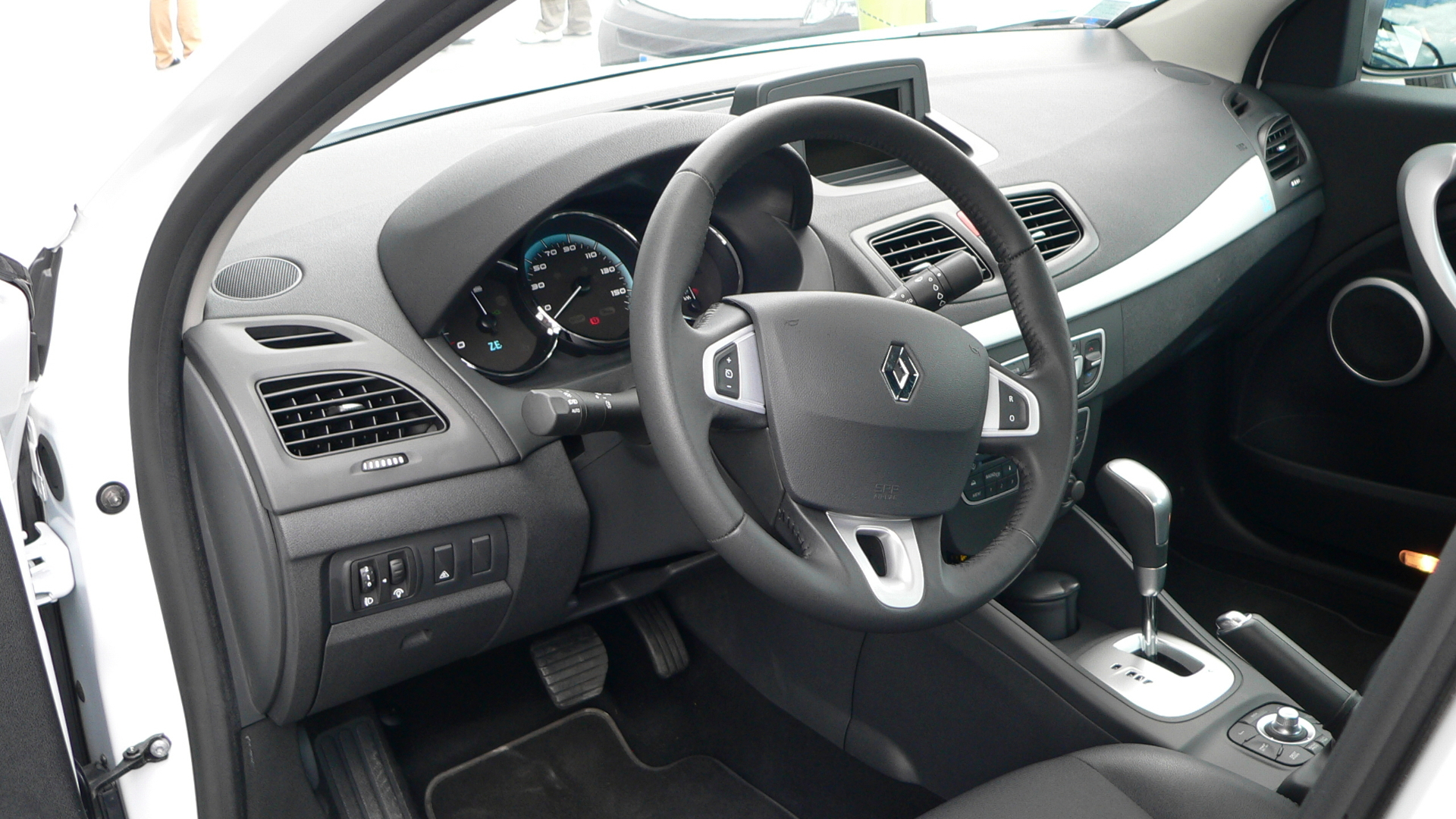
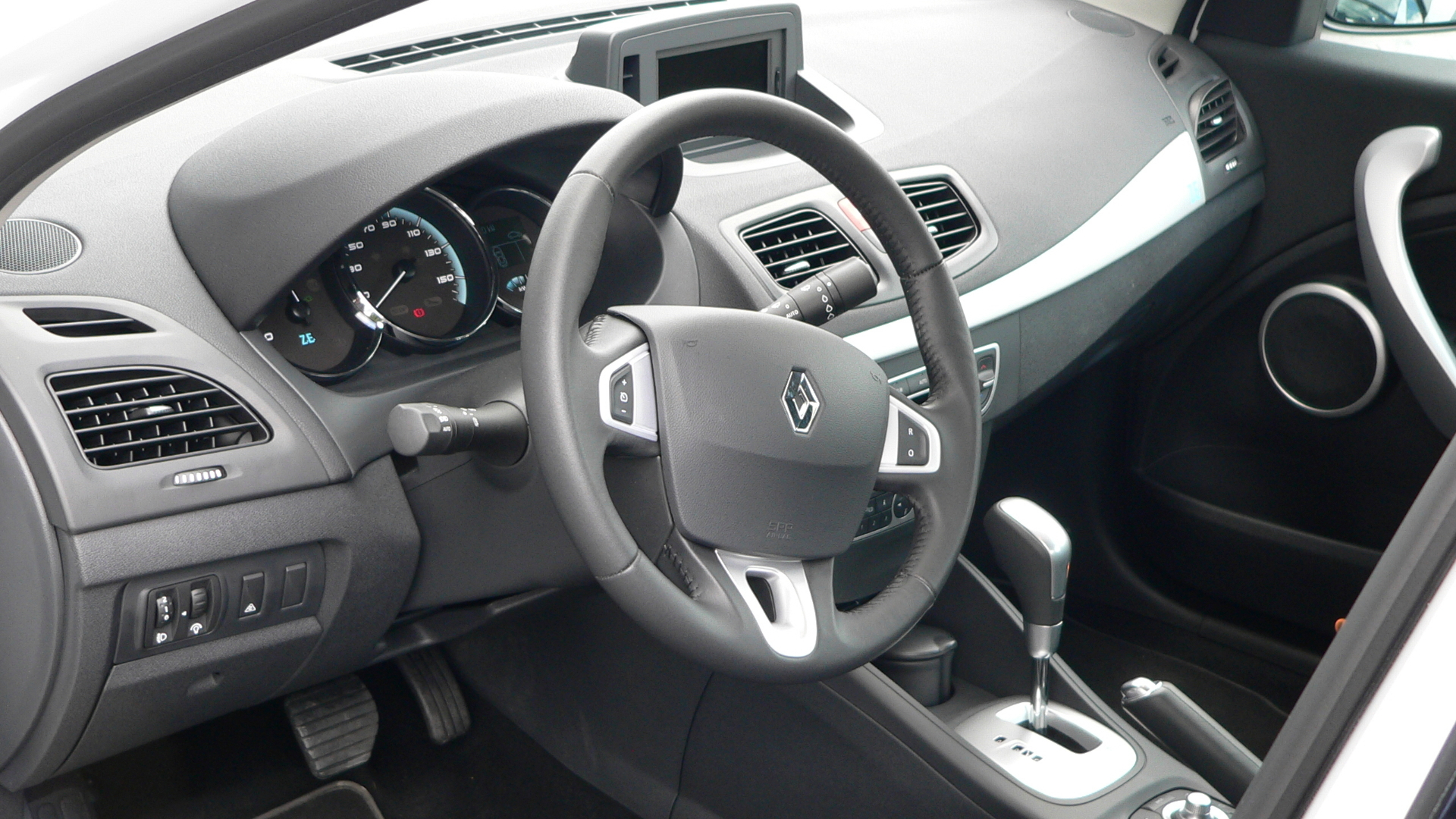
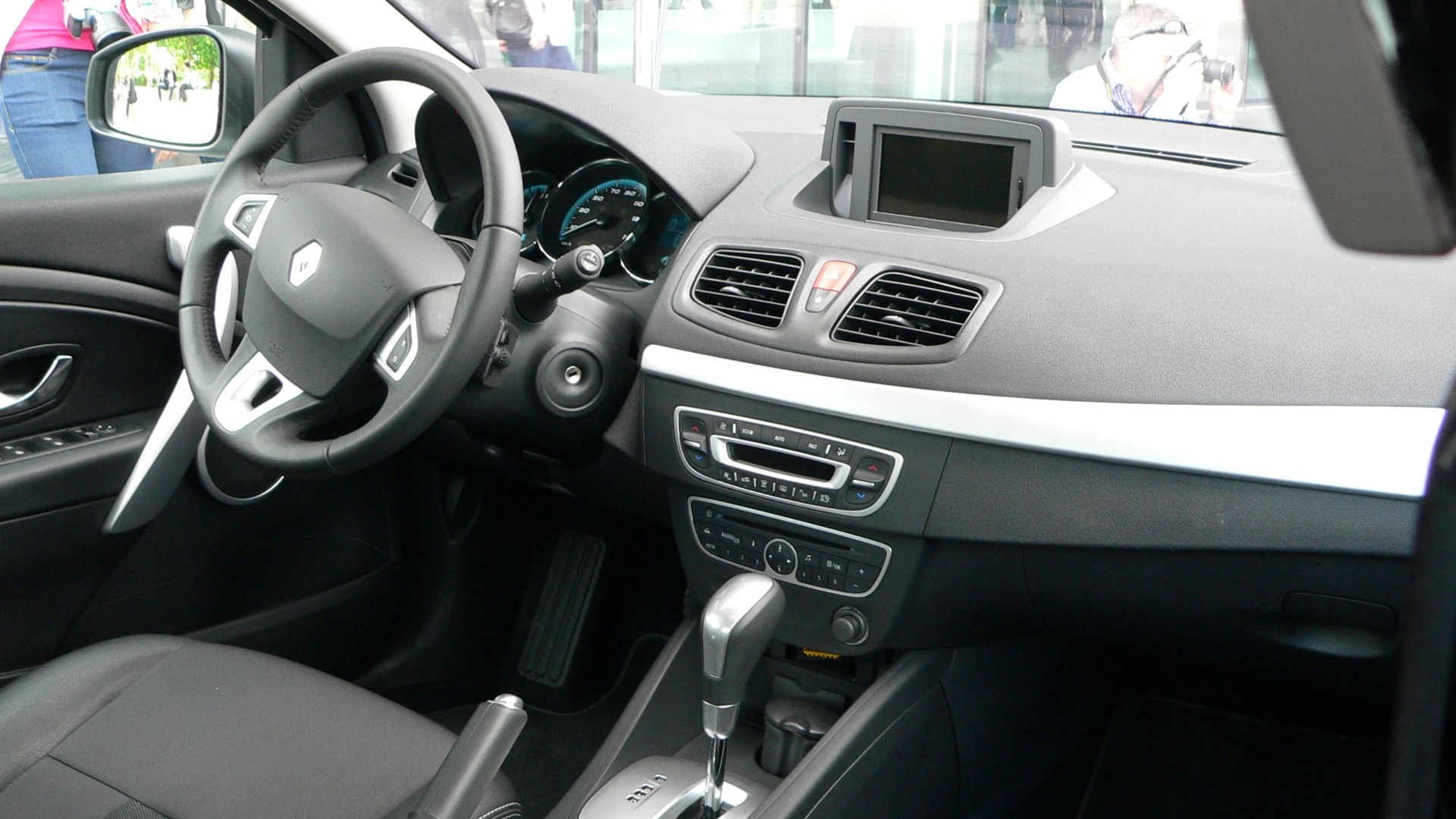
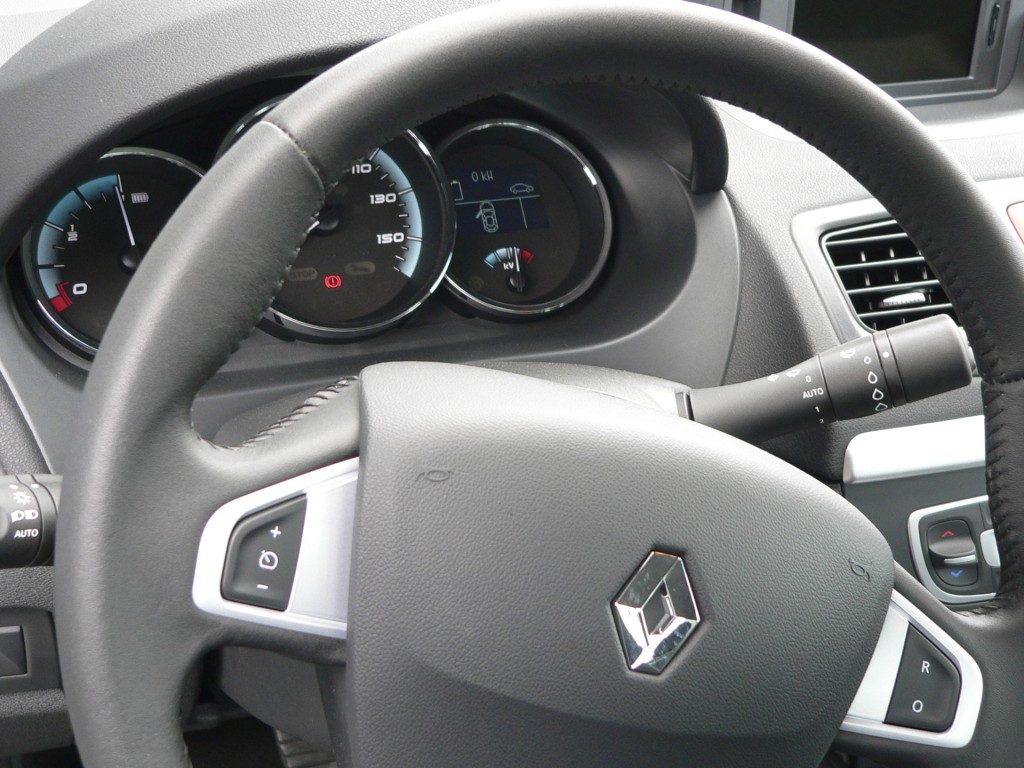
The Fluence Z.E. continues the theme of understated environmental credentials on the inside. Instead of large touch-screen displays, strange gear selectors and electronic parking brakes normally found in electric cars, the Fluence is refreshingly normal.
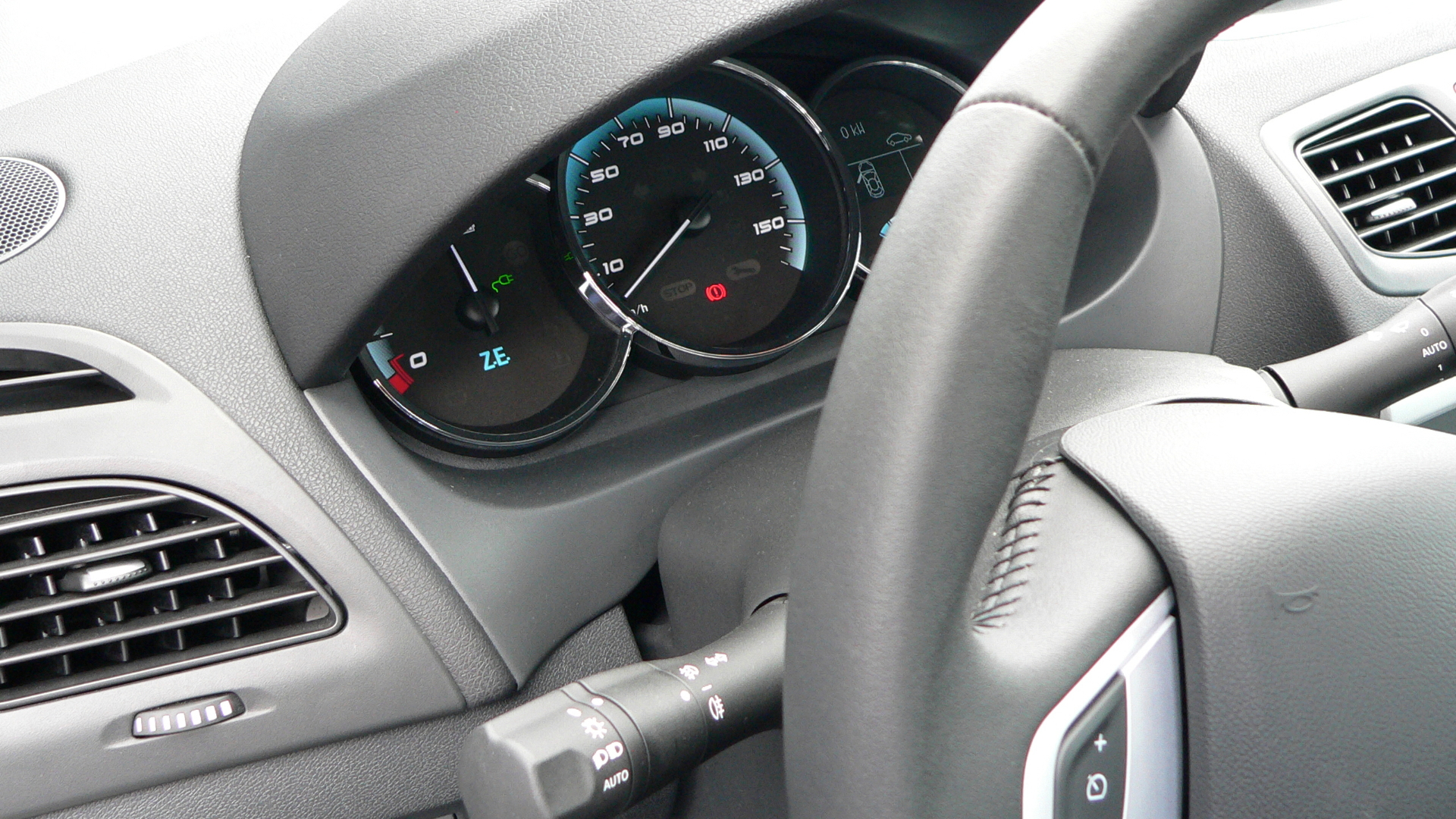
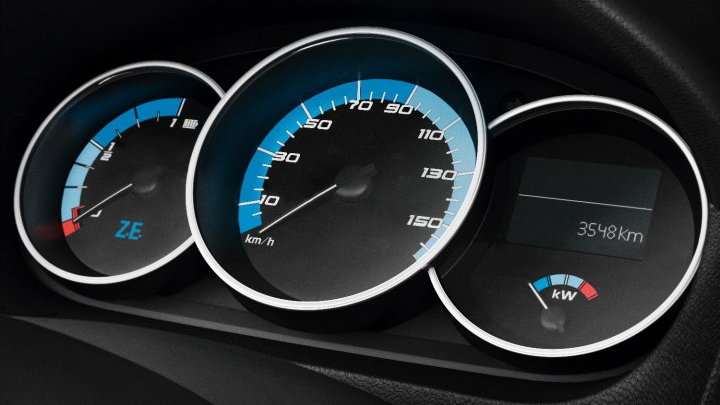
With not a butterfly, polar bear or tree in sight, the Fluence’s dash tells you all the information you need to know: speed, energy consumption and range to empty.
Next to a traditional speedometer in place of a tachometer is the fuel gauge, effectively showing how far your car can travel. The same size as the speedometer, it is easy to read and understand.
The no-nonsense interior continues, with conventional automatic gear selector, parking brake and cabin controls, all instantly familiar to anyone with a driving license.
The only thing we struggled to use was the car’s built-in TomTom satellite navigation system, which uses a rotary wheel in place of a more conventional touch-screen.
Five seats, restricted luggage
Being designed on the gasoline Fluence, the Fluence Z.E. has ample space in the cabin for tall passengers both in the front and the back, easily accommodating a family of five.
But the one place the Fluence Z.E. is drastically let down is its trunk. Being a sedan, its luggage carrying abilities are already severely handicapped, but Renault has further compounded the problem by using a large portion of the trunk area to house the car’s 24 kilowatt hour battery pack.
Placed vertically behind the rear seats to aid battery swapping at Better Place battery swap stations, the Fluence Z.E’s battery pack has crippled the desirability of what should be a great family sedan.
Charging
Although the Fluence Z.E. is primarily a European car, it currently has one J1772 outlet on each side of the car. Having two places to plug in really helps improve opportunistic charging, since the charging cable can be plugged in whichever side is convenient.
Missing is the 2011 Nissan Leaf’s level 3 rapid charging cable. Renault has chosen to not include this as the Fluence’s battery pack can be swapped in minutes using one of Better Place’s rapid battery switch stations.
2012 Renault Fluence Z.E. Prototype
Driving
As is often the case with pre-production prototypes, getting time behind the wheel was a bit of a challenge, not helped by the fact that we were only given ten minutes to drive the Z.E. in busy London traffic.
What can we tell you? The Fluence Z.E’s road handling in city traffic is impeccable.
With little or no discernible regenerative braking on accelerator lift-off, we found it possible to employ pulse and glide techniques often associated with hybrids like the Toyota Prius to obtain excellent energy consumption in slow-moving traffic.
Depress the brake steadily, and regenerative braking slows you down to around 8 mph before the friction brakes take over. Stop in a hurry, and the car’s regenerative and friction brakes work together to bring you quickly and safely to a stop.
Sadly, we can’t tell you more than that. We can’t tell you how it performed at highway speeds, nor can we tell you much about how the car’s range matched up to Renault’s own claim of 115 miles per charge.
An electric car for everyone else
But what we can tell you is how unlike any other electric car the Fluence Z.E. felt, and how similar it felt to a mid-range gasoline car.
Thanks to a lack of complicated dashboards and in-car entertainment, the Fluence Z.E’s no-nonsense, zero gimmick approach to electric motoring is bound to gain it a whole lot of fans from drivers who love the idea of going electric but hate gadgets.
Combine this with a novel purchase scheme where you buy the car but lease the battery pack from Renault or sign up for Better Place membership and we think the Fluence Z.E. will be popular with those wanting an electric car that behaves and costs the same as a gasoline car.
In short, the 2012 Fluence Z.E. feels and drives more like a regular gasoline-powered car than any other electric car we’ve driven. If the 2011 Nissan Leaf is for the geeky early adopters, the Fluence Z.E. is an electric car for the masses.
While we’re not going to see the Fluence Z.E. in the U.S. it does pose a question.
What would happen if Nissan followed suit, and converted a gasoline car to a no-nonsense, gadget-free normal-feeling electric car for everyone?
We think it’d be an instant hit.