Ah, ethanol, that most political of alternative fuels.
Farmers love it, deficit hawks hate it, automakers want it for flex-fuel CAFE credits but nowhere else, and environmentalists only want it if it doesn't suck up food supplies, use too much water, or worsen the carbon balance.
Yesterday, EPA officials came out swinging against a hale of criticism from carmakers and Senators over the impending arrival of E15 gasoline.
What IS "science-based"?
The director of the agency's office of transportation and air quality, Margo Oge, stressed the EPA's extensive research into any potential impacts of using E15. Their studies found "no unusual damage," she said, when tested against the same vehicles running on standard gasoline.

Sarah Palin takes aim at ethanol subsidies
Representative Andrew Harris (R-MD) insisted the EPA's waiver permitting sales of E15 was not a "science-based" decision. (Harris did not define the standards he would deem to be scientific.)
Representatives referred often to letters sent Tuesday by 12 automakers to the EPA, which warned that using E15 in vehicles not designed for it may damage engines, void vehicle warranties, and lower gas mileage.
The last is undoubtedly true; pure ethanol has less energy per volume than pure gasoline, so a gallon of E15 gasoline has 3.4 percent less energy than one of E10 (the standard for gasoline since 1978).
Minimal damage vs. doom and gloom
It's less clear that E15 will damage engines; a study by Ricardo showed "minimal damage" even to cars built before 2000.
Automakers have produced relatively little data showing any E15 engine damage, recommending that the matter be further studied.
Their fears are understandable; drivers are unlikely to blame the EPA for any problems with E15, but will instead point to the company that built the car.
So, last December, automakers sued to stop the rollout of E15. Then in February, the House voted to block that rollout as well.
The EPA is moving forward regardless; it has just issued warning label designs to highlight pumps that contain E15. It's meant to warn drivers who fill up that the new blend of gasoline is to be used in cars built in 2001 or later.
Read the pump label
What's a driver to do amidst all the yelling? Most likely, you won't have to do anything right away.
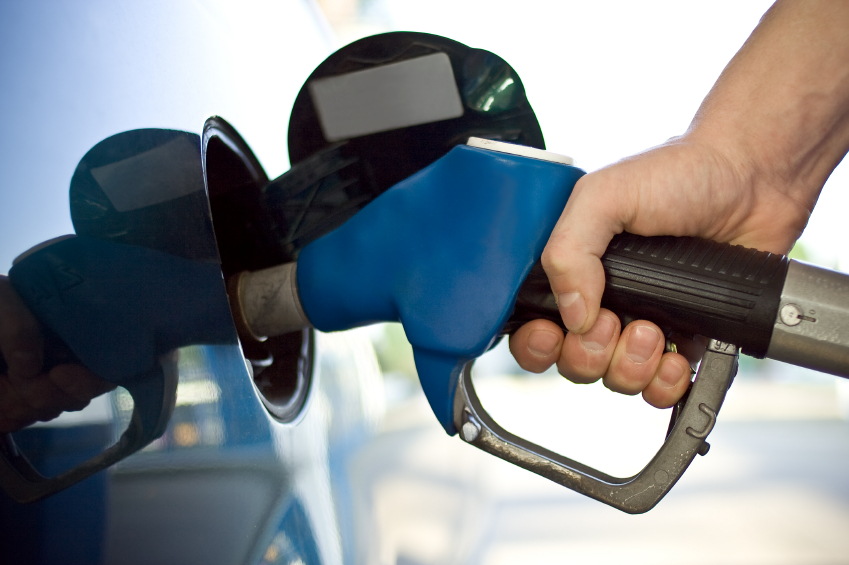
Gas pump
And with a possible Senate agreement to kill ethanol subsidies, there may not be enough ethanol to boost the amount in gasoline.
The E15 issue will generate more heat and noise before it all gets resolved, if it does.
But what do you think? If it cost the same, would you use E15 in your car, if it's from 2001 or newer?
Leave us your thoughts in the Comments below.
+++++++++++