Well, now we know a little more about why the Cadillac SRX Plug-In Hybrid project was killed by its development team at General Motors.
The culprit, according to GMInsideNews, was the lithium-ion battery pack.
More specifically, it wasn't providing the efficiency gains that would have been needed to make the car viable.
The SRX Plug-In Hybrid was to have been the most advanced version of a new generation of GM's Two-Mode Hybrid system. As well as refinements to its operating modes, it was to use a lithium-ion battery pack rather than the current system's older nickel-metal-hydride pack.
But according to GMI's sources (who tend to be right more often than not), the proposed new pack just didn't cut it. The minimum requirement would have been 10 miles of electric range, which had been promised for the Saturn Vue Two-Mode Plug-in Hybrid version originally scheduled for 2010--the first of several vehicles in the whole sorry saga.
The Two-Mode Hybrid system, originally a joint venture among GM, DaimlerChrysler, and BMW, was developed before the Voltec extended-range electric system used in the 2011 Chevrolet Volt.
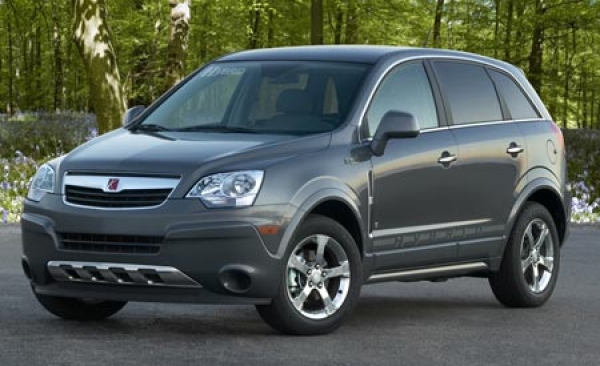
Saturn Vue Two-Mode Hybrid
Now, it appears that elements of the Voltec system may play into a revised design for the big hybrid technology, which may have four modes rather than two--leading some to refer to it as the "Four-Mode Hybrid" system.
The key question will be the source of the lithium-ion cells in the battery pack. Hybrid systems that don't plug in prioritize power (quick delivery of energy for short periods) over energy (high capacity for storing lots of energy for longer ranges).
The Volt's battery pack is an "energy" pack, whereas the older Two-Mode packs were "power" packs.
Perhaps an adaptation of the Volt pack--for which LG Chem supplies the cells--might be used for the new plug-in hybrid version?
We'll have several years to find out, anyhow. The new generation of the Two-Mode system isn't expected to launch until 2015. The SRX Plug-In Hybrid was to have gone on sale in 2013.
+++++++++++