Advertisement

Could Your Electric Car Insurance Be Higher Than You Expect?

 
Follow Nikki

03crash_large.jpg

03crash_large.jpg

Enlarge Photo

Related Photo Galleries


See more photos »

Arranging insurance for your new car is always a stressful and unpleasant business. Often overlooked, it has a direct impact on your driving habits and your pocket book. 

But unlike gasoline cars, electric cars are not yet fully known by the insurance industry, causing some potential headaches for first time owners and hiking the price of premiums up above those increases already determined by driver age, location, occupation and miles driven per year. 

So what does drive insurance up on electric vehicles? And what should you look for?


Sticker Price 

It goes without saying that at the moment electric cars are not exactly affordable for everyone. Traditionally, the higher the sticker price (MSRP), performance and specifications, the higher the insurance premium. 
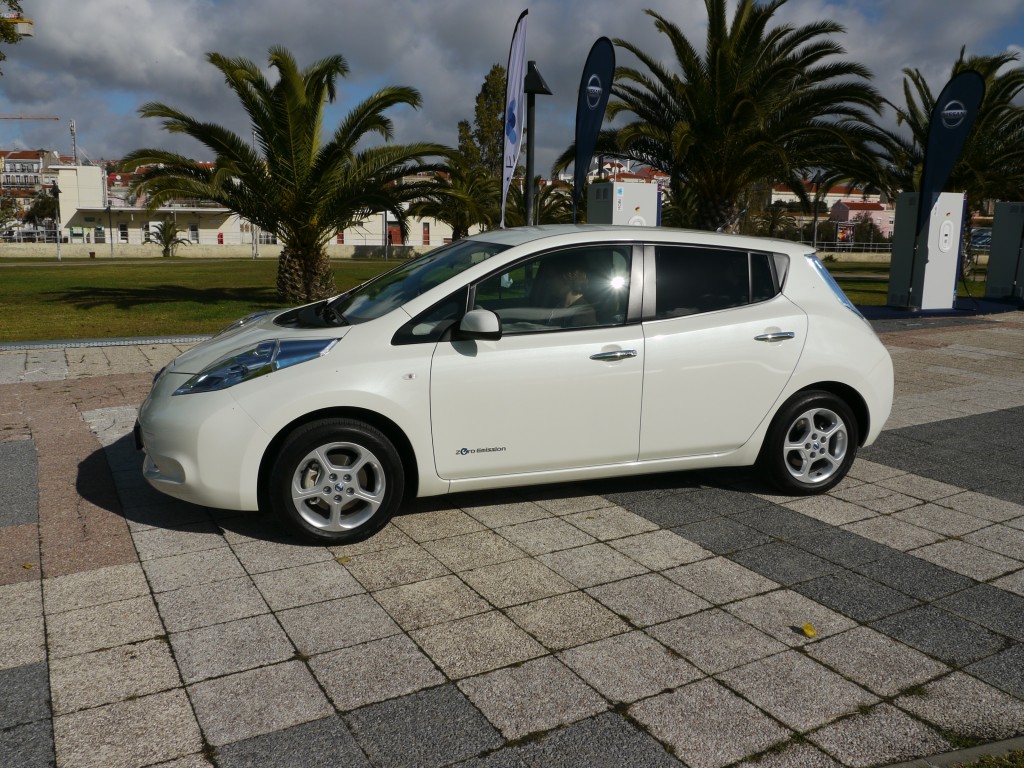
2011 Nissan Leaf

2011 Nissan Leaf

Enlarge Photo

With President Obama’s plans to turn the federal tax credits for electric vehicles into purchase grants there’s even more reason to consider an electric car.

Sure, your 2011 Nissan LEAF may only cost from as little as $25,280 in certain states after federal and state incentives have been applied. But that shouldn’t be the value you insure your car for. 

Why? Because the true replacement cost of your car will be the manufacturer's MSRP. 

Think about it. If you insure your electric car for the amount it cost you to purchase after incentives you may find in the event of a total loss that your insurance will be anything up to $7,500 short of the purchase cost of a replacement vehicle. 

Quote MSRP, and you’ll save yourself a lot of hassle if something goest wrong. 

Accident Repair Uncertainty

While electric cars may not have as many components forming the drivetrain and fuel system as gasoline cars, the costs to replace electric drive trains, batteries and motors are more expensive right now. 

High demand for cars and low production numbers don’t help, increasing the end consumer price of everything from body panels through to replacement batteries. 

As always, insurance firms are keen to pass on that pricy risk to you in the form of an increased premium. 

Lack of Definitive Residual Value Models
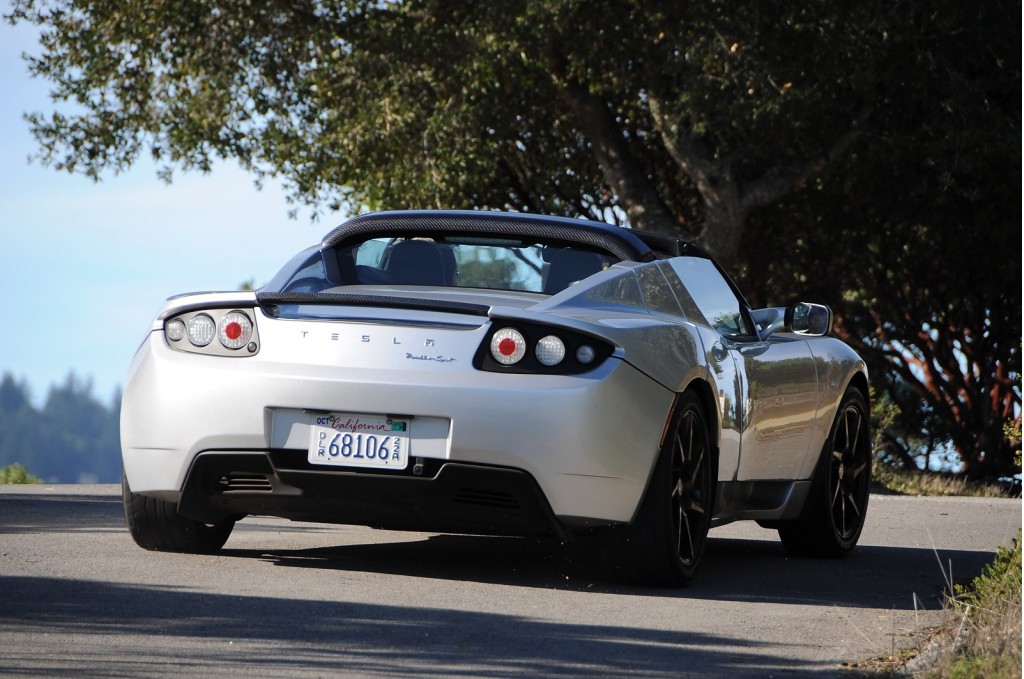
2011 Tesla Roadster Sport. Photo by Joe Nuxoll.

2011 Tesla Roadster Sport. Photo by Joe Nuxoll.

Enlarge Photo

Here’s a real stinger. While many investment firms and institutions have tried to come up with a realistic model for electric car depreciation, no-one can agree on it. 

There’s just too much uncertainty and misinformation in electric cars and the technology in them. 

To an insurance firm, that’s a scary prospect. 

They want to know core details, like the value of the battery pack, replacement cost and longevity. But no-one really knows until more electric vehicles are being used in the real world. 

Imagine your 2011 Volt is involved in an accident in a year’s time and is written off as a total loss. To calculate value, insurance companies need to have some kind of comparable vehicle to use to ascertain what the true depreciation will be of that car over the year.

The uncertainty around residual value has one effect: Increase  the risk to the insurance company. That in turn comes back to us, the consumers.

The Solution

Don’t worry though. There are some simple solutions to keeping your insurance low

  • Try to give as accurate an expected mileage per-year figure as you can.
  • Shop around to make sure you get the lowest possible quote.
  • Quote MSRP rather than the purchase cost after rebate to avoid nasty surprises. 
  • Attend an advanced driving course to improve your skill and lower accident risk
  • Park your car at night in a locked garage. 
  • Don’t add inexperienced or accident prone additional drivers to your policy. 

If you’ve already got electric car insurance, where did you go? Where there any problems to insuring your car? What steps did you take to lower your premium? Don’t forget to tell us in the Comments below. 



Follow Us


Have an opinion?

  • Posting indicates you have read this site's Privacy Policy and Terms of Use
  • Notify me when there are more comments
Comments (8)
  1. This is meant to be a PRO EV blog right? Good headline lol
     
    Post Reply
    Vote
    Bad stuff?

  2. Paul,
    It doesn't matter if this is a Pro-EV blog or not. We don't do any favours by pretending things are always cheaper or easier than other cars. As always, an informed consumer is a smart consumer.
     
    Post Reply
    Vote
    Bad stuff?

  3. Both of our EVs are insured by State Farm. It was no problem and the rates are quite reasonable. The only issue was that they didn't have the Toyota RAV4-EV in their database so it got mangled on our cards, RAV-EV4 or something equally stupid.
    I know of a couple of Roadsters that got wrecked. The insurance companies pay out based on fair market value, which is difficult to determine for low-production cars with little or no action in the used market. Insurance companies like to low-ball the fair market value. Push back if they come in too low.
     
    Post Reply
    Vote
    Bad stuff?

  4. My Volt INS was only $100 a year more than the my Touring model 09 Prius. I added replacement cost ins so the Ins Co. will replace with the same car or the value of the same car. I found the premium bill not out of line with any $43K car.
    We got it at Costco!
     
    Post Reply
    Vote
    Bad stuff?

  5. When I checked for a Leaf insurance at Amex/Costco, the insurance was $140 more than my 12 year old Maxima. Infact I had an interesting experience ( see this, you will also see a lot of others' experiences http://www.mynissanleaf.com/viewtopic.php?f=27&t=2366).
     
    Post Reply
    Vote
    Bad stuff?

  6. This info goes against my experience too, in working with EV drivers over the years. Since there's not enough data on theft or accidents yet, insurance companies tend to rely on price and/or, interestingly enough, horsepower. Given the latter, I've known many EV drivers who paid less for insurance.
    As Tom notes, we've had instances of one EV or another not being in the database, and I know of two companies over the years who simply wouldn't insure EVs just for the hassle factor of only dealing with a few of them (given how many are coming, I doubt that remains the case.) But I've not seen a common theme of charging a huge amount to insure them simply because they're electric.
     
    Post Reply
    Vote
    Bad stuff?

  7. This is all really interesting. My own experience is that many EV Owners are getting higher quotes due to the higher cost. I guess as several of you have pointed out, cheaper deals are possible and we'll know more after a few years of EV ownership.
    I'm glad it's sparked a discussion and has certainly prompted me to look a different way at the subject.
     
    Post Reply
    Vote
    Bad stuff?

  8. Hi everybody,
    do you have any information about car insurance for a regular car converted into an electric car?
    That is supposed to be my husbands new project, he wants to do it himself.
    But I can't find a company that would insure a converted car, even though there are a lot of pepople that do conversions...
    Any advice is very much appreciated!
    Have a great day!
     
    Post Reply
    Vote
    Bad stuff?


Have an opinion?Join the conversation!

Advertisement
Advertisement

Find Green Cars

Go!

Advertisement

 
© 2013 Green Car Reports. All Rights Reserved. Green Car Reports is published by High Gear Media. Send us feedback. Stock photography by Homestar, LLC.