Advertisement

Electric-Car Battery Packs Irresistible To Rampaging Rodents?

 
Follow John

2011 Chevrolet Volt

2011 Chevrolet Volt

Enlarge Photo

Related Photo Galleries


See more photos »

Anyone who's stored a car in a rural area has heard stories of the chaos wreaked by nesting squirrels.

Engine compartments stuffed with leaves, twigs, nuts, and even entire furry families can cause overheating and sometimes fires.

But now a new peril has come to light against which electric-car owners may have to guard: Rodents seeking warmth can be attracted to their high-voltage battery packs and other components when the car is plugged in to recharge.


Rattus norvegicus, the brown rat; image from Wikimedia Commons

Rattus norvegicus, the brown rat; image from Wikimedia Commons

While gasoline vehicles go cold when they're switched off and parked, the batteries of electric cars stay warm as long as the vehicles stay plugged in--making them that much more attractive to heat-seeking critters.

All electric vehicles "condition" their battery packs to stay at the right temperature while recharging. It may mean using some of the wall current to warm the pack, or to operate fans to keep the pack cool in cars with air-cooled packs like the 2011 Nissan Leaf.

In vehicles with liquid-cooled packs, like the 2011 Chevrolet Volt, wall current may go toward operating the pumps that circulate the coolant.

Either way, battery packs are kind of like human beings: They're sluggish when they're cold, and they work best when they stay warm, but not hot.

As Joe Wiesenfelder of Cars.com explained in a lengthy post yesterday, a rat managed to cause $600 of damage by chewing through a portion of the wiring harness on his 2011 Chevrolet Volt test car.
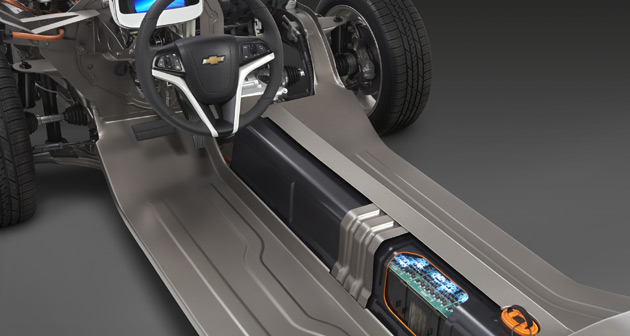
2011 Chevrolet Volt battery system

2011 Chevrolet Volt battery system

Enlarge Photo

And because rats really are considered an "act of nature," the repairs weren't covered under the Volt's warranty.

Now we're wondering if electric-car makers need to consider armored wiring conduits.

It could be worse, though: At least it wasn't sharks, which AT&T found to be causing expensive damage to its undersea cables.

[Cars.com; image: Wikimedia Commons]



Follow Us


Have an opinion?

  • Posting indicates you have read this site's Privacy Policy and Terms of Use
  • Notify me when there are more comments
Comments (7)
  1. This isn't unique to the Volt, or even to EVs, though I've seen it in both EV1 and Tesla. From what we can tell it seems to be less about the battery pack (as some cars weren't even plugged in at the time or generating any source of heat) and more about something in the sheathing around the wires that rodents find tasty. But any service department has a set of stories about cats, rats and other critters making their way up into all sorts of vehicles and chewing them apart. That it happened to a Volt isn't really a story, other than for novelty's sake. And at $600, they actually got off fairly easy considering how extensive these things can be.
     
    Post Reply
    Vote
    Bad stuff?

  2. One of the issues is high voltage exposed when the rescue people try to help after an accident. If they clamp the jaws of life onto several hundred volts, they may need care for the first responders too.
     
    Post Reply
    Vote
    Bad stuff?

  3. @SJC4: Actually, electric-car makers are following the same set of established rules and conventions used to identify high-voltage components in hybrid cars. Auto makers routinely train first responders on new vehicles; it's a standard part of rolling out a new model. See:
    http://www.allcarselectric.com/blog/1045798_facing-a-wrecked-electric-vehicle-what-must-ems-staff-know
    and also
    http://www.greencarreports.com/blog/1046910_how-do-first-responders-act-around-a-crashed-hybrid-or-ev
     
    Post Reply
    Vote
    Bad stuff?

  4. That is good, but in the heat of the moment I doubt that the first responder is looking closely at small labels.
     
    Post Reply
    Vote
    Bad stuff?

  5. @SJC4: Did you read the articles? They. Get. TRAINED. And you'd better believe that first responders pay attention to their training. Any emergency responder who blithely grabs a Jaws Of Life and starts hacking into a wrecked car at random should lose his license, his accreditation, and any professional respect. The training is important, and they know it.
     
    Post Reply
    Vote
    Bad stuff?

  6. I am not going to argue with you, most other sites do not have authors commenting and arguing...by.
     
    Post Reply
    Vote
    Bad stuff?

  7. @SJC4: That's one of the reasons we like to think we're different! Authors pay attention to comments. :)
     
    Post Reply
    Vote
    Bad stuff?


Have an opinion?Join the conversation!

Advertisement
Advertisement

Find Green Cars

Go!

Advertisement

 
© 2013 Green Car Reports. All Rights Reserved. Green Car Reports is published by High Gear Media. Send us feedback. Stock photography by Homestar, LLC.