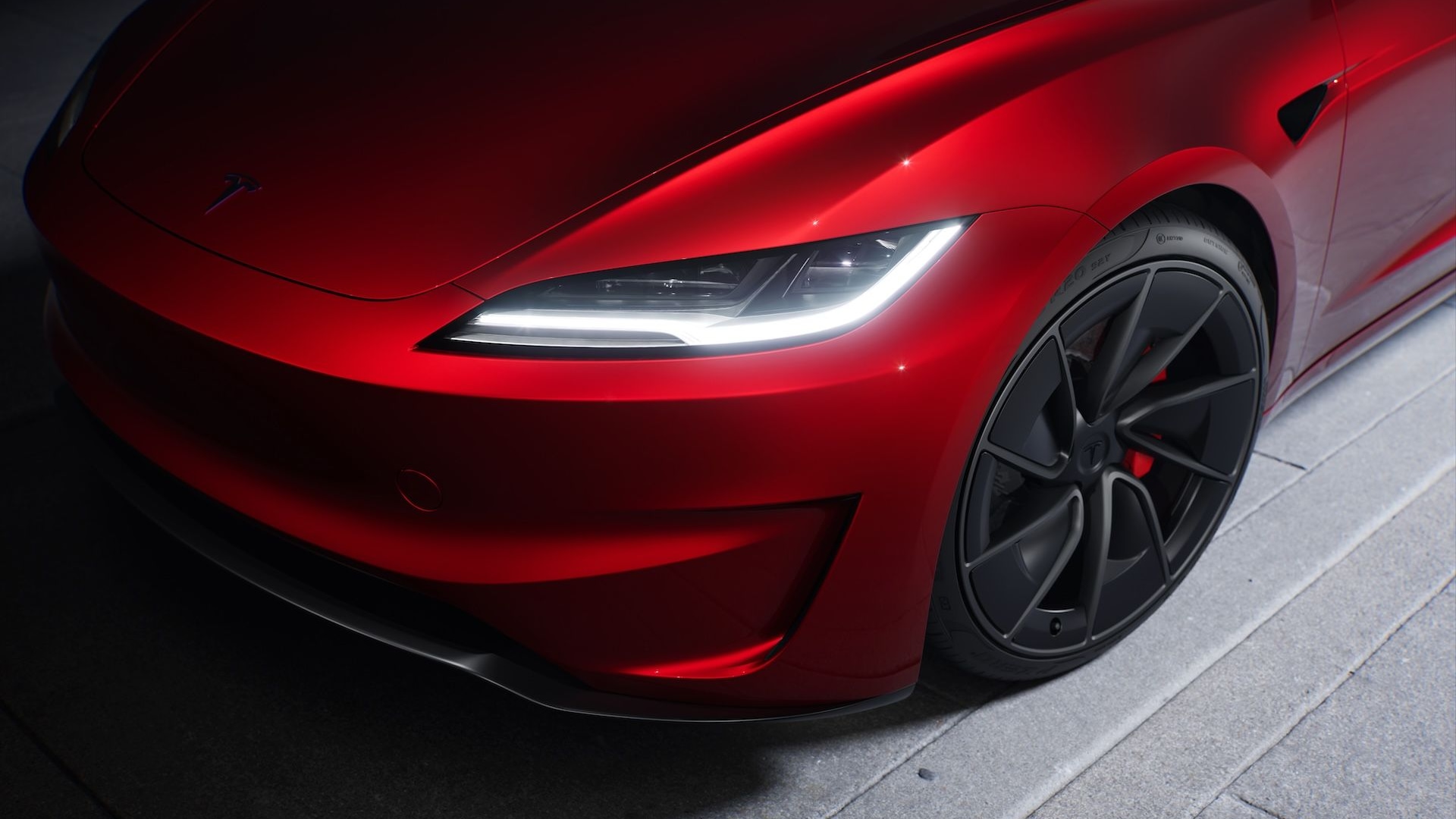
That’s the conclusion drawn by an automotive engineer with Osram Sylvania, according to Autoblog Green. Electric and electric-hybrid car ranges are impacted by external factors like temperature, whether you’re running the air conditioning or heater and how often you brake.
Alleviating range concerns of electric car owners and prospective buyers is a big issue in spurring electric vehicle adoptions. Companies like Ecotality, NRG Energy and Coulomb are rolling out public and private electric car chargers across the nation. The partially-electric Chevrolet Volt comes with a digital meter on its console that turns green the “greener” you drive — that is, the less you brake or accelerate hard.
Because LEDs are more energy efficient, replacing traditional headlights with LEDS would go a long way for plug-in hybrids like the Toyota Plug-In Prius 2012, with just 13 miles of range, or the Chevrolet Volt, with 25 to 50 miles (both cars switch to hybrid or gas mode after exhausting the battery). The average all-electric car gets about 100 miles of range.
LEDs are already an option in some cars, like the Toyota Prius (a non-electric hybrid).
This story, written by Iris Kuo, was originally posted on VentureBeat's GreenBeat, an editorial partner of AllCarsElectric.
Have an opinion?Join the conversation!
By cdspeed Posted: 1/25/2011 6:49am PST
By the way, this sort of thing can also improve the FE on ICE powered cars. And, they could also use the alternator for "regenerative braking" by loading the alternator during deceleration.
Sincerely, Neil
By cdspeed Posted: 1/25/2011 12:16pm PST
By paulrmc Posted: 1/25/2011 2:31pm PST
By David Peilow Posted: 1/25/2011 10:42pm PST
Let's do the math:
A typical Halogen headlight bulb is 55W. LED is about 1/10th so let's say 5W. So each will save 50W or 100W for the pair.
An EV uses about 300Wh/mile in real world highway driving. Therefore, you'd have to be driving for 3 hours to save 1 mile's worth of energy. Thus, to save 6 mile's worth of energy you'd have to drive for 18 hours between charges. Not even a Tesla can do that.
The case is even more extreme with Xenon HIDs. They are typically 35W per bulb or a saving of 60W for the pair between that and LED. So now you'd have to drive for 5 hours to save 1 mile of energy or 30 hours for the claimed 6 hours.
I allow for a mile hit on range when driving the Tesla at night. That's being generous.
By David Peilow Posted: 1/25/2011 11:07pm PST
Neil
I like EV tech articles like this, it basically shows yet another piece of the puzzle in building toward the future.The case is even more extreme with Xenon HIDs. They are typically 35W per bulb or a saving of 60W for the pair between that and LED."HID headlights"
Have an opinion?Join the conversation!