How Much More Does It Cost To Repair A Crashed...
2011 Chevrolet Volt: Air Dam, Display Issues...
2011 Chevrolet Volt Ultimate Guide
As 2010 draws to a close, we now have shipments of the 2011 Nissan LEAF and the 2011 Chevy Volt to customers around the United States. With the advent of these vehicles, is there still a business case for Better Place?
To refresh your memory, Better Place is the venture between Shai Agassi and Renault-Nissan that proposes to sell electric cars without batteries, then lease the batteries to consumers and allow replacement for longer journeys through regional infrastructures of battery quick-swap stations.
Nearly three years ago, Shai Agassi and Renault-Nissan announced their intent to launch Project Better Place, now known more simply as Better Place.
The business case they made then, was that batteries were years, maybe decades, from being able to meet the targets of cost (gasoline equivalent car), energy / power density (range - 300+ miles), long-life (10 years, no degradation) and rapid-rechargeability (5 – 15 minutes), demanded by consumers well acclimated to using gasoline cars.
By cheaply leasing batteries that could be quick-swapped within a regional base of battery swapping stations, all the shortcomings of existing battery technology would be mitigated for the customer, and managed by the lease holder.
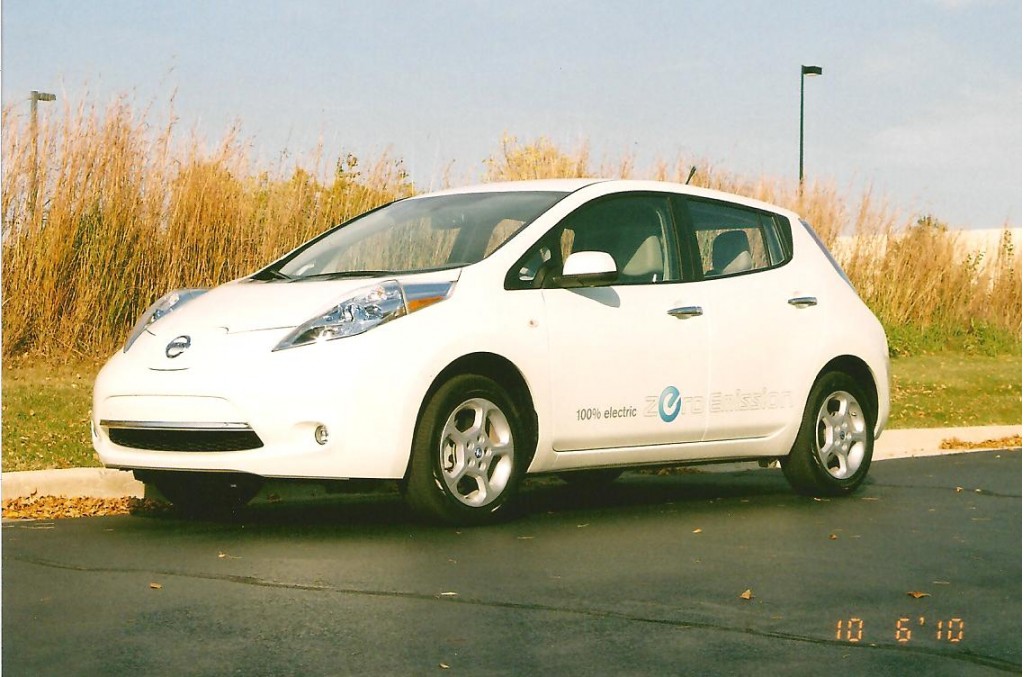
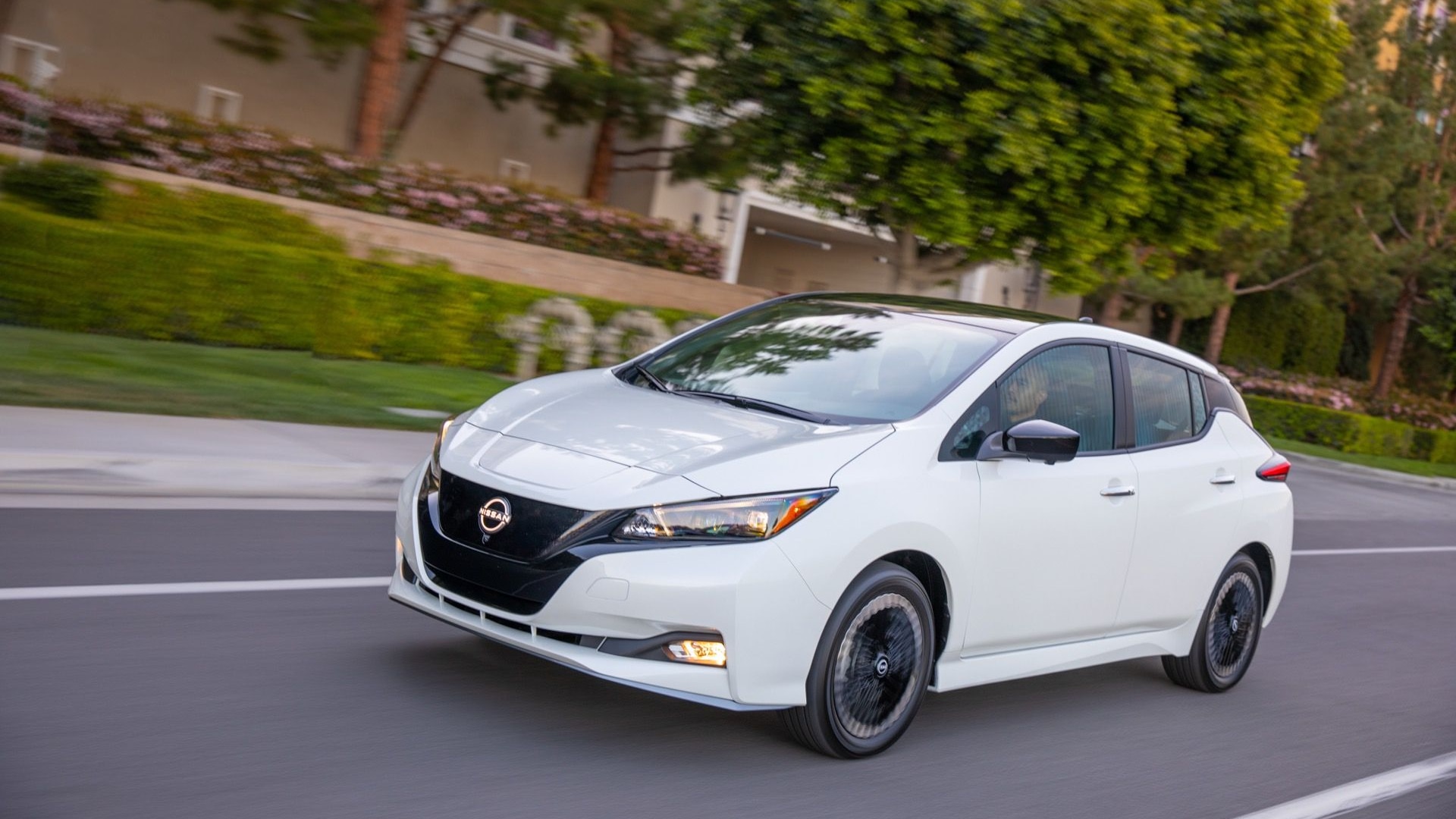
The 2011 Nissan LEAF SL has an MSRP of $33,720, before the federal tax credit of $7,500. The EPA has given the Nissan LEAF an official range of 73 miles.
Although Nissan provides an 8-year, 100,000 mile warranty on the LEAF’s drive-train, battery and charging systems, they estimate that the battery should still maintain 80% of its capacity after five years of use, but it is not guaranteed.
As for charging, it takes about ~30 minutes to 80% at a 480 volt quick-charge station. Starting from a depleted battery, ~7 hours at 220/240V (depending on amperage), about 20 hours at 110/120V. Nissan only offers 220 / 240V max for home units, so expect to charge most of the night to get your 73 miles of range.
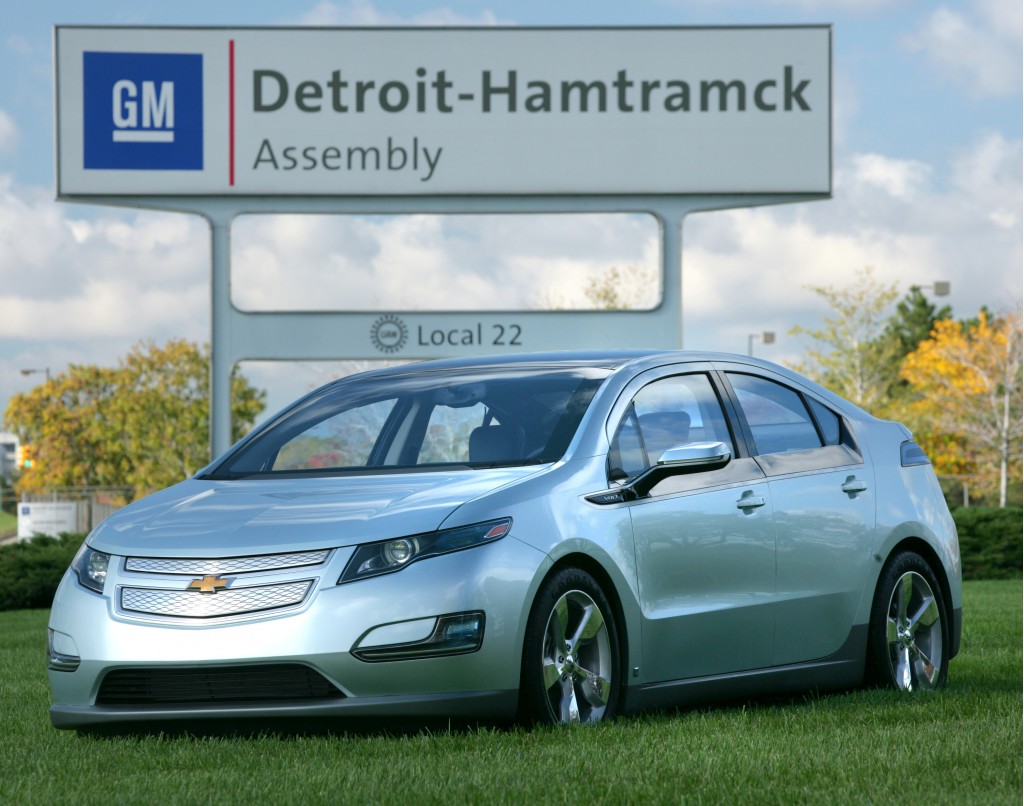
The 2011 Chevrolet Volt has a base MSRP of $40,280, before the federal tax credit of $7,500. The EPA has given the Chevy Volt an official all electric range (AER) of 35 miles, but the gasoline range extender with 9.3 gallons fuel tank extends that range an additional 340 miles for a total of 375 miles of range.
The Volt also comes with an 8-year, 100,000 mile warranty on the battery, but the Volt maintains its overall range through the use computer algorithms to increase the percent of battery used as the overall charge capacity of the battery declines.
As for charging, the Volt will be fully charged in about 10 hours at 120V, or in as little as 4 hours using a dedicated 240V line.
Against the Better Place criteria laid out three years ago, the Nissan LEAF has not achieved the thresholds of costs, energy / power density (range), long-life or rapid rechargeability. While the Chevy Volt does meet the thresholds of energy / power density (range), long-life and rapid rechargeability, it does so by using a gasoline range-extender, raising its base price approximately $7,000 higher than the Nissan LEAF and $18,000 above an equivalent gasoline only car.
Although I expect major automakers to continuing offering and improving vehicles with respect to these targets, it appears that the LEAF and the Volt affirm Better Place’s business case, rather than threaten it.
Have an opinion?
When comparing the LEAF to the Renault Fluence ZE/Better Place, shouldn't you talk about the lease price of the battery? What is the monthly lease price?
Well according to Autoblog it is $110/month. But the car is $38,000 (Danish marketplace). Well let's see $110/month is $1320/year. That seems pretty steep, along with a car that more than the price of a LEAF. So I don't know that Better Place has achieved its goal.
On the other hand, I am speaking from the American perspective where cars and fuel are cheaper than in Europe.
Anyway, if there are any serious discussions about Better Place, please direct me toward them. Personally, I think the model does not make any sense, but I love the battery swapping technology.
ev enthusiast Posted: 12/22/2010 9:14am PST
ecogo Posted: 12/22/2010 10:00am PST
As an aside, does anyone know the energy efficiency of the Fluence i.e. average miles per kwH??
Jason M. Hendler Posted: 12/22/2010 10:57am PST
Chris O Posted: 12/22/2010 11:10am PST
Anyway...still looking to find the av miles for KwH of the fluence. anyone?
Jason M. Hendler Posted: 12/22/2010 11:55am PST
Jason Posted: 12/22/2010 1:50pm PST
Dan Posted: 12/22/2010 2:27pm PST
I don't even want to use the swap often, but if I can just drop it off once a month or so and get a fresh one, that's one less thing to worry about. A per-mile bill is fine, even for miles I charged up myself.
If you can change the battery from a large up-front cost to a per-mile cost, pure electric vehicles ought to be cheaper to purchase than ICE cars.
Kevin Sharpe Posted: 12/22/2010 3:16pm PST
I think the money would be much better spent on deploying ultra low cost charge points everywhere and DC fast charge at key interstate locations. Imagine how many $500 Level 2 charge points we could install for the cost of one battery swapping station.
ffinder Posted: 12/22/2010 3:32pm PST
- (1) - Price: BPlace will sell their electric cars at least $5,000 less than the average price of gasoline cars that are sold in the US. - (2) - Range: BPlace electric cars will have an unlimited driving range where BSStations with 59.1 seconds battery swap are deployed. All of California will be covered with BSStations, goto betterplace.com to see the map. 7 days of the cost of oil in the US can cover all of the US with BSStations. - (3) - Battery : BPlace customers do not own the battery in the car, transferring concern over battery life, maintenance, capital cost, quality, technology, and warranty issues to BPlace. - (4) - Billing: BPlace customers will only have one monthly bill covering batteries, BSS swaps, charge spots, navigator to BSS's/chargers, and 24/7 support.
ffinder Posted: 12/22/2010 3:33pm PST
FF
ecogo Posted: 12/23/2010 2:57am PST
Youf added points are helpful and are part of what I was looking for in this article (or anywhere).
The key points of discussion are
1) Better Place has always claimed that the price of operating a BP EV will be comparable with gasoline and if you drive a lot, cheaper than gasoline. Now that European prices have been announced, is it true?
2) Better Place has pretty much said that their model does not work in the USA due to the low price of gasoline.
3) Is the model financially viable for Better Place? They have to pay for the batteries, the extra batteries at the swap stations, the swap stations, the charging stations, and the electricity. Not clear they can do that without government subsidy. So the BP model may be a fiction only possible with government tricks. If equal government support was given to non-swappable EVs, they would probably be even more viable.
Also you can see the problems in the discussion with @ffinder's comments. @ffinder does not even bother to put in the numbers to see if his argument makes sense. He just states as fact that things will be cheaper. Now that prices are available, are the actually cheaper?
Thanks
John C. Briggs
Now, there are other benefits to leasing which is the reason people do it. But lower cost is not a reason.
Later
John C. Briggs
Most would also agree that clean elec will get cheaper over time while car efficiency will only increase also. so the relative cost of EV driving to gas driving will get better and batter. thats regardless of whether BP is around or not.
IF battery technology does suddenly lead to quick charge fucntionality ie under say 3-5 minutes, there's still the cost of the battery, the infra to make it convenient and the grid capacity to deal with it. all not in place.
The BP model will work (and is revolutionary as it commoditizes personal transport) but it's market share will depend on the speed on those other factors for quick charge etc.
The other big variable is alt fuel sources e.g. synthetic ethanol. a whole other discussion.
Jason M. Hendler Posted: 12/23/2010 7:34am PST
even if clean elec goes up, then the quesiton is whether it will do so relatively slower to gas prices which would seem highly probable.
there's definitely no certainty however the BP model seems poised to take advantage of those macro trends while dependent on some micro policy issues.
their whoel model depends on the relative cost of the EV mile to the gas mile. I'm betting they have it right.
Bannor99 Posted: 12/24/2010 12:18am PST
$1 billion daily spent on oil (US)
EV, with current incentives, cheaper by $5000 over equivalent ICE
15 batteries in one station will support 2500 cars
7 days gasoline cost would be enough to build infrastructure
($150 million for Israel;
ffinder Posted: 12/25/2010 12:26pm PST
1)the Fluence Z.E. should start at a base price of 205,000 Danish Kroner.. It's actually CHEAPER than a Honda Civic @ 219 400 and very close to a Honda Jazz so its like you pay for a small bubble car and you get a big sedan.
2)BPlace is already deploying 4 BSS's in San Fransisco.. if they didn't believe it's going to work they woudn't bother with US at all
http://www.betterplace.com/global-progress-north-america-california
3)no gov help:
http://alexdc.org/2010/12/live-blogging-leweb-shai-agassi-of-better-place-interviewed-by-loic-le-meur.html
4) The monthly fees, Agassi insists, would be no more than (and likely less than) the cost of buying gasoline to travel the same number of miles. (includes battery leasing, swaps, charging) so you are already paying/leasing the gasoline you supply to your petrol car at about the same price a BPlace customer will be leasing etc. with BPlace.
http://www.edmunds.com/fuel-economy/better-places-battery-exchange-charges-ahead.html
more info on BPlace:
http://en.wikipedia.org/wiki/Better_Place
ff
anon Posted: 12/25/2010 3:20pm PST
Roy H Posted: 12/26/2010 3:15pm PST
The only case for fast charge or swapping is for working trucks and people driving on highways, in a real hurry. These markets are not reasonable now, and will come in several years after EVs are common place in cities.
Cost and range are big factors, charge time is not. BP will cost the customer significantly more, and within 5 years range will be about 300 miles and cost 1/2. At that point BP will be obsolete. BP is a short term solution for a problem that will go away.
Roy H Posted: 12/26/2010 3:28pm PST
Nobody would want to buy an 8 year old car with a dying battery that costs more to replace than the car is worth. This is one place where the BP model might be attractive. On the other hand, if batteries are cheap enough or last 10 to 20 years, then this may not be an issue. I think Chevy is counting on the long life, with the 35 miles still available at end of 8 year warranty. Nissan has stated that all LEAFs that come off the 3 year lease will be outfitted with new batteries before they are sold.
Dan Posted: 12/28/2010 8:14am PST
Pure EVs are cheaper than pure ICEVs because the ICE is expensive. The ICE should count as a wonder of the world, but wonders are expensive. While the electric motor is very cheap and very efficient.
By leasing the battery, it's easy for the consumer to see that
1. the upfront car is cheaper
2. the maintenance costs are lower
3. the per-mile costs are lower.
I understand how point 3 is debatable, but BP is willing to put their money on the line to prove it.
David Holland Posted: 12/28/2010 11:42pm PST
David Holland Posted: 12/28/2010 11:44pm PST
Kevin Sharpe Posted: 12/29/2010 3:19pm PST
John Pinke Posted: 1/1/2011 3:09pm PST
ffinder Posted: 1/11/2011 2:45am PST
ff
Have an opinion?Join the conversation!