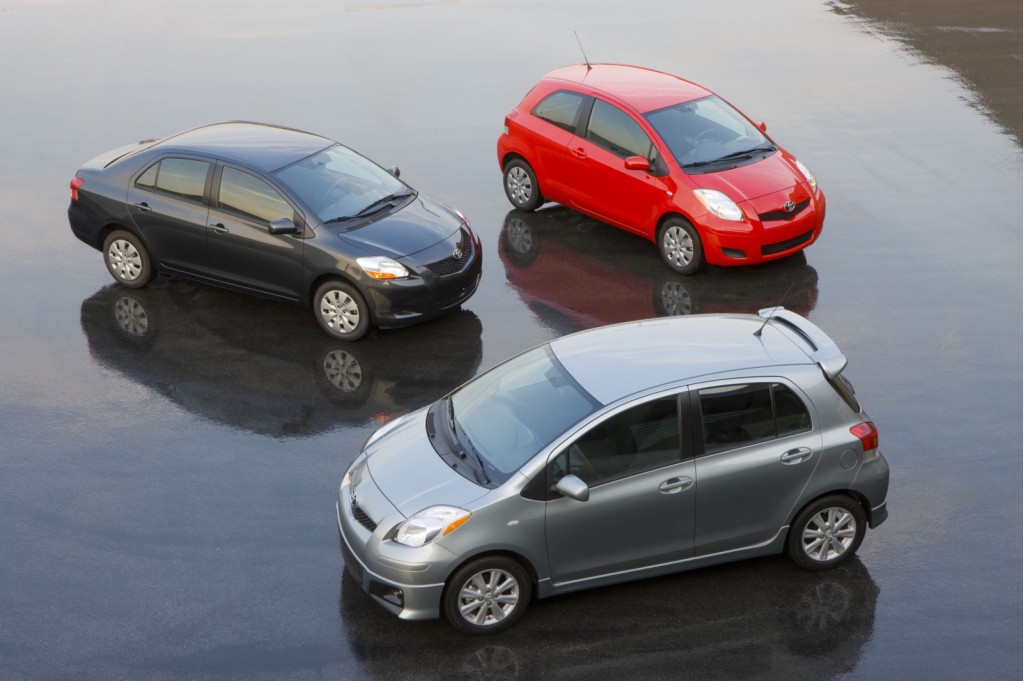
Today's small cars are better than they've ever been, even if few of them are among the EPA's all-time gas mileage champs.
And spurred by tighter fuel-economy laws, 40 miles per gallon on the highway is becoming the new target for subcompact and even compact cars.
There's just one little problem: Not only are 40-mpg models not selling particularly well, the whole small-car segment is anemic at best.
As auto sales have started to recover, the fastest growing segment is midsize sport utilities and crossovers. According to sales data from Ward's Auto, small cars have been the only segment to decline in sales even as sales rose overall. (All data cover the 12 months from October 2009 through September 2010.)
Declines of 25 percent...or more
In fact, sales of the much-praised 2010 Honda Fit fell a remarkable 26.6 percent, with the older 2010 Toyota Yaris declining more than 30 percent. Sales across the Scion brand, which offers only small cars, plummeted 30.7 percent, while Smart was down 63 percent and Suzuki lost essentially half its sales.
The 2011 Ford Fiesta, new this year, "isn't setting the sales world on fire," in the words of Cars.com. The optional trim level that rates the Fiesta at 40 mpg on the highway doesn't seem to have helped much.
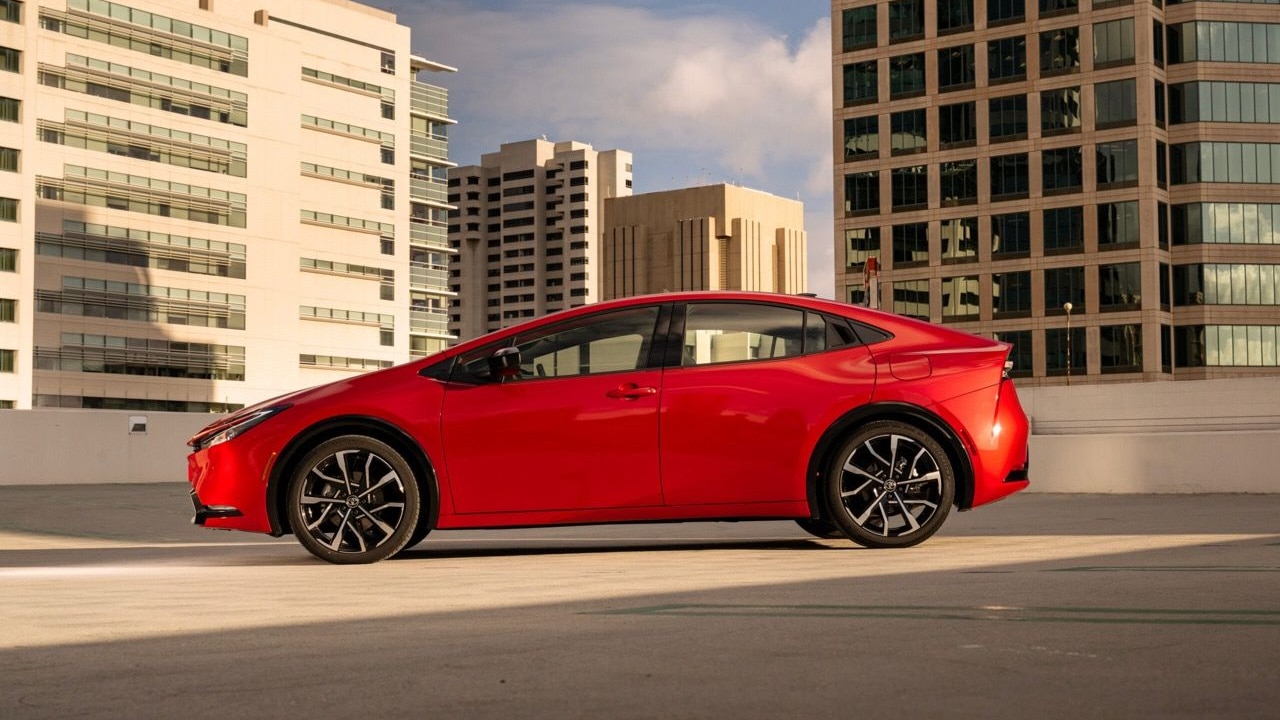
Hybrid sales, too, fell 3.8 percent for 2010 model year offerings. The car that accounts for more than half of all hybrids sold here, the 2010 Toyota Prius, was in short supply just 18 months ago but is now easily available on dealer lots.
Gas prices, of course
The culprit, of course, is essentially stable U.S. gasoline prices--which remain at levels far lower than those in much of the rest of the world.
It's a truism that new-car buyers generally opt for the largest, best-equipped vehicle they think at the time that they can afford. Not every buyer, but most of them. And that seems to apply equally in Europe and Asia too.
New entries regardless
Several new compact cars are entering the market, or about to. The 2011 Chevrolet Cruze is now in dealerships, the 2011 Hyundai Elantra will arrive shortly, and the eagerly awaited 2012 Ford Focus will land in a matter of months.
Then there are the plug-in cars, albeit in small volumes: the 2011 Chevrolet Volt and 2011 Nissan Leaf. Despite high purchase prices, they're essentially sold out for the year. Their real test won't come until 2013, when much higher volumes are available and waiting lists will have been sated.
What will it take?
But it may take the next spike in gasoline prices before U.S. car buyers look again at small and subcompact cars.
In the summer of 2008, remember, when gas prices soared to $4 a gallon or more, buying behavior changed so abruptly that for several months, the mix of models sold would have--if continued--met the 2016 fuel economy standards a full seven years earlier.
But then gas prices ebbed, and gradually U.S. buyers returned to larger vehicles. Which poses a question: What would it take to raise sales of subcompact and 40-mpg vehicles?
Leave us your thoughts in the Comments section, below.

Have an opinion?
Brian Posted: 12/9/2010 8:29am PST
Ruslan Posted: 12/9/2010 9:02am PST
It may work for a young family on a budget that doesn't have kids, but then priorities change...
greg Posted: 12/9/2010 9:28am PST
You say that hybrid sales are DOWN. Wrong they are UP, way UP. 2009 hybrid sales were 2.3% in 2010 hybrid sales are 4.3%. Not quite double, but close.
You say that percent of SUV sales are up, well compared to 2009, OK, they are up a little. But they are well below the percentage of sales show in 2004-2008.
And you may not drive, but for those of us that do, gasoline is once again above $3/gallon. Perhaps that might be a factor.
And perhaps it is worth mention in such an article that the CAFE standard will be pushing cars up to 35.5 MPG by 2015 (I believe) and the first step on that part starts next year.
R2Dad Posted: 12/9/2010 9:50am PST
Dan Posted: 12/9/2010 9:55am PST
R2Dad Posted: 12/9/2010 10:26am PST
rich Posted: 12/9/2010 11:25am PST
Bob Leonard Posted: 12/9/2010 1:14pm PST
Larry Posted: 12/9/2010 9:23pm PST
Larry Posted: 12/9/2010 9:34pm PST
Rob O'Keefe Posted: 12/10/2010 7:34am PST
@John B, I agree with many of your points but sales info from Wards supports the data here and not what you've shown. Wards shows hybrid sales at 270,171 for Oct. 2009-Sep. 10 versus 279,285 for the previous period in 2008-09. I hope I'm wrong here but where do you see they are "UP, way UP?"
Compacts and subcompacts were never designed for everyone but at least the newer ones are well done. It'll never be my primary car but love my wife's Mini Cooper & it's been great.
Marcio Posted: 12/10/2010 9:38am PST
Craig Hansen Posted: 12/10/2010 9:47am PST
Tom Servo Posted: 12/10/2010 10:44am PST
I'd like to share a blog that provides ways to improve efficiency should you vehicle not meet the 40MPG criteria.
Rob O'Keefe Posted: 12/10/2010 11:10am PST
As for diesel fuel being cleaner, NOx emissions are over double, CO is double, and smog-forming pollution is almost double.
Diesels make sense in many cases, but some of the claims about it are a stretch...
Laura Posted: 12/10/2010 4:31pm PST
The VW Jetta Sportwagen TDI (diesel) w/DSG and the SE (gasser) are almost identically equipped. Comparing MSRPs (both w/DSG), the TDI is $2375 more expensive than the SE. Most of this difference had been offset by a $1300 federal tax credit that the buyer of TDI got that the SE buyer did not get, leaving a net difference of $1075. But I believe this tax credit is phasing out.
The TDI consistently gets better reviews than the SE for its more refined and higher torque engine. The TDI is EPA rated 30/41 while the SE is EPA rated 24/31.
The JSW TDI has a sophisticated emissions control system and is much cleaner than diesels of the past. It's EPA rated Tier 2 Bin 5, so it's tailpipe emissions equal the average car sold today -- meaning it's cleaner than the average car on the road. NOx from the TDI is indeed higher than the cleanest gassers sold today. But evaporative emissions along the refining and supply chains are much lower for diesel compared to gasoline, and evaporative emissions are also a significant source of pollution.
Laura Posted: 12/10/2010 4:33pm PST
If the SE gasser averages 25 mpg (like the EPA sez, there's no owner reported data on fueleconomy.gov) and the TDI averages 39.6 mpg (like buyers of my TDI actually find), using current US average prices of $2.96 for RUG and $3.20 for diesel, then at the 20,000 miles/yr I average, the TDI has a $752 lower annual fuel cost. The reduced fuel cost would pay for the higher TDI price in 17 months with the $1300 credit, or 38 months without the credit.
On top of a lower total cost of ownership, the TDI is the better driving car.
And the TDI also has CO2 emissions about 30% less than the SE if we premise 39.6 mpg vs. 25 mpg.
Craig H. and I are not the only ones who have done the math and read the reviews. The JSW TDI outsells the JSW SE by 4 to 1.
Laura Posted: 12/10/2010 4:51pm PST
Xavier Itzmann Posted: 12/12/2010 10:29am PST
Anytime you fill up, note how many gallons. Say 15, for instance.
Take out your own checkbook, and write a $15 check to the IRS. Write "donation".
Just don't screw with the rest of us. Your instincts to have everyone oppressed/taxed the way you see fit si not appreciated.
chezboy Posted: 12/12/2010 3:13pm PST
chezboy Posted: 12/12/2010 3:28pm PST
The VW diesel is awesome. It would be better if it were in a hybrid.
Don't look just at the average emisions numbers, because the carcinogenic soot and NOx go un-regulated, but are important.
MSRP is convenient, but is not well connected to selling price. In real life, the $5K is the diff.
Laura Posted: 12/12/2010 7:37pm PST
If diesel hybrids materialize, I suspect we'll see them first from BMW or Mercedes Benz, not VW. The higher price would be harder for VW buyers to swallow. There is already a version of the BMW 320d available in Europe that has features from hybrids including stop/start and regeneration braking. It is more powerful than the VW Jetta TDI AND it gets better fuel economy.
NOx and particulates for diesel cars are both regulated by the EPA. Diesel cars have particulate filters, as well as either NOx traps or urea injection to reduce NOx.
The $2.3K difference in MSRP for VW Jetta TDIs vs. a comparably equipped gasser does not morph into a $5K difference out the door. New 2010 TDIs are selling for under dealer invoice.
Tom Posted: 12/13/2010 8:04am PST
Price Lister Posted: 12/13/2010 8:20am PST
Abe Posted: 12/13/2010 3:19pm PST
A 40mpg with Auto Transmission, Good Price, Decent Size, is not yet on the market.
The Hyundai Elantra isn't out yet, but it comes close to the description.
Tom Posted: 12/14/2010 7:04am PST
First: The scenario is that we determine the average fuel use is 600 gallons per year so we send out tax credits of $600 to each taxpayer to offset the extra dollar on each gallon. The program could be a victim of its own success as the average fuel use drops by 100 gallons. The government has suffered a net loss of tens of billions in revenue.
Second: Elderly people who don't earn enough to file 1040's each year would have to pay more taxes at the pump but there's no income tax to reduce.
Third: You'd have to extend credits to businesses as certain ones would be extremely vulnerable to this tax and determining the level of those credits could be very complicated.
Fourth: People would respond to the gas tax by not only choosing a more fuel efficient car for their next purchase but also by driving less. Thus there would be less wear and tear on the cars and we'd buy fewer new ones over time.
I'd like to see people refute these arguments. Or you could simply resort to insults and name calling. Either way is entertaining.
Jay Jay Posted: 12/14/2010 3:18pm PST
Tom Posted: 12/15/2010 6:40am PST
Raymond Posted: 12/17/2010 2:13pm PST
Aaron Posted: 12/19/2010 11:44am PST
Add to that the fact that government incentivizes large, heavy vehicles over smaller compacts (see NHIIS, EPA, and other rules for auto manufacture) and the cultural expectation of roominess and safety and your compacts are basically out of the game.
Gas prices play a role, but that's too easy. You said yourself that even in higher fuel price markets, like Europe, people still mostly buy mid-sized and larger vehicles.
cdavidhess Posted: 12/20/2010 9:01pm PST
Brenda Fallone Posted: 12/28/2010 5:20pm PST
John Posted: 12/28/2010 6:56pm PST
Lisa Posted: 12/29/2010 7:04am PST
WagonMaster Posted: 1/8/2011 8:42am PST
Rather simple. In 1967 I bought a MercedesBenz 200Deseil 4dr Sedan. It was COMFORTABLE!! It was QUIET! It handled well. Had all the options You get the picture. But the big thing was that it was a medium sized car NOT A SHOE BOX! and it got 37-48 mpg. I topped 51mpg one time from Sacramento to San Jose. Where are those cars? In Europe because we can't get them here
Cheryl Posted: 1/8/2011 8:46am PST
http://www.greencarreports.com/blog/1039689_why-cant-we-buy-small-european-diesels-in-the-u-s
and
http://www.greencarreports.com/blog/1051249_five-reasons-small-diesels-wont-dominate-the-u-s-car-market
Have an opinion?Join the conversation!