Advertisement

Tesla Gets Jolt Of Power As Panasonic Buys $30 Million Stake

 
Follow Nikki

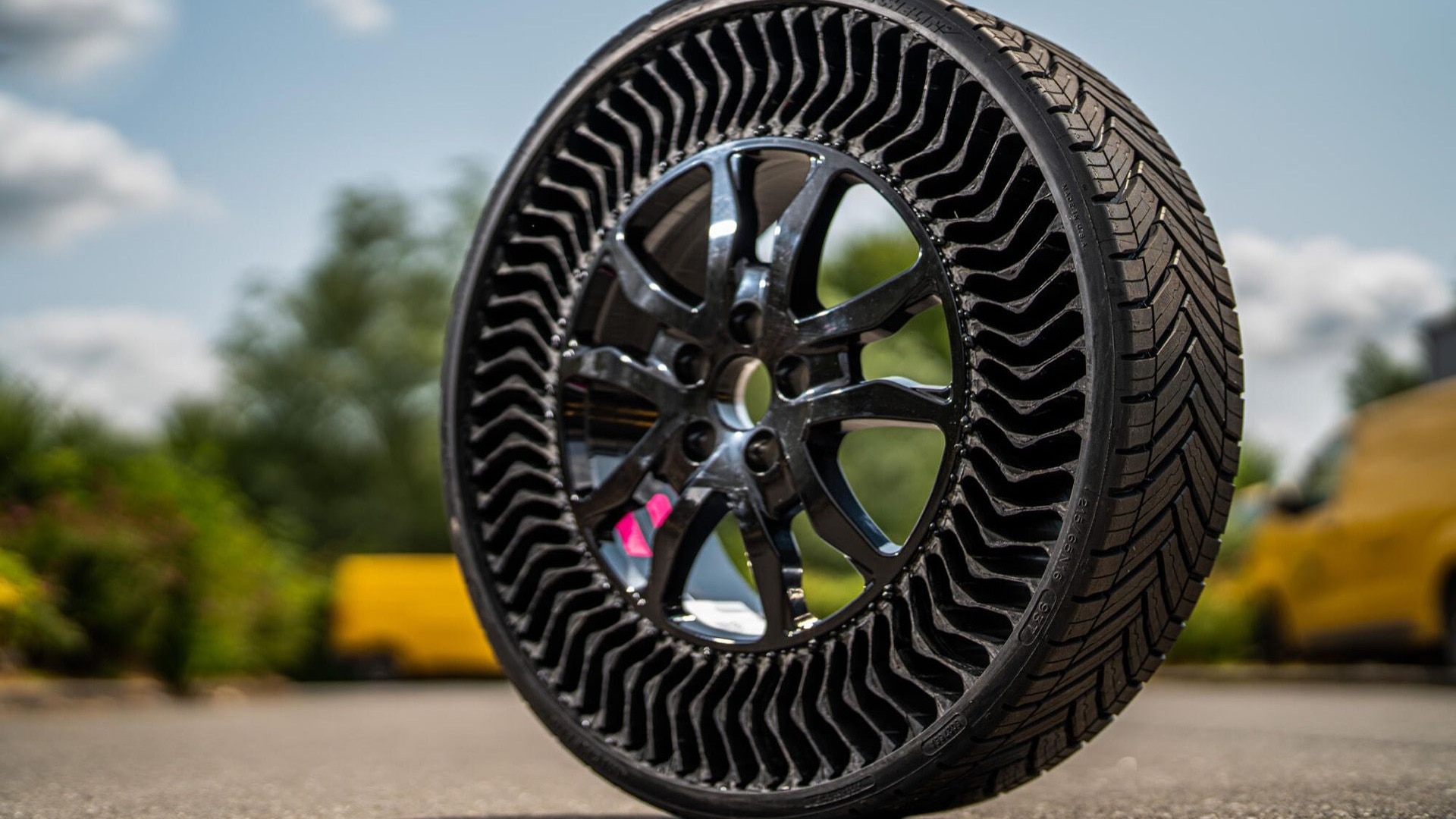
Taken in Bristol, UK. Photograph taken by Phil Bambridge. Used with Permission.

Taken in Bristol, UK. Photograph taken by Phil Bambridge. Used with Permission.

Enlarge Photo

Related Photo Galleries


See more photos »

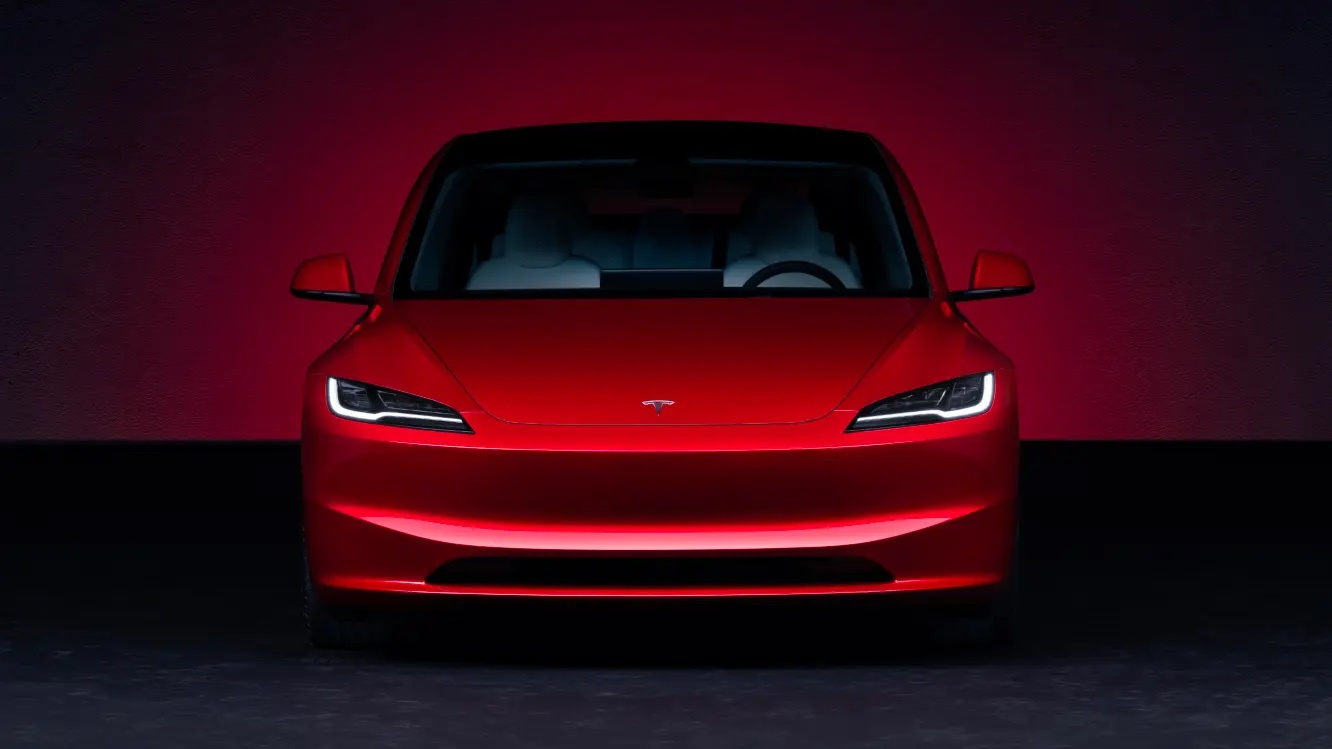
We have to hand it to Tesla Motors. Over the past year the Californian-based automaker responsible for the fast, sexy 2011 Tesla Roadster 2.5 and 2011 Tesla Roadster Sport 2.5 has experienced a pretty good year. 

Not only has the Palo Alto firm survived its initial public offering, generating over $226 million for the company, but it has managed an updated version to its popular Roadster sportscar as well as announcing a slew of development partnerships. 

In May, Tesla and Toyota confirmed they would be working together on electric vehicle development. Then, later in the year both companies confirmed that Toyota’s $50 million investment in Tesla would result in both companies designing an all-electric 2013 Toyota RAV4 EV for market release some time in 2012. 


While we’re excited to see what the fruits of the labors will be when the RAV4 is unveiled later this month at the LA Auto Show, we can’t help but think Tesla’s latest piece of news will also give the company further stability for the future. 
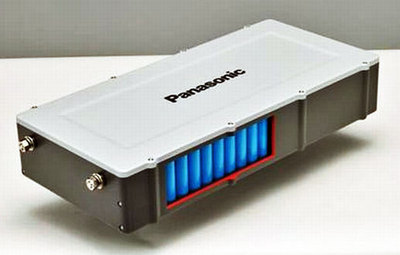
Panasonic Li-Ion EV battery

Panasonic Li-Ion EV battery

Enlarge Photo
While Japanese technology giant Panasonic Corp. has been working closely with Tesla for nearly a year to develop nickel-based lithium-ion battery packs for electric vehicles, Panasonic has taken the next step in their corporate relationship by buying a $30 million stake in Tesla. 

What does this mean for the small electric car firm with big aspirations?  

Aside from the obvious financial boost to a company which has been criticized in the past for haemorrhaging money, expect Tesla to have a secure supply of Panasonic’s high energy density lithium ion cells. The cells, while only 3.1Ah individually are combined in packs of 6,800 cells to give the Tesla Roadster its legendary performance. 

Tesla also hopes the investment and partnership will also enable Tesla to leverage Panasonic’s mass-production knowledge, benefiting from the economies of scale and reducing the cost to the consumer of its cars. 
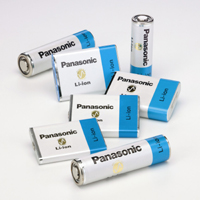
Panasonic Lithium-Ion Batteries

Panasonic Lithium-Ion Batteries

Reduced battery pack costs also allows Tesla to move forward with production of its Model S Sedan, due to hit the road some time in 2012. It should also provide knock-on benefits to Toyota, making the 2013 RAV4 EV more affordable for consumers. 

But while Panasonic may be better known for its consumer gadgets than its batteries, the Japanese electronics giant is no stranger to electric vehicles. 

Founded in 1996 as a joint venture between Toyota and Panasonic, Panasonic EV Energy Co., supplied prismatic nickel-metal-hydride EV batteries to Toyota and GM for use in the Toyota RAV4 EV and GM EV1. 

More recently the company, which changed its name earlier this year to Primearth EV Energy Co., Ltd, has provided batteries to Honda and Toyota for use in hybrid electric vehicles. 

[Tesla][Panasonic]



Follow Us


Have an opinion?

  • Posting indicates you have read this site's Privacy Policy and Terms of Use
  • Notify me when there are more comments
Comments (11)
  1. tesla's interest in getting new funds is not a good thing, in my opinion. all the ado in san jose, and then later between downey and long beach were all just lies. they may have had their eyes on toyota, all along. they are a deceitful company.
    just what their real plans are is anyone's guess. i would not want to be a stockholder.
     
    Post Reply
    Vote
    Bad stuff?

  2. @ ev enthusiast, I don't think they lied. Being a newer company they've probably had make some decisions as they go along. I think they have just had to shift their plans in certain areas based on business decisions.
     
    Post Reply
    Vote
    Bad stuff?

  3. hi cd,
    tesla is the one topic where we are on different sides of the fence - LOL.
    too much emphasis is being put on acquiring funds, be it from us taxpayers, to stock sales, to toyota, to panasonic, and who knows what is next.
    tesla and coda are about 180 degrees apart. tesla does whatever it can to make the news, while coda is the strong, silent type. in life, the people that behave like coda are the ones who know they already have something to back their claims up.
    it will be interesting, but i still think that coda will be a major player. i am not nearly so sure about what tesla actually plans to do.
    but one thing is certain - musk is doing everything he can to get money from wherever he can. wait and see - that is not a good sign.
     
    Post Reply
    Vote
    Bad stuff?

  4. ev, I do agree that Tesla is still standing on shaky ground but they are gaining traction. And I don't dislike Coda like you dislike Tesla, I always think its best to avoid becoming a fanboy to any one brand so it's not like I'm dedicating myself to Tesla. But as of right now Coda really looks unstable, correct me if I'm wrong but wasn't the goal of Coda's sedan to bring EVs to the masses? At its price of 44,900 it's priced in the BMW 3-series and Mercedes C-class price range but you know they can't compete with BMW or Mercedes. And the Leaf is highly more competitive than the Coda in price, design even though the Leaf will never win any beauty contests, and it's a Nissan a company people already know and trust. When you said Coda backs up it's claims I thought HOW, Tesla doesn't need to rush the Model S to market to prove anything, they're timing doesn't make them liars, they need to take it slow so they can develop a reliable sedan. Both Tesla and Coda do have something in common they both want to bring EVs to the masses but its Coda that tried to do it first so they made a cheap asian sedan competitor but it costs the same as a small luxury car. So it looks more like Coda thats not delivering on their promises of an inexpensive family EV, they're coming to market later than the much less expensive Leaf, the Leaf will reach the masses so Nissan wins that race. So the question is how is Coda going to stay afloat with nothing innovative to offer?
     
    Post Reply
    Vote
    Bad stuff?

  5. i agree that the price is too high. but lets see what the prices are a couple years from now, when there are no more waiting lines (not just coda, but all the ev prices).
    i like the looks of the coda MUCH BETTER than the leaf. but "looks" is something subjective. it plays no part in determining the value of a car.
    coda does offer a thermal battery mgmt system, for one. i think that the coda will be a better quality car than the leaf. time will tell on that one. although i also think that all these first evs will have some problems that are unsuspected. they simply need to get them on the road.
    however, coda is not competing with nissan, in terms of who can sell the most vehicles. they never were. sure, they wanted to beat nissan to the punch. but they could not possibly manufacture as many cars as nissan can.
    but it truly is coda that brought in the big companies. i agree that the coda is overpriced right now, but being touted as a family ev, has helped spur on the ev industry, in a way that the tesla roadster never could.
     
    Post Reply
    Vote
    Bad stuff?

  6. Actually the Tesla Roadster does inspire people to take interest in EVs. It's the first car to combined the words electric and sports car, people love sports cars. And styling is important it sparks interest, like the Fisker Karma, it's biggest selling point is it's styling. I really don't think the Coda has spurred anything because few people have even heard of them, Coda really hasn't achieved anything. Tesla has managed to put their high performance roadster on the road and show a running concept of a future model and has plans for more and as stated in this article has had several major companies invest in Tesla. I guess the point I'm trying to make about Coda is that their survival in the market doesn't look promising. The Coda's price, styling, and features suggest bankruptcy auction. I hope I'm proven wrong, I'd like to see them find that one thing that keeps Coda moving into the future. We're still just stuck playing the waiting game.
     
    Post Reply
    Vote
    Bad stuff?

  7. Sorry, Nikki, wrong again. NiMH batteries are NOT all the same; the GM version had many problems, such as the heat issue, which GM refused to solve. The GM batteries were supplied by GM-Ovonics (later Chevron-ovonics battery systems) and were inferior, not being able to charge above 90 deg. F and having a fire issue in certain cases above 100,000 miles or 12 years.
    The PEVE batteries were improved over a 10-year period (from 1992 to Nov., 2002); work started when Toyota (PEVE was a JV with Panasonic) took the ZEV mandate seriously and cross-licensed "gen-I" NiMH from Ovonics (prior to GM buying control). PEVE improved the NiMH so that it lasted longer, was more robust, had less of a heat issue, and didn't need a cooling system. PEVE supplied batteries to Honda, Toyota and Ford (for the RangerEV).
    GM-Ovonics used inferior NiMH;
    PEVE used superior, tested NiMH for the RAV4-EV.
    The development of NiMH ended with the settlement of Chevron's lawsuit against Toyota, where Toyota submitted to "blackmail" and agreed to only use NiMH for hybrids that can't plug in.
    Even though Chevron disgorged most of its interest in cobasys to Bosch/Samsung in 2009, they RETAINED their "special agreements" hobbling Toyota.
     
    Post Reply
    Vote
    Bad stuff?

  8. This is why, it is speculated, the Plug-in-Prius uses the NiMH (small) battery only for recapturing regen braking, and the (larger, wall-charged) Lithium battery for driving on electric from the wall.
    Chevron is opposed to any use of its battery, apparently, for any plug-in that gets its power from anything but gasoline.
    Thus, everyone is forced to use more expensive and unproven Lithium.
    The requirements for an EV battery are stringent and specific; even though bad NiMH will work, it won't last. Similarly, Lithium may or may not be able to last more than 100,000 miles, while we have one RAV4-EV already at 105,000 miles and still 120 miles range, using the original pre-Chevron-lawsuit 2002 batteries.
     
    Post Reply
    Vote
    Bad stuff?

  9. chevron can keep their batteries. we will develop something better, and not have a gasoline company involved in the ownership.
    the current lithiums may end up better, already.
     
    Post Reply
    Vote
    Bad stuff?

  10. The oil companies have been investing in energy patents for a long time. The gas prices go up. Interest in a better energy source bubbles over again. New and better ways of solving the battery issue are presented, oil company steps in the way to stop it and/or buy it. If it causes too much drama, lower the gas prices and the masses lose interrest due to convenience. In my opinion the solution has to be cheap, easy to switch to, and lucrative for the oil companies too. IF YOU CANT BEAT EM ,JOIN EM!
     
    Post Reply
    Vote
    Bad stuff?

  11. The oil companies have been investing in energy patents for a long time. The gas prices go up. Interest in a better energy source bubbles over again. New and better ways of solving the battery issue are presented, oil company steps in the way to stop it and/or buy it. If it causes too much drama, lower the gas prices and the masses lose interrest due to convenience. In my opinion the solution has to be cheap, easy to switch to, and lucrative for the oil companies too. IF YOU CANT BEAT EM ,JOIN EM!
     
    Post Reply
    Vote
    Bad stuff?


Have an opinion?Join the conversation!

Advertisement
Advertisement

Find Green Cars

Go!

Advertisement

 
© 2013 Green Car Reports. All Rights Reserved. Green Car Reports is published by High Gear Media. Send us feedback. Stock photography by Homestar, LLC.