Advertisement

100-MPG Auto X-Prize Mainstream Winner: Would You Drive This?

 
Follow John

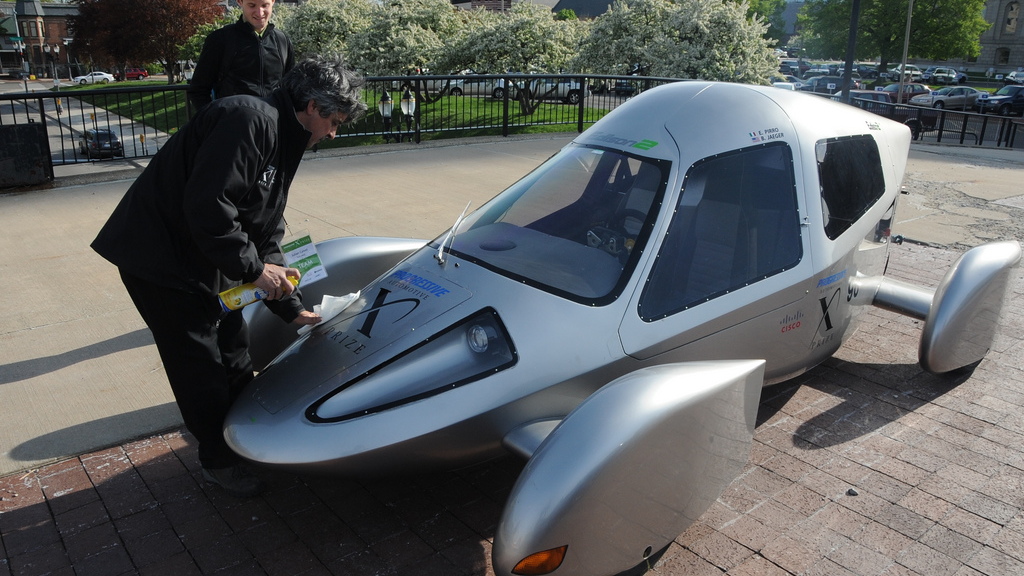
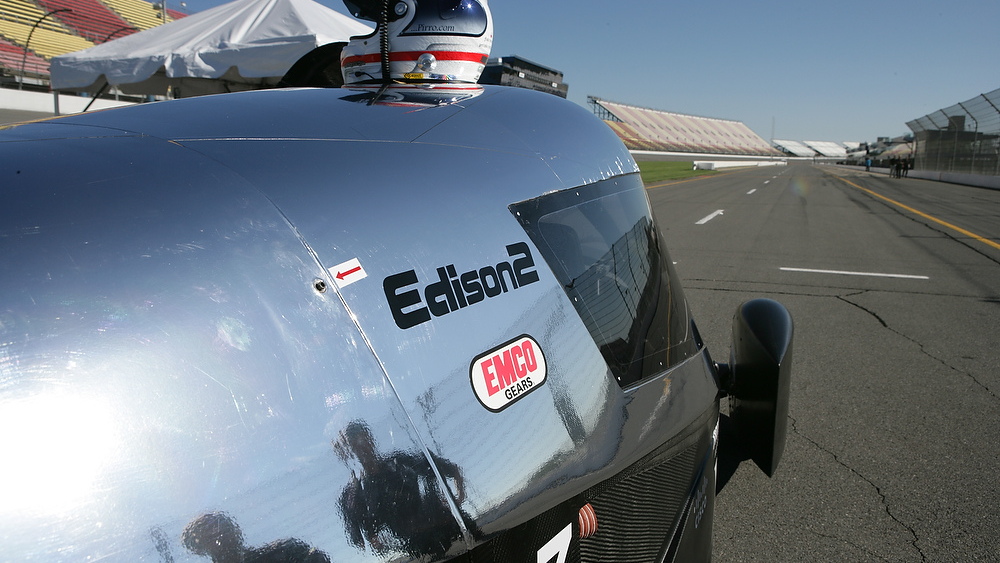
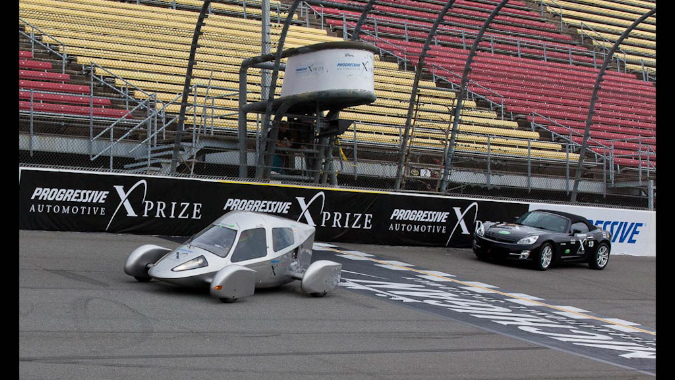
Edison2 Very Light Car, Progressive Automotive X-Prize winner.

Related Photo Galleries


See more photos »

After many months of testing, qualifying, and mechanical challenges--not to mention reams of press releases--today the Progressive Automotive X-Prize announced the winners of its three categories, who will split $10 million in prize money.

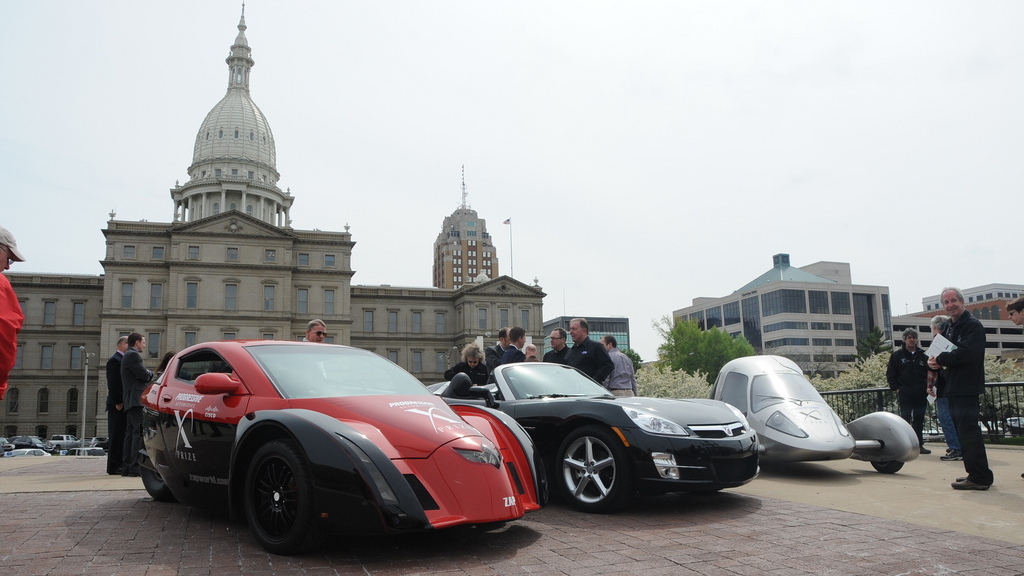
Both winners in the "alternative" classes for two-passenger vehicles were electric, and our sister site AllCarsElectric.com has full coverage of the pair: the Wave II (side-by-side) from Li-Ion Motors of Mooresville, North Carolina, and the E-Tracer (tandem) from Peraves X-Tracer of Winterthur, Switzerland. Each of those teams takes home $2.5 million.


Peraves E-Tracer, winner of Progressive Automotive X-Prize. Photo: Stefano Paris.

Peraves E-Tracer, winner of Progressive Automotive X-Prize. Photo: Stefano Paris.

Enlarge Photo

Li-Ion Motors Wave II, Progressive Automotive X-Prize winner.

Li-Ion Motors Wave II, Progressive Automotive X-Prize winner.

Enlarge Photo

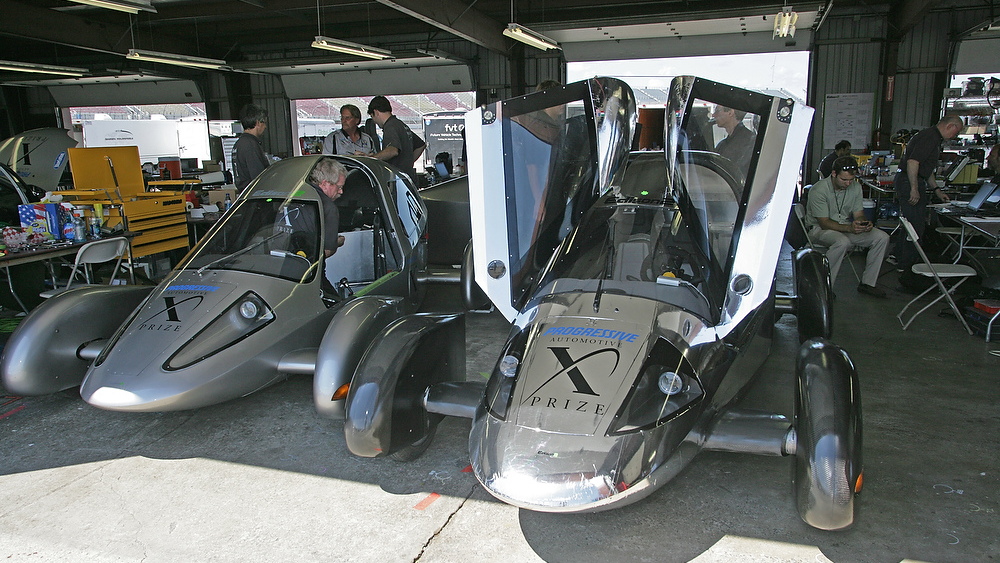
Here, we focus on the "mainstream" class, which required accommodation for four passengers. The $5 million winner was the Charlottesville, Virginia, team calling itself Edison2, whose "Very Light Car" (# 98) boasted the lowest drag coefficient of any four-wheeled vehicle tested.

Oliver Kuttner, a dealer and racer of European cars, assembled the Edison2 team of eight full-time members plus more than 50 other contributors. It entered no fewer than four Very Light Cars, each with slightly different bodywork on top of the same basis chassis and powertrain.

All weighed under 1,000 pounds and turned in drag coefficients of 0.15, far better than any production car today. The body of the winning vehicle was made entirely of carbon fiber.

As the name indicates, the team focused obsessively on reducing weight in their vehicle, which allowed them to use a smaller displacement engine. The entire vehicle weighed a mere 830 pounds (sans passengers). That's roughly one-third the weight of any other four-passenger car sold today in the United States.

Running on E85 ethanol, their 0.25-liter dual overhead-cam single-cylinder engine generated 40 horsepower--and squeaked them past the 100-MPG minimum required of any competitor to win. 

The final result was 102.5 MPGe, or "miles-per-gallon-equivalent," a metric constructed by Auto X Prize organizers after discussions by a working group to find some single way to compare vehicles using a wide variety of powertrains (mechanical and electrical) and energy storage mechanisms (predominantly liquid fuel, hydrogen, and battery packs).

So here's our question: With gasoline at $2.70 per gallon today--and who knows what price in five years--would you be willing to drive a car like this (no amenties, remember) to quadruple your mileage from today's average 25 miles per gallon to 100 miles per gallon?

Why or why not? Leave us your thoughts in the Comments below.



Follow Us


Have an opinion?

  • Posting indicates you have read this site's Privacy Policy and Terms of Use
  • Notify me when there are more comments
Comments (6)
  1. Yes, I would do it. But I want the electric version of the car.
    It is unfortunate that you did not choose to summarize Oliver's comments at the acceptance speech. There is a whole range of problems that the country faces, in that perspective, a change to the automobile for the USA is long overdue.
     
    Post Reply
    Vote
    Bad stuff?

  2. Yes, I would. What I really want is a plugable series hybrid, where the gas engine charges the batter rather than running the car. But I'd take anything that gets me over 100 mpg, and it doesn't matter what the price of gas is at the time -- it's running out, and the host of problems it causes, environmental and political, are not worth it. We have to switch to something more sustainable now, and everyone knows it.
     
    Post Reply
    Vote
    Bad stuff?

  3. I think small 3-wheeled cars with 2 seats and an electric motor or gasoline motorcycle engine will become more common. It will be a primarily a vehicle for commuters who can afford a third, low-price vehicle at a cost of less than $8,000 new. They're small, so 3 could fit in the space of 2 lanes. They get good gas mileage, and when you are only carrying yourself and your work gear, you don't need the extra space and power of your traditional car. Meanwhile, the traditional car will still serve as the primary family vehicle and unfortunately will probably always outnumber the trikes.
     
    Post Reply
    Vote
    Bad stuff?

  4. NO ! I examined the car at MIS during the final evaluation stage there. It is way too spartan without any passenger amenities, e.g. AC--the team was using ice to keep the driver alive in the cabin during warmer test days for example. It is also really noisy. It sounds like a small motorcycle --which in terms of engine IT IS. I would further doubt that it would come close to meeting any of the current crash standards for a mass market vehicle.
    But, the Wave II, though claustrophobic inside, comes close to being a functional and practical car. I personally like the Finnish RaceAbout design for a 4 wheel model and the Aptera in the 3-wheel format. Both of those designs were close to actually "saleable" in terms of market needs.
     
    Post Reply
    Vote
    Bad stuff?

  5. George Parrott,
    Thanks for your input here. You give us a much better sense of the car's readiness for the market.
    Thanks
    John C. Briggs
     
    Post Reply
    Vote
    Bad stuff?

  6. I'd love one. Odds are, however, it won't ever be mass produced (just like the Aptera).
     
    Post Reply
    Vote
    Bad stuff?


Have an opinion?Join the conversation!

Advertisement
Advertisement

Find Green Cars

Go!

Advertisement

 
© 2013 Green Car Reports. All Rights Reserved. Green Car Reports is published by High Gear Media. Send us feedback. Stock photography by Homestar, LLC.