Tomorrow's Hot-Rodders Will Take to Electric Cars, Just Watch

 
Follow Antony

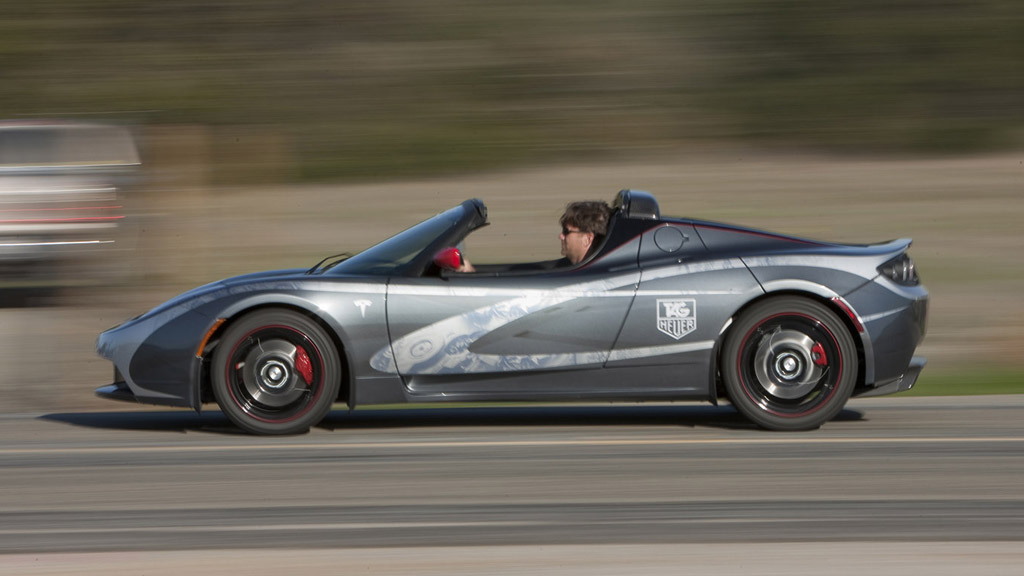
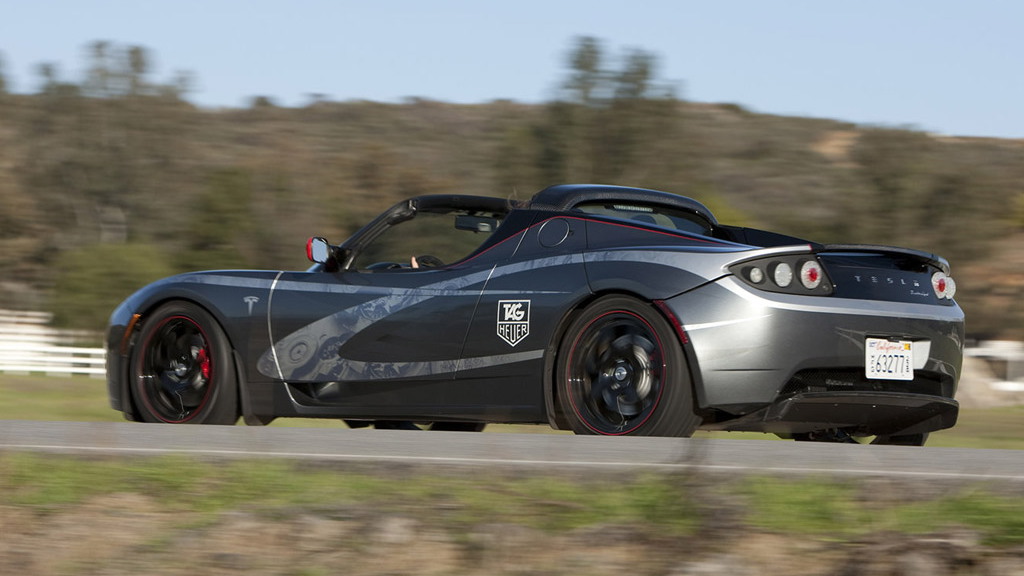
2010 TAG Heuer Tesla Roadster

2010 TAG Heuer Tesla Roadster

2010 TAG Heuer Tesla Roadster

Enlarge Photo

Headers. Cams. Pistons. Liners. Ports. Carbs. Crankshafts. Filters. Mufflers. Are these all words we'll start to see disappearing from the tuning magazines of the future?

Mankind has always wanted to go faster, whether that's in a car, an aircraft, a boat or even on a horse. Tuning is an essential part of car culture ... and EVs will be no exception.

As electric cars become more prevalent in the marketplace, a hot-rodding culture will likely develop around them in the same way it has for internal combustion cars.

So what does the future of EV tuning have in store?

Simply going faster shouldn't be a problem - the beauty of an electric motor is in its simplicity. You have wound wires, electromagnets and a central shaft. Adding more coils to the wire, stronger magnets and reducing the friction of the shaft will all contribute to extra power. Improve the cooling and increase the voltage to the motor and you're good to go.

Or not. There are, of course, challenges.

The first is range. The 2011 Nissan Leaf manages 100 miles on a charge. The harder you drive it, the quicker the batteries will drain. Increasing the power of the electric motor has the same effect, to the point where even a trip to the 7/11 might induce range anxiety.

This is why most car makers find a compromise between power and range for their EVs, and why the battery fitted to the 2011 Tesla Roadster contains 6,831 laptop cells producing 53 kilowatt-hours (versus the 24 kWh of the Leaf) and weighs almost 1,000 lb.

Think of it as fitting gas-guzzlers and supercars with larger fuel tanks to mitigate frequent gas-station stops.

The second challenge is getting to the motor in the first place. Modern production EVs aren't really designed with the home mechanic in mind. Partly because such a simple drivetrain requires very little maintenance besides remembering to charge it, and partly as a consequence of all the insulation and cooling requirements of an electric motor and batteries.

This means the home mechanic might struggle to just drop in a bigger and more powerful motor like a modifier today might drop in a bigger engine. This ain't your average V8 swap here, boy.

Power isn't the only way to modify a car though. Many other aspects of EVs are quite similar to other cars. Chassis tuning, for example. Indeed, many EVs might already have the edge here, since their batteries tend to be stored down low in the chassis and electric motors are lighter than internal combustion engines, great for lowering the center of gravity.

Or in the words of Colin Chapman, the founder of British sports car company Lotus, "add lightness".

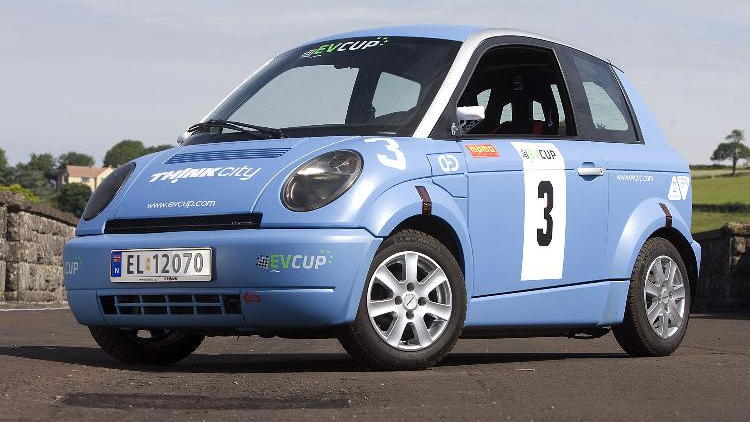
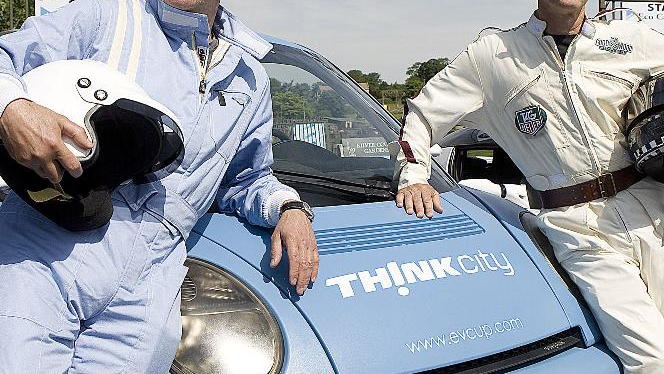
Norwegian electric car maker Think have taken this path with their 2011 City EVCup. Think lost the trim, radio, seats and carpets to turn the regular 2011 City into the City EVCup racer. Out come the heavy glass windows too, replaced with shatterproof, heat-resistant and light perspex.

All the changes shed a massive 155 pounds from the Think's weight--not bad from such a small and light car to begin with.

So electric cars still have the potential for tuning, and seem no more inherently compromised for the purpose than regular cars, especially as we see improvements in range to offset anything a power increase might take away.

Tuners are a resourceful bunch, and you can guarantee that EVs are on their radar. We've already seen petrol-electric hybrids like the Toyota Prius and Honda CR-Z fall under the tuners' scalpel.

Enthusiasts will keep the gasoline engines roaring until the wells run dry, but it's only a matter of time before we see a 2011 Leaf on the cover of Import Tuner...probably with a fancy paint job, lowered suspension, wide wheels with low-profile tires, and a screaming electric motor.

Wait for it!



Follow Us


Have an opinion?Join the conversation!

  • Posting indicates you have read this site's Privacy Policy and Terms of Use
  • Notify me when there are more comments
Comments (10)
  1. not that i think it is important, but there are all sorts of videos on youtube showing electric cars beating the pants off gas cars.
     
    Post Reply
    Vote
    Bad stuff?

  2. Yes, it will take time, but eventually electrics will dominate. Race cars, dragsters, street hot rods will all become electric, not because the owners want to be green, but because they will out perform their gas counter-parts.
     
    Post Reply
    Vote
    Bad stuff?

  3. The verification seems to be getting harder and harder. Even though I am careful and think I have it right, I have not got past it on the first try in months. Last post took 5 tries!
     
    Post Reply
    Vote
    Bad stuff?

  4. hi roy,
    that is one of my pet peeves. the verification process is ABSOLUTELY RIDICULOUS. not just this site, the process itself.
    the goal is supposed to be to make sure a live person is posting, and not spam. okay, so far, so good.
    all the verification process needs to do is print 5 EXTREMELY LEGIBLE letter/number combinations.
    instead, the process places up illegible lettering, with words that are not well known.
    sometimes i really wonder who comes up with these hairbrained systems. this one must have been hired by the govt, it is so dumb.
     
    Post Reply
    Vote
    Bad stuff?

  5. I've been lucky to know several people with Tesla's and get to drive it now and then. It's freaking amazing! I drive a mundane EV for now, the Toyota RAV4 EV. While it's quicker than the gas version, and BTW never needs maintenance, literally, it's still not "fun" to drive in that sense.
    The Tesla is like a dream. There's no noise, no vibration, just a still car sitting there. You punch it, and the damn thing bolts like you've never felt outside of a theme park! It's killer fun!
    So, from those two extremes, you can extrapolate what the future is for EVs. There will be plenty of utilitarian cars and some super fast cars, but there will also be lots of BMW, Lexus, Infinity luxury sport cars that haul ass.
    And remember, all the energy that powers them is made right here in the U.S.!
     
    Post Reply
    Vote
    Bad stuff?

  6. The best option to improve your EV acceleration is to drive all four wheels. Most electric motors already have enough torque to smoke the tires, so that power needs to be distributed to the other wheels to deliver the power to the road. In-hub wheel motors are the future of performance EV's.
     
    Post Reply
    Vote
    Bad stuff?

  7. i think that will eventually become a standard for all evs. but it will start out on the "performance" evs.
     
    Post Reply
    Vote
    Bad stuff?

  8. motorcycles without noise - MUSIC TO MY EARS !!!!!
     
    Post Reply
    Vote
    Bad stuff?

  9. @ CT FORD DEALERS, sure the sound of a race car is fantastic, but its the speed that matters most, and a good driver. Look at it this way, Enzo Ferrari always looked for new ways to make his race and road cars better and better each year. I doubt Enzo would have stopped racing just to preserve the sound his cars made.
     
    Post Reply
    Vote
    Bad stuff?

  10. @ CT FORD DEALERS - I don't know if you've seen any of the videos of racing from the TTX-GP, but if you do I think you'll agree that all the excitement is still there, even if the majority of the noise is absent.
     
    Post Reply
    Vote
    Bad stuff?


Have an opinion?Join the conversation!

Find Green Cars

Go!


© 2011 Green Car Reports. All Rights Reserved. Green Car Reports is published by High Gear Media. Send us feedback. Stock photography by Homestar, LLC.