What Consumers Should Know About Cars Converted to Electric

 
Follow Nikki

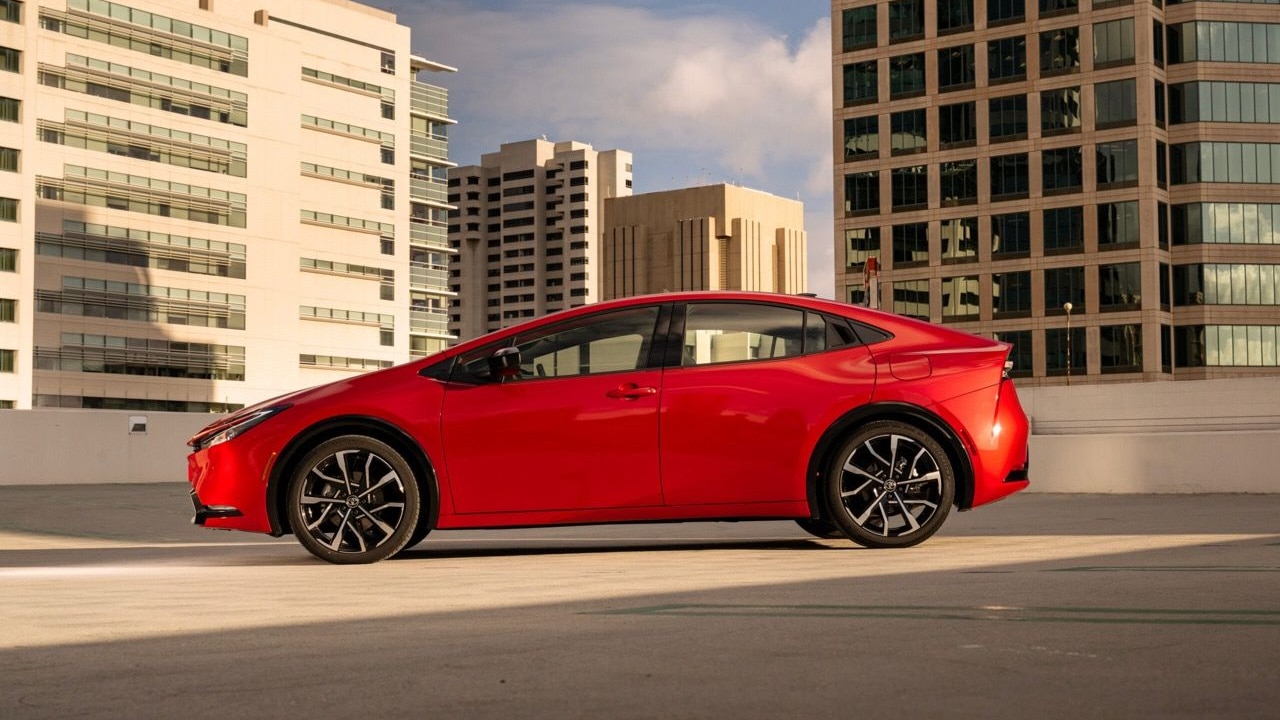
The socket in the bumper shows that this Prius can recharge on grid power

The socket in the bumper shows that this Prius can recharge on grid power

Enlarge Photo

Getting custom-built cars has been a part of the auto industry for many years. From improving the power curve on a small block engine through to creating custom convertibles from anything from a Hummer H3 through to a Toyota Prius, paying a company thousands of dollars for a unique vehicle happens daily across the U.S.

But over the past decade, more and more shops have begun to appear offering consumers the chance to have any car converted to electric. With prices starting from $15,000 do conversion companies offer a sensible way to get behind the wheel of an EV?

The answer depends on the outlook of the person writing the check.

Here at AllCarsElectric, we love to hear about enterprising individuals who have both the skill and time to convert their gas-guzzler to electric on little more than an old fork-lift motor and a set of second-hand batteries.

But most DIY converters are happy to tinker when things go wrong. For them, it's part of the sheer joy of converting a car to electric.

And for now, it's not the DIY conversions we're examining. It's professional conversion companies willing to convert your own car to electric or those who source cars direct from the manufacturer and then convert to electric, adding anything up to $50,000 onto the price-tag.

As Autobloggreen  recently discovered when test-driving the Amp Equinox, a professionally converted 2010 Chevy Equinox, converted vehicles have an uncanny knack of misbehaving at just the wrong point.
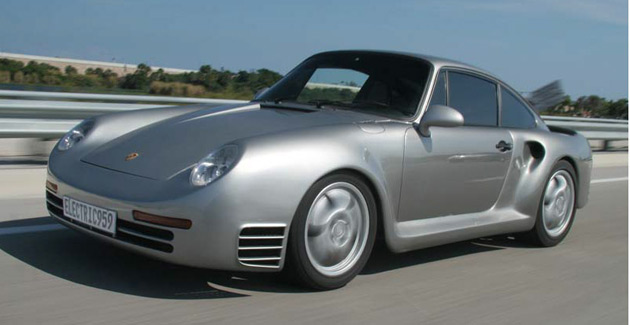
The company specializes in everything Porsche, going so far as to put 959 bodies onto 911 running gear

The company specializes in everything Porsche, going so far as to put 959 bodies onto 911 running gear

Enlarge Photo
It isn't that professional conversions are poorly designed, or that the companies who do them are substandard. Most conversion companies have a team of highly skilled engineers who perform engineering miracles on unbelievably small resources.

But at the end of the day miracles can only take a company so far.

Developing any car costs a lot. The development of both 2011 Nissan Leaf and 2011 Chevy Volt has been well into seven figures. It's the kind of money most conversion companies simply don't have access to. Money aside, most factory-built EVs are tested for years before they make it to production and the dealer's lot.

A conversion company would have to work for many years on its drivetrain, battery and electronics to come close to a factory-built feel to any conversion.

And sadly, as the hype behind alternative fuelled vehicles increases, more and more companies are popping up, offering bespoke conversion opportunities for anything from a Smart ForTwo to an SUV.  Each company keen to take consumer's money but perhaps not always possessing the skills and engineering skills to make a truly consumer-ready car.

Add to that an often inflated price, due to hours of specialised manual labor and labor, and a converted vehicle often out-prices a competing manufactured EV.

We've driven sales demonstration units before from conversion companies where the sales demonstrator and the engineering prototype were one and the same.  Niggles with the performance, error messages and unexplained noises are explained away with the promise that "Our customer model won't have this issue."

We even once had a conversion company moan that we'd mistreated its demonstrator by accelerating too hard out of a parking lot ramp, causing the underlying lacklustre performance.

Citroen C1 ev'ie

Citroen C1 ev'ie

Enlarge Photo
If experiences like this were rare it would be easy to forgive. But nearly every converted car we've seen has lacked the finish, feel and reliability of a professionally built, mainstream EV.

Just like those who fit their own body kits and do suspension drops in their back yard, DIY EV converters are willing to accept that occasionally things go wrong and need fixing.

But for those with cash but no time or skill to do things themselves, the message is clear. Unless that new car absolutely has to be fully custom and you are willing to research which of the many shops will give you a truly outstanding car in exchange for a large blank check we recommend sticking with a mainstream EV.

There are some excellent conversion companies out there, but finding them is a lengthy and expensive process.

As they say, Caveat Emptor (Buyer Beware).



Follow Us


Have an opinion?Join the conversation!

  • Posting indicates you have read this site's Privacy Policy and Terms of Use
  • Notify me when there are more comments
Comments (12)
  1. Thought-provoking piece Nikki. It raises the same sort of questions that buyers of low-production sports cars face - do you buy something like a Lotus Elise, or for slightly less money and slightly more risk do you put your money down on an ultra-low volume competitor from the kit-car market?
    Early adopters of electric car technology might well be the types prepared to adopt a little more risk for a technologically advanced product from an independant manufacturer, but when the bulk of the general public are in the crosshairs they may often be better off spending a little more cash to get a tried and tested product - those who prefer to let a dealership maintain their car, for example.
     
    Post Reply
    Vote
    Bad stuff?

  2. Hi Nikki! Liked the article- even more balanced when one takes into account that you have converted a couple of cars yourself to EVs- it would be wise to heed your hard-earned, fiery experience;-)
     
    Post Reply
    Vote
    Bad stuff?

  3. I admire both the industry of the conversion companies and the people who support them. But I dis-spare every time someone posts that conversions are a trivial matter of purchasing components and bolting them into the car. This industry is still young and quality and suitability of parts varies tremendously. Anyone who thinks they can get reasonable performance and reliability on the cheap is sorely mistaken. Even with the best parts, as pointed out above, there are many integration issues difficult to solve. There is a reason why GM spent over $1B on the Volt. Anyone who buys a converted car should not expect perfection and should be happy if it runs well even with a few idiosyncrasies.
     
    Post Reply
    Vote
    Bad stuff?

  4. Good article - perhaps it will be the racing industry which pushes the market. I talked to a couple of dirt track racers yesterday who are really thrilled at the prospect of converting their machines and getting involved in long races. This 'revolution' seems to be taking a lifetime to evolve ... why, oh why did our grandfathers ever let themselves get suckered into the gas guzzler to begin with? We lost a whole century of electric vehicles ... koko
     
    Post Reply
    Vote
    Bad stuff?

  5. Given the fact that affordable and fully performing (90mph, 600km) full sized cars will need another 20 years, consumers have to look for some retrofits.
    If the kit is pre-configured and the donor car usable, what should go wrong? It's only that the expectation should be in-line with the potential of retrofits. In Europe we have much less professional converters on the market and that's a pity.
     
    Post Reply
    Vote
    Bad stuff?

  6. Good talking point Nikki. I have often though / planned on converting to an EV on my own. But I would have to listen to my wife complain about the time and money invested. Then she would not let me take the kids out on the roads in it. She is sold on getting an EV but it will have to be from one of the major manufactures due to safety, reliability and yes a warranty. Regards,
     
    Post Reply
    Vote
    Bad stuff?

  7. Trashing the people who provide good alternatives to the limited corporate offerings available will get you liked by the man but does a disservice to ingenuity.
     
    Post Reply
    Vote
    Bad stuff?

  8. Gary -
    I'm not trashing conversion companies out of hand. As I said, there are a few good companies if you've got the large amount of cash they need. But for most consumers, professiona. conversions are impractical, costly and often lacking the refinement of a factory-built EV.
    I'm a fan of DIY conversions. I've done two myself...
    Regards
    Nikki.
     
    Post Reply
    Vote
    Bad stuff?

  9. Also worth noting that in the U.S., just one of the several companies offering to convert hybrids to plug-ins has actually subjected the modified vehicle to the same suite of NHTSA crash tests as the original. That company is Hymotion, owned by lithium cell maker A123. (They also test the modified car using the same emissions cycles as carmakers, to ensure it stays within the legal limits.)
    From my POV, removing much of a drivetrain and bolting in hundreds of kilos (or pounds) of batteries in areas different to where the weight used to be raises all sorts of worrisome issues about a vehicle's performance in serious accidents.
    My two cents.
     
    Post Reply
    Vote
    Bad stuff?

  10. very few people are gonna go to the trouble of converting a car, when they have the option of buying them.
     
    Post Reply
    Vote
    Bad stuff?

  11. ...this reminds me of the renewable energy business, where many new businesses have suddenly popped up insuring people of huge savings on energy immediately if only we give them our checkbook... not quite that simple. With that said, the best wisdom I could imagine is the collective wisdom of regional ev groups, like various chapters of the electric auto association. Your thoughts Nikki or John?
     
    Post Reply
    Vote
    Bad stuff?

  12. yeah yeah yeah. why cant i rip out the engine and tranny from my Honda Ody and drop in an electric motor for each wheel and a ton of batteried in the ample space.
    I wonder how much money I could get for a used Honda V6.
     
    Post Reply
    Vote
    Bad stuff?


Have an opinion?Join the conversation!

Find Green Cars

Go!


© 2011 Green Car Reports. All Rights Reserved. Green Car Reports is published by High Gear Media. Send us feedback. Stock photography by Homestar, LLC.